
If you have ever seen YWA in a text, Snapchat reply, gaming chat, or social media comment and wondered what it meant, you are not alone. Slang changes fast, and keeping up can feel confusing. That is why so many people search for YWA meaning in text, especially since it can sound friendly, casual, or even slightly sarcastic depending on context.
In today’s fast digital world, understanding short forms like YWA helps you avoid misunderstandings, reply with confidence, and stay in sync with modern conversations across texting, gaming, and social media.
What Does YWA Mean in Text?
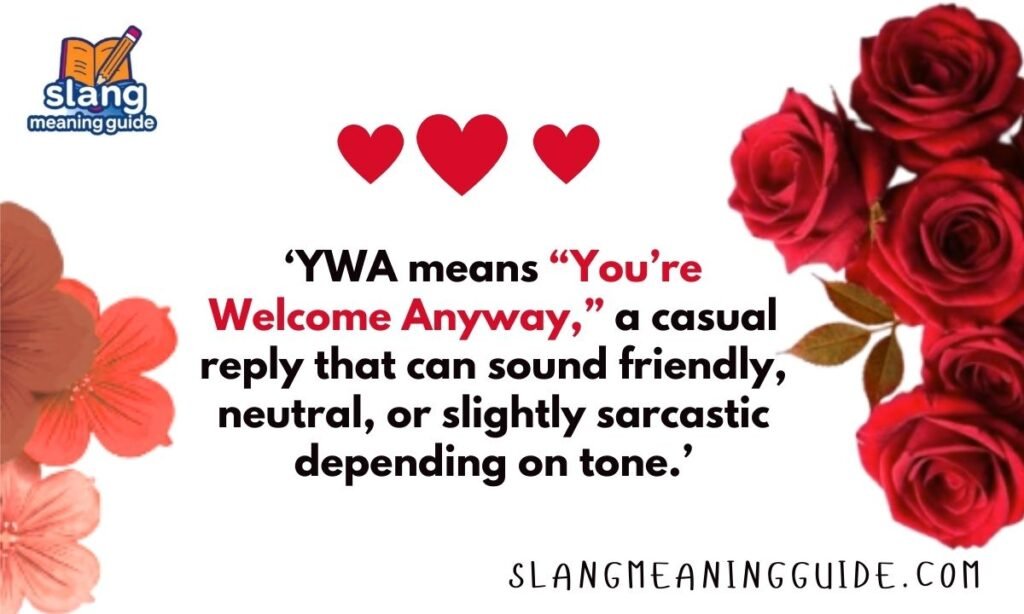
YWA meaning in text primarily stands for “You’re Welcome Anyway.” It is usually used as a response after someone says “thank you,” especially when the help was small, late, or not really needed. It can also have a few secondary meanings, depending on context and platform.
| Acronym | Primary Meaning | Other Meanings | Tone |
| YWA | You’re Welcome Anyway | You Were Awesome / You’re Welcome Again | Casual / Sometimes Sarcastic |
Tone Explanation
The tone of YWA depends on how it is written and the situation:
- Friendly: Polite and relaxed
- Neutral: Simple acknowledgment
- Sarcastic: Slightly dismissive or dry
This is why context always matters when understanding YWA meaning in text.
YWA Meaning in Text from a Boy 😎
When a boy uses YWA in texting, it usually sounds casual, chill, confident, or slightly playful. It is often used in relaxed conversations with friends or someone he knows well.
In many cases, YWA from a boy means:
- No big deal
- Casual politeness
- Light teasing
- Slight confidence
Examples
Example 1:
“Thanks for helping me with the homework.”
“YWA 😎”
Example 2:
“Sorry for replying late, but thanks!”
“YWA, no stress.”
Example 3:
“Appreciate the support!”
“YWA, anytime.”
In these examples, YWA meaning in text shows friendliness and relaxed confidence, not rudeness.
YWA Meaning in Text from a Girl 💖
When a girl uses YWA, the tone often feels warm, polite, friendly, or sweet, especially when paired with emojis. Emoji choice can completely change how the message feels.
YWA from a girl usually means:
- Gentle politeness
- Friendly response
- Sweet acknowledgment
- Soft reassurance
Examples in Dialogue Format
Example 1:
“Thanks for the help 💕”
“YWA 😊”
Example 2:
“Sorry, I bothered you so much.”
“YWA, it’s okay 💖”
Example 3:
“Thank youuu!”
“YWA 🥰”
Here, YWA meaning in text sounds caring, soft, and polite.
Origin and History of YWA
The rise of YWA meaning in text is closely linked to the evolution of digital communication. As texting, gaming, and social media became faster, users started shortening common phrases.
Why YWA Became Popular
- SMS character limits
- Fast-paced gaming chats
- Twitter’s early 140-character restriction
- Snapchat’s quick reply culture
- Informal online slang trends
Evolution Timeline
- Early gaming forums: Quick shorthand replies
- Twitter & Tumblr growth: Short forms became mainstream
- Modern casual texting: Everyday slang in chats
By the early 2010s, YWA had become a recognizable slang term across messaging apps and online platforms.
How YWA Is Used in Different Contexts
1. Texting & Social Media
In everyday chats, YWA meaning in text usually stands for “You’re Welcome Anyway.” It often follows a thank-you message.
Examples:
- “Thanks for waiting.” → “YWA!”
- “Sorry I didn’t reply earlier.” → “YWA, no worries.”
Tone here is relaxed and friendly.
2. Gaming Communities
In gaming, YWA can sometimes mean “You Were Awesome.” This is less common but still used in positive team interactions.
Examples:
- “Great teamwork!” → “YWA, clutch move.”
- “That play saved us.” → “YWA bro!”
In this case, YWA meaning in text becomes a form of praise.
3. Snapchat Usage
On Snapchat, YWA can sound indifferent, casual, or slightly dismissive, depending on punctuation and emojis.
Examples:
- “Thanks.” → “YWA.”
- “Thanks for snapping back.” → “YWA 😶”
Snapchat replies are often short, so tone can easily feel cold if no emoji is used.
4. Workplace or Professional Use
Using YWA at work is not recommended in formal communication.
- Emails
- Reports
- Business messages
- Client communication
Instead, use:
- “You’re welcome.”
- “Happy to help.”
- “My pleasure.”
Professional environments require clarity and politeness without slang.
Tone, Subtext & Hidden Meanings
The way YWA is written changes its emotional meaning.
Tone Variations
- YWA 😊 → Friendly and warm
- YWA… → Sarcastic or annoyed
- YWA!!! → Excited and energetic
- YWA 😐 → Neutral or indifferent
Key Tip
Context always determines interpretation. This is why understanding YWA meaning in text depends not just on words, but also on emojis, punctuation, and conversation flow.
Common Misconceptions About YWA
Many people misunderstand what YWA means. Let’s clear that up.
❌ Myth 1: It always means “You Were Awesome.”
✅ Truth: Most commonly, YWA meaning in text is “You’re Welcome Anyway.”
❌ Myth 2: YWA is rude.
✅ Truth: It depends on tone, emojis, and context.
❌ Myth 3: YWA is only for gaming.
✅ Truth: It is widely used in texting, Snapchat, and social media.
Similar Slang Terms & Alternatives
Here are common alternatives to YWA and when to use them.
| Acronym | Meaning | Best Used When |
| YW | You’re Welcome | Neutral polite reply |
| NP | No Problem | Casual response |
| TY | Thank You | Showing gratitude |
| TIA | Thanks in Advance | Asking for help |
These options help vary tone and avoid repetition in chats.
How to Respond to YWA
Your response to YWA meaning in text depends on three key factors:
- The tone of the message
- Your relationship with the sender
- The conversation context
Choosing the right reply helps keep the conversation smooth and avoids awkward moments.
Friendly Situation
When YWA is used in a warm, casual, or kind way, it is best to mirror their tone and keep the reply simple.
How to respond:
- 😊
- 😄
- “Anytime!”
- “Appreciate it!”
Example Chat:
“Thanks for helping me today!”
“YWA 😊”
“Of course, anytime!”
This keeps the conversation positive and natural.
Sarcastic Situation
If YWA sounds dry, teasing, or slightly sarcastic, responding with light humor helps reduce tension and keeps things friendly.
How to respond:
- “Haha, fair enough 😂”
- “Alright, you got me 😅”
- “Touché 😆”
Example Chat:
“Thanks for finally replying.”
“YWA…”
“😂 Haha, fair enough.”
Humor prevents misunderstandings and keeps the mood relaxed.
Unclear Situation
Sometimes, YWA feels confusing or emotionally unclear. In these moments, it is best to ask politely to avoid misreading the tone.
How to respond:
- “All good?”
- “Everything okay?”
- “Hope I didn’t bother you.”
Example Chat:
“Thanks for the help.”
“YWA.”
“All good?”
This approach shows emotional awareness and keeps communication open.
Professional Setting
In formal or workplace conversations, it is best to avoid slang entirely. Use polite, professional phrases instead.
Better alternatives:
- “Thank you, much appreciated.”
- “I appreciate your support.”
- “Thanks for your help.”
Example Work Reply:
“Thank you for the update.”
“Thank you, much appreciated.”
This keeps communication respectful and professional.
Regional & Cultural Differences in YWA Usage
The way people understand YWA meaning in text can vary depending on region, culture, and communication style.
US & Canada
- Very common slang
- Widely used in casual daily texting
- Popular among teens, students, and gamers
Typical usage:
- Friendly
- Relaxed
- Informal
In North America, YWA is usually seen as casual and harmless.
UK
- Less frequently used
- Mostly appears in informal chats
- Not as common in professional settings
In the UK, people often prefer full phrases like “You’re welcome” or “No worries.”
Non-English Speaking Countries
- Mostly used by younger users
- Popular in gaming chats and social media
- Often learned from English-speaking influencers and streamers
In these regions, YWA may sound cool, trendy, or modern.
Global Gaming Communities
- Very common
- Can mean:
- “You’re Welcome Anyway”
- “You Were Awesome”
- “You’re Welcome Anyway”
Example:
“Nice clutch play!”
“YWA, that was insane!”
Here, YWA becomes a compliment instead of a response.
Why Culture Matters
Understanding cultural context helps:
- Prevent misunderstandings
- Improve emotional tone
- Build better communication
This is why knowing YWA meaning in text across cultures makes conversations smoother.
Is YWA Offensive or Rude?
No, YWA is not inherently offensive or rude. However, it can sound dismissive or cold depending on how it is written and the situation.
When YWA Might Feel Rude
- Used with dots → YWA…
- Paired with cold emojis → 😐 🙄
- Sent during tense or emotional conversations
Example:
“Sorry for bothering you.”
“YWA…”
This may feel emotionally distant or slightly annoyed.
When YWA Feels Friendly
- With warm emojis → 😊 😄 💕
- In casual, relaxed conversations
- Between close friends
Example:
“Thanks for the help!”
“YWA 😊”
This feels polite, light, and kind.
Key Rule
👉 Tone + context = meaning
The same word can feel:
- Warm
- Neutral
- Cold
- Sarcastic
This is why understanding YWA meaning in text requires paying attention to emotional cues, emojis, and conversation flow.
Frequently Asked Questions
What does YWA stand for in texting?
YWA meaning in text primarily stands for “You’re Welcome Anyway.” It is a casual reply after someone says thank you.
Is YWA sarcastic?
Sometimes. Tone depends on punctuation, emojis, and conversation context.
What does YWA mean on Snapchat?
On Snapchat, YWA usually means “You’re Welcome Anyway,” but can feel casual or slightly dismissive due to short replies.
Can I use YWA at work?
It is better to avoid slang in professional communication. Use full polite phrases instead.
What does YWA mean from a guy or girl?
From a guy, it often sounds casual or confident. From a girl, it often sounds warm, polite, or friendly, especially with emojis.
Conclusion
Understanding YWA meaning in text helps you communicate clearly and confidently in today’s fast-paced digital world. While YWA most commonly stands for “You’re Welcome Anyway,” its tone can change based on emojis, punctuation, and context. It may sound friendly, neutral, playful, or slightly sarcastic depending on how it is used.