
You have probably seen “be so fr rn” all over TikTok, Snapchat, and texts. It sounds simple, but it carries strong emotion and attitude. This phrase can instantly change the tone of a conversation. In this guide, we break down what it means, where it came from, how people use it, and when you should or should not say it.
Be So Fr Rn Meaning in Texting
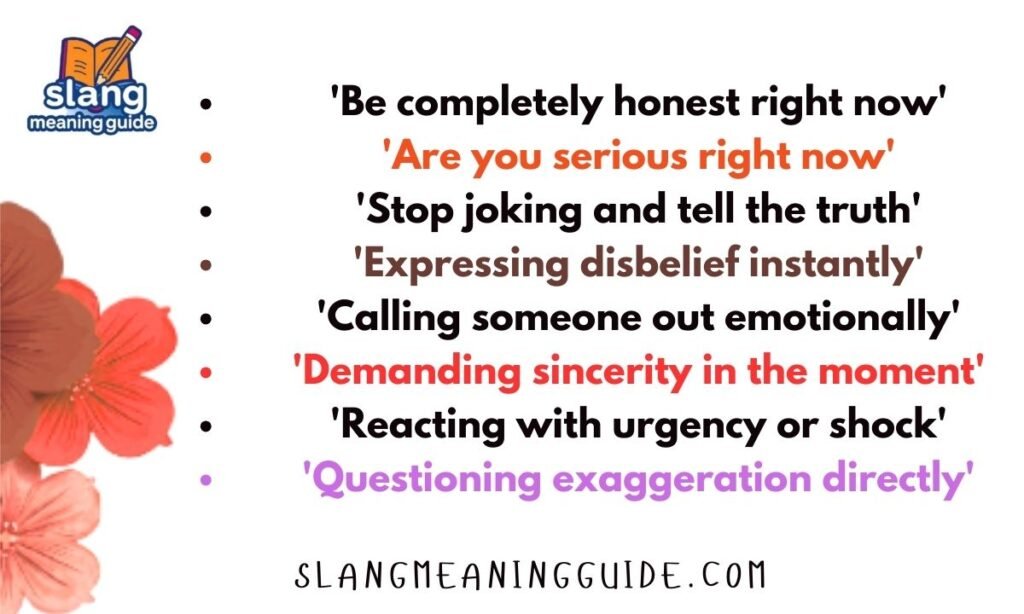
Be so fr rn means “be so for real right now.” It is used to demand honesty, express disbelief, or call someone out when something sounds exaggerated, unrealistic, or dramatic.
In texting, this phrase often appears when a person wants immediate clarity or sincerity. It adds emotional weight and urgency, making the message feel more intense than simply saying “be honest.”
Be so fr rn → Be completely honest right now
Be so fr rn → Are you seriously saying this?
Be so fr rn → Stop joking and tell the truth
This phrase is popular because it is short, expressive, and emotionally direct. It fits perfectly into fast-paced online conversations where tone matters just as much as words.
Be So Fr Rn Origin
The phrase “be so fr rn” originated from African American Vernacular English (AAVE) and evolved through online communication, particularly early social media platforms like Twitter and texting culture in the early 2000s.
It became widely popular during the late 2010s and early 2020s through viral trends on TikTok, Snapchat, and Instagram. Gen Z adopted it as part of everyday digital speech, helping it spread globally.
- AAVE roots → Authentic emotional expression
- Internet slang evolution → Shortened texting formats
- Social media amplification → TikTok and Twitter trends
This history explains why the phrase feels emotionally charged and conversational rather than formal or technical.
Social Media Usage: Snapchat, TikTok, Instagram
Be so fr rn thrives on platforms built for fast, emotional expression. Each platform uses it slightly differently depending on context and tone.
- Snapchat
- Used in private chats when reacting to surprising messages
- Example: “You met him already? Be so fr rn.”
- Used in private chats when reacting to surprising messages
- TikTok
- Used in comments and captions to react to dramatic or shocking videos
- Example: “Be so fr rn, this plot twist is insane.”
- Used in comments and captions to react to dramatic or shocking videos
- Instagram
- Used in DMs, story replies, and comment sections
- Example: “That outfit? Be so fr rn, you ate.”
- Used in DMs, story replies, and comment sections
This flexibility makes the phrase powerful. It can express disbelief, excitement, admiration, or skepticism depending on tone and context.
Formal vs Informal Use
Be so fr rn is strictly informal and should only be used in casual communication. It fits best in personal conversations, social media posts, and relaxed group chats.
Formal communication avoids this phrase entirely.
- Informal settings
- Text messages
- Social media comments
- Group chats
- Casual online discussions
- Text messages
- Formal settings
- Work emails
- Professional meetings
- Academic writing
- Official correspondence
- Work emails
In professional spaces, using slang like this can seem unprofessional or unclear. Always switch to standard language when clarity and professionalism matter.
Common Misunderstandings
Many people misunderstand be so fr rn as rude or aggressive. While it can sound confrontational, its tone depends entirely on context and relationship.
Some common misconceptions include:
- It always sounds angry → Not true. It can be playful, shocked, or impressed.
- It is disrespectful → It is casual, not inherently rude.
- It always expresses disbelief → It can also show excitement or admiration.
Understanding tone is essential. Among friends, it often feels lighthearted. In tense situations, it can feel confrontational.
Usage Tips and Emotional Context
Be so fr rn works best when emotions are high or reactions are instant. It helps communicate disbelief, excitement, or urgency without long explanations.
- Surprise: “Be so fr rn, you won tickets?”
- Disbelief: “You ate five burgers? Be so fr rn.”
- Excitement: “That ending? Be so fr rn, I screamed.”
Emotionally, this phrase signals engagement. It shows that you are fully reacting in the moment, which makes conversations feel more dynamic and expressive.
Comparisons With Similar Abbreviations
Slang often evolves through similar phrases that share meaning but differ in tone. Here is how be so fr rn compares with related abbreviations:
| Phrase | Meaning | Tone |
| be so fr rn | be so for real right now | emotional, intense |
| fr | for real | casual, light |
| frfr | for real, for real | strong agreement |
| no cap | no lie | confident, assertive |
| ong | on God | sincere emphasis |
Each phrase communicates sincerity, but be so fr rn stands out for urgency and emotional impact.
Practical Examples in Conversations
Real-life usage helps clarify meaning. Here are examples showing how tone changes depending on context:
Disbelief: “You’re moving tomorrow? Be so fr rn.”
Excitement: “That concert lineup? Be so fr rn, I’m going.”
Calling someone out: “You didn’t study? Be so fr rn.”
Playful admiration: “You cooked all that? Be so fr rn.”
Each example shows how flexible and emotionally adaptive the phrase can be.
When to Avoid It
Even though be so fr rn is popular, there are times when it should be avoided.
- Professional communication
- Academic writing
- Formal emails or messages
- Serious emotional discussions where tone matters deeply
In sensitive conversations, the phrase can feel dismissive or sarcastic. In formal settings, it may appear immature or unclear.
Quick Meaning and Usage
| Aspect | Explanation |
| Full form | Be so for real right now |
| Main purpose | Express disbelief, urgency, or sincerity |
| Tone | Casual, emotional, conversational |
| Common platforms | TikTok, Snapchat, Instagram, texting |
| Best context | Friends, social media, informal chats |
Frequently Asked Questions
What does be so fr rn mean in texting?
It means “be so for real right now,” used to demand honesty or express disbelief.
Is be so fr rn rude?
Not usually. Tone and context determine whether it sounds playful or confrontational.
Where did be so fr rn originate?
It comes from AAVE and gained popularity through early internet and social media culture.
Can I use be so fr rn in professional messages?
No. It is informal slang and should stay in casual communication.
What is the difference between fr and frfr?
“Fr” means for real, while “frfr” emphasizes stronger sincerity or agreement.
Final Words
Be so fr rn captures modern digital expression perfectly. It is emotional, direct, and flexible, making it one of the most powerful slang phrases in Gen Z communication. When used naturally and in the right context, it adds personality, humor, and authenticity to everyday conversations.