
You are deep in a conversation and the other person suddenly sends three letters and disappears. No explanation. No warning. Just GTG. Here is everything you need to know about what it means and how to use it right.
GTG Stands for “Got to Go” in Most Chat Conversations
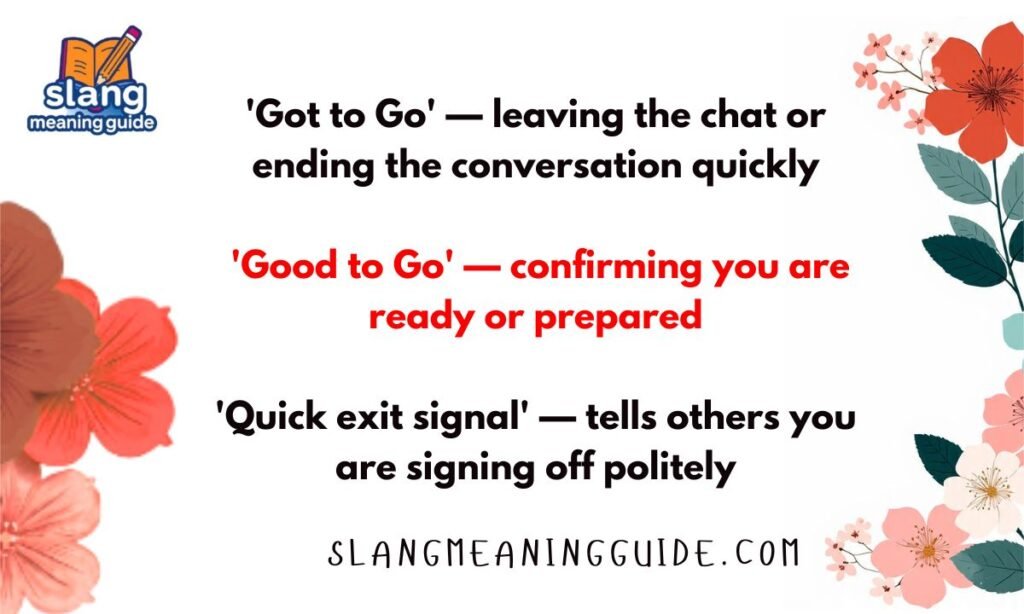
GTG is a texting abbreviation that means Got to Go. People use it to signal they are leaving a conversation or logging off quickly. It is casual, fast, and widely understood across platforms like WhatsApp, Snapchat, Discord, and iMessage.
Example:
“Dinner is ready, GTG!”
That is the core meaning. But GTG does not always mean the same thing in every situation.
GTG Has Two Main Meanings Based on Context
Most people only know one meaning of GTG. The second one catches a lot of people off guard.
| Meaning | Full Phrase | When It Appears |
|---|---|---|
| Got to Go | Leaving/signing off | Texting, social media, gaming |
| Good to Go | Ready or all set | Gaming, planning, confirmations |
Got to Go covers about 90 percent of cases. Good to Go shows up when someone is confirming they are ready for something.
Example of Good to Go:
“Just finished getting ready. I’m GTG!”
Read the context before you assume which meaning applies.
GTG Shows Up Differently Across Platforms and Situations
In Everyday Texting
This is the most common place you will see GTG. It works as a polite, quick exit from a conversation without leaving someone hanging.
“Had fun chatting! GTG now, talk later.”
In Gaming Chats
Gamers use GTG constantly. It signals a player is logging off or leaving a lobby.
“GG everyone, GTG for dinner.”
It can also mean Good to Go when a team is ready to start a match.
On Social Media
Creators and commenters use GTG in captions, replies, and live streams to signal they are stepping away.
“GTG, will reply to comments later!”
GTG and G2G Mean the Same Thing
You will sometimes see G2G instead of GTG. They are identical in meaning.
The number 2 replaces the word “to,” which was a common SMS habit from the early 2000s when character limits made every keystroke count.
| Term | Meaning | Style |
|---|---|---|
| GTG | Got to Go | Modern, widely used |
| G2G | Got to Go | Old-school SMS style |
Both are acceptable. GTG is more common today.
GTG Originated in Early Internet Chat Rooms
Where It Started
GTG dates back to the 1990s and early 2000s. Platforms like IRC, AOL Instant Messenger, MSN Messenger, and Yahoo Chat gave it life. Those platforms had character limits and small screens. Users needed fast ways to say they were leaving without typing full sentences.
Why It Stuck Around
Character limits disappeared with smartphones. But the habit of short replies never left. Speed became the main reason people kept using GTG even when they had unlimited space to type. Today it lives across every major platform and shows no sign of slowing down.
GTG Is Fine in Casual Chats but Wrong for Professional Settings
GTG works great among friends. In formal communication, it creates the wrong impression.
Use GTG here:
- Personal text messages
- WhatsApp chats with friends
- Discord and gaming communities
- Snapchat and Instagram DMs
Avoid GTG here:
- Work emails
- Client messages
- Job-related communication
- Any formal written exchange
In professional settings, write it out:
“I need to step away. Let’s reconnect later this afternoon.”
That takes five seconds longer and makes a much better impression.
GTG Is Not Rude When You Use It the Right Way
Some people worry that GTG sounds abrupt or dismissive. It does not have to be.
The tone depends entirely on how you pair it:
- Without context: “GTG.” — feels cold
- With a reason: “GTG, my class starts now!” — feels warm and human
- With an emoji: “GTG 😅” — feels casual and friendly
- With a follow-up: “GTG but let’s finish this later!” — shows you care
A small addition makes GTG feel natural rather than like a door slamming shut.
How to Reply When Someone Sends You GTG
The right response depends on what was happening in the conversation.
If the conversation was wrapping up naturally:
- “Bye! Talk soon.”
- “Take care!”
And If it felt cut short:
- “No worries, catch you later!”
- “Okay! When are you free to continue?”
If they used GTG to mean Good to Go:
- “Perfect, heading over now!”
- “Great, see you in 10.”
Never overthink a GTG. It is almost always friendly and harmless.
GTG Compared to Similar Texting Abbreviations
| Abbreviation | Meaning | Key Difference |
|---|---|---|
| GTG | Got to Go | Signals departure |
| BRB | Be Right Back | Short absence, coming back soon |
| TTYL | Talk to You Later | Softer, more open-ended goodbye |
| AFK | Away from Keyboard | Mostly gaming, temporary |
| BBL | Be Back Later | Longer absence expected |
GTG is the most final of the group. BRB implies you will return. GTG usually means the conversation is done for now.
Frequently Asked Questions
What does GTG mean in texting?
Got to Go — used to leave a conversation quickly.
Can GTG mean Good to Go?
Yes, when someone is confirming they are ready.
Is GTG the same as G2G?
Yes, both mean Got to Go.
Is GTG rude?
No, add a reason or emoji to keep it friendly.
Should I use GTG at work?
No, write the full phrase in professional messages.
Where did GTG come from?
IRC and early instant messaging platforms in the 1990s.
Final Words
Three letters do a lot of work when you know how to use them. GTG signals respect for someone’s time while closing a conversation cleanly and naturally. It works on every platform, fits every casual tone, and takes less than a second to type. Now that you know exactly what it means and when to use it, you will never send the wrong message again.