
You have probably seen the word “aura” pop up in texts, captions, and comments lately. It feels simple, yet everyone seems to use it differently. Once you understand what it actually means, you will start noticing how much power this tiny word carries in modern communication.
Aura Meaning in Texting
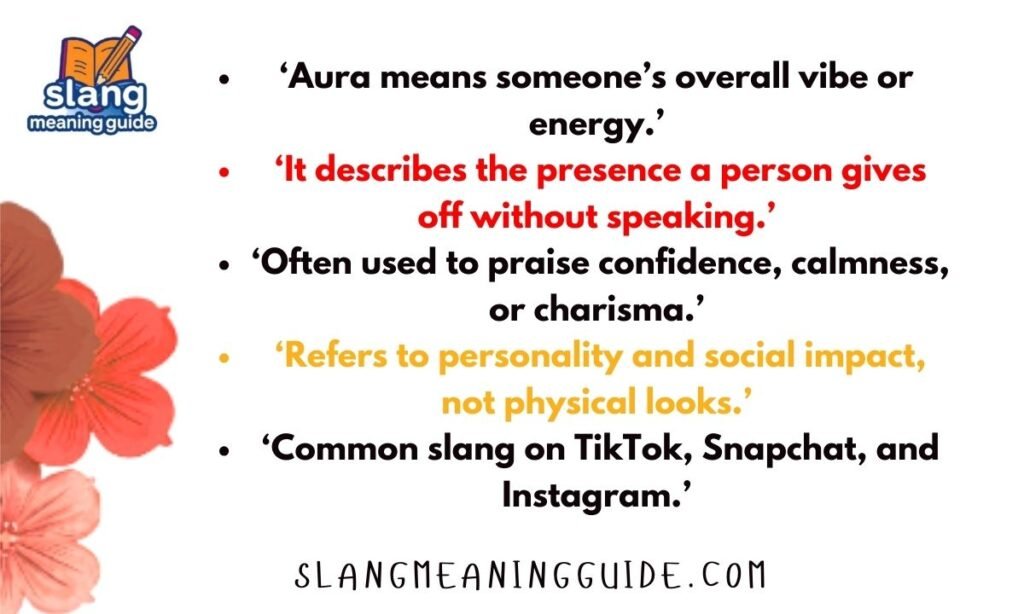
In texting slang, aura means the overall vibe, energy, or presence a person gives off. It describes how someone makes others feel without needing to say much. When someone has aura, they project confidence, charisma, calmness, or a unique personal energy that stands out naturally.
In everyday messages, aura often works as a compliment. It highlights personality, emotional tone, and social presence rather than physical appearance. People use it to describe how someone moves, speaks, reacts, and interacts in ways that feel authentic and magnetic.
- Confident energy: calm presence that feels self-assured
- Charismatic vibe: natural charm that draws people in
- Emotional presence: the mood someone spreads in a room
- Social magnetism: influence without effort
Aura Origin
The word aura comes from ancient Greek and Latin roots meaning “breeze” or “air,” originally describing an invisible atmosphere surrounding a person. In spiritual traditions, it referred to an unseen energy field believed to reflect emotions, health, and personality. Over time, this mystical meaning slowly shifted into everyday language.
In the early 2020s, social media transformed aura into modern slang. Platforms like TikTok and Twitter popularized it to describe effortless coolness, presence, and confidence, especially in athletes, celebrities, and viral personalities. By 2024, the term exploded through trends like “aura points,” “auramaxxing,” and “define aura,” cementing its place in digital culture.
- Ancient roots: invisible atmosphere and energy
- Spiritual meaning: emotional and personal energy
- Modern evolution: vibe and social presence
- Social media influence: slang through viral trends
Social Media Usage: Snapchat, TikTok, Instagram
Aura thrives on visual and short-form platforms where vibe and presence matter most. On TikTok, users talk about gaining or losing aura points based on awkward or impressive moments. On Instagram, aura shows up in captions, bios, and comments praising someone’s confidence or style. While On Snapchat, it appears casually in private chats and story reactions.
Across these platforms, aura becomes a playful way to describe social wins and losses. It helps people frame everyday moments as cool, awkward, confident, or embarrassing, often with humor and exaggeration.
- Snapchat: casual compliments and playful teasing
- TikTok: viral trends and aura points scoring
- Instagram: captions and comments praising presence
- Reels and shorts: highlighting confident moments
Formal vs Informal Use
Aura is firmly informal slang. It belongs in casual conversations, social media posts, and relaxed digital communication. Using it in professional emails, academic writing, or formal discussions can sound out of place and unprofessional.
In friendly texts, aura adds personality and emotional color. It helps express feelings that standard words like “confidence” or “charisma” sometimes fail to capture. The key is matching tone and setting so the word feels natural, not forced.
- Casual texting: relaxed tone and friendly vibe
- Social captions: expressive and trendy language
- Group chats: humor and personality
- Avoid formal writing: maintain clarity and professionalism
Common Misunderstandings
Many people assume aura refers only to mystical or spiritual energy. In slang, it rarely means that. Instead, it focuses on emotional presence, confidence, and social impact. Most users mean vibe, not invisible fields or spiritual beliefs.
Another misunderstanding is thinking aura equals physical attractiveness. While looks can influence first impressions, aura mainly describes how someone carries themselves, reacts emotionally, and interacts socially. True aura comes from behavior, not appearance.
- Not mystical only: mostly figurative meaning
- Not about looks: centered on personality
- Not arrogance: balanced confidence
- Not dominance: calm self-assurance
Usage Tips and Emotional Context
Using aura correctly depends on emotional awareness. It fits moments of quiet confidence, emotional maturity, smooth social interactions, and calm reactions. Overusing it or forcing it into every situation weakens its impact.
Emotionally, aura reflects stability, self-respect, and inner confidence. It highlights how someone manages stress, handles conflict, and maintains composure in public and private moments.
- Praise confidence: calm and controlled actions
- Highlight composure: steady emotional reactions
- Encourage growth: positive social energy
- Avoid exaggeration: keep meaning authentic
Comparisons With Similar Slang Terms
Aura overlaps with other slang about confidence and vibe, but it emphasizes presence more than performance. Comparing it with similar terms clarifies its unique emotional tone.
| Term | Core Meaning | Tone | Typical Use |
| Aura | Presence and energy | Calm | Complimenting vibe |
| Rizz | Charm and flirting | Playful | Social attraction |
| Main Character Energy | Self-focus | Dramatic | Motivation |
| Big Energy | High excitement | Loud | Celebration |
Another helpful comparison focuses on emotional depth and social tone.
| Phrase | Focus | Emotional Style |
| Aura | Overall presence | Balanced |
| Vibe | Mood or feeling | Situational |
| Swagger | Bold confidence | Assertive |
| Cool factor | Social appeal | Casual |
Practical Examples in Texting
Real examples show how naturally aura fits into everyday messages. These phrases highlight confidence, calm, and presence without sounding forced.
- “She walked in like she owned the place, pure aura.”
- “That calm reaction was all aura.”
- “His silence in that moment had more aura than words.”
- “You gained major aura points for that move.”
Each example focuses on emotional control, composure, or confident presence rather than physical traits.
When to Avoid Using It
Although aura works well in casual contexts, certain situations call for clearer, more neutral language. Professional communication, academic writing, and serious discussions benefit from straightforward wording.
It is also best avoided with people unfamiliar with slang, where confusion or misinterpretation may occur. Context awareness ensures your message remains respectful and effective.
- Professional emails: prioritize clarity
- Academic writing: avoid slang
- Serious conversations: maintain tone
- Mixed-age groups: reduce confusion
FAQ
What does aura mean in texting?
It means someone’s vibe, energy, or overall presence.
Is aura always positive?
No, aura can be positive, neutral, or negative depending on context.
Can someone gain or lose aura points?
Yes, socially impressive actions add aura, while awkward moments reduce it.
Is aura the same as vibe?
Not exactly, aura is deeper presence, while vibe is temporary mood.
Is aura gender-specific?
No, it applies to everyone equally.
Final Thoughts
Aura has become a powerful piece of modern slang because it captures something subtle yet meaningful: how people feel in your presence. Understanding its meaning helps you read social situations better, express compliments more naturally, and communicate emotional nuance in today’s digital world.