
One small word can completely change the tone of a message. You see it in texts, comments, and replies, yet its meaning shifts with context. If you have ever paused after reading “bet” and wondered whether it meant agreement, confidence, or a challenge, you are not alone.
Digital conversations rely on speed, tone, and emotional shortcuts. “Bet” has become one of those shortcuts that carries more meaning than its size suggests. Understanding how it works helps you respond naturally and avoid awkward misunderstandings.
This guide explains everything you need to know about the slang meaning of “bet,” how people use it, where it comes from, and when to avoid it.
Bet Meaning Slang in Texting
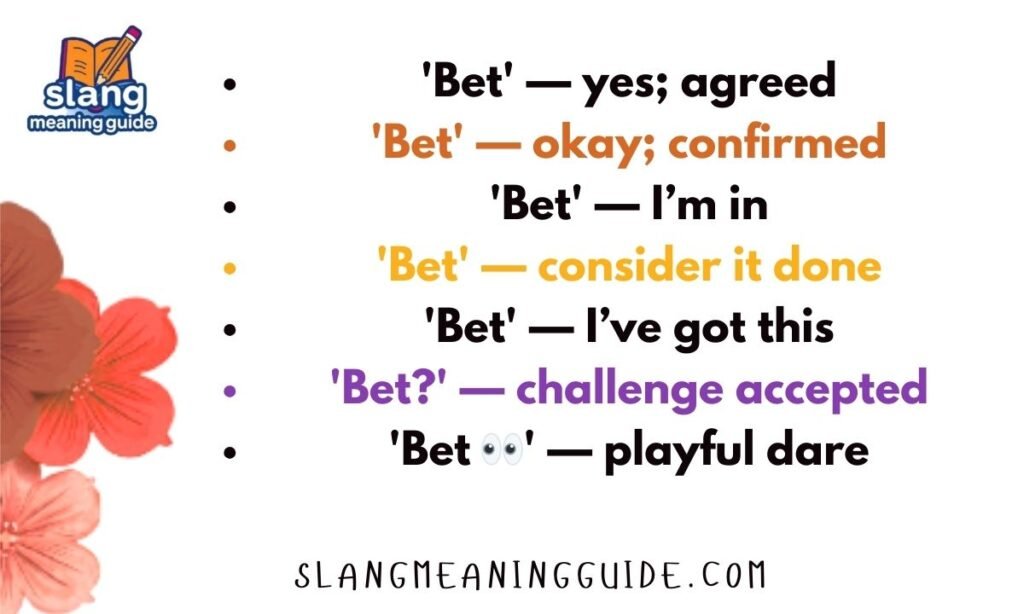
In texting and casual chat, bet most commonly means yes, okay, I agree, or that’s confirmed.
It is a short, confident way to acknowledge a message and signal acceptance without sounding formal or distant. Instead of typing a full sentence, people use “bet” to keep conversations quick and fluid.
This slang meaning also conveys confidence and readiness. It does not just mean agreement, but often suggests motivation, enthusiasm, or commitment. That subtle emotional layer is why it feels more energetic than simple replies like “okay” or “sure.”
- Agreement: Yes, sounds good, I’m in
- Confirmation: Consider it done, it’s settled
- Confidence: I’ve got this, no problem
Examples in texting:
- Bet, I’ll send you the file tonight.
- Meet at 7? Bet.
- I’ll handle the presentation. Bet, leave it to me.
In everyday chats, “bet” helps maintain rhythm and emotional connection, making messages feel natural and relaxed rather than robotic or overly formal.
Bet Meaning Slang Origin
The slang usage of bet originates from African American Vernacular English (AAVE), where it has long been used to express acknowledgment, understanding, and agreement. Over time, this conversational style entered mainstream language through hip-hop culture, television, and online communities.
Historically, the word “bet” was associated with gambling and wagering. Expressions like “you bet” or “you can bet on it” existed as early as the 1800s, meaning “certainly” or “of course.” The modern slang meaning evolved from these phrases, gradually dropping extra words while keeping the confident tone.
- Cultural roots: African American Vernacular English
- Influence: Hip-hop music, street culture, internet slang
- Modern rise: Social media and texting platforms
As TikTok, Instagram, and messaging apps gained popularity, “bet” spread rapidly because it was short, expressive, and easy to use. Its adaptability across different tones made it ideal for fast-paced digital communication.
Social Media Usage on Snapchat, TikTok & Instagram
On social media, bet acts as a fast reaction that signals agreement, excitement, or playful challenge. The meaning stays consistent, but tone shifts depending on platform, emoji use, and conversation style.
Each platform gives “bet” a slightly different emotional flavor. On TikTok, it often carries bold confidence. On Instagram, it signals vibe alignment. While On Snapchat, it feels casual and friendly.
- Snapchat: Quick replies, friendly confirmation
- TikTok: Bold confidence, playful challenges
- Instagram: Agreement, excitement, support
Examples across platforms:
- Snapchat reply: Bet 😂, see you later.
- TikTok comment: You can cook better than me? Bet 👀
- Instagram DM: We linking this weekend? Bet 🔥
Social media thrives on emotional shortcuts, and “bet” fits perfectly into short captions, comments, and reactions, allowing users to communicate quickly while maintaining tone.
Formal vs Informal Use of Bet
“Bet” is firmly rooted in informal language. It works best in texting, social media, gaming chats, and casual conversations. In formal or professional settings, however, it can sound unclear, overly casual, or even unprofessional.
In workplaces, schools, and business environments, clearer language helps avoid misunderstandings. While some startups and internal team chats tolerate casual slang, formal emails and documents should use precise alternatives.
- Informal settings: Texting, group chats, memes, comments
- Formal alternatives: Agreed, confirmed, acknowledged, understood
Examples:
- Informal: Bet, I’ll handle it.
- Formal: Confirmed, I will handle it.
Using the right tone ensures credibility while keeping communication smooth and respectful.
Common Misunderstandings About Bet Slang
One common misunderstanding is assuming bet always means a challenge. While it can carry a playful dare-like tone, most of the time it simply means agreement or acknowledgment. Another frequent mistake is linking it only to gambling, which rarely applies in modern slang use.
Tone, context, and delivery determine the true meaning. Emojis, punctuation, and conversation flow all influence how “bet” is perceived.
- Mistake: Bet always means daring someone
- Reality: It usually means agreement
- Mistake: Bet implies gambling
- Reality: Slang bet rarely involves money
Examples:
- I’ll be there in 10. Bet. (agreement)
- You can’t finish that today. Bet. (challenge)
Understanding emotional context prevents confusion and awkward replies.
Usage Tips and Emotional Context
Using “bet” naturally depends on emotional awareness. It expresses confidence, enthusiasm, and readiness. Adding emojis often softens tone or makes intent clearer, especially in playful exchanges.
Emotionally, “bet” can convey:
- Confidence: I’m sure, I’ve got it
- Excitement: Looking forward to it
- Playful defiance: Try me, let’s see
Usage tips:
- Pair with emojis to clarify tone.
- Use sparingly to avoid sounding repetitive.
- Avoid in serious or sensitive discussions.
Examples:
- Bet 🔥, can’t wait.
- Bet 😂, let’s see.
- Bet, I’m on it.
Tone control ensures the word supports your message instead of distracting from it.
Comparisons With Similar Abbreviations and Slang
Several slang terms overlap with “bet,” but each carries its own emotional nuance. Knowing the differences helps you choose the right expression for each context.
| Term | Meaning | Emotional Tone |
| Bet | Yes, agreed, confident | High confidence |
| OK | Acknowledged | Neutral |
| Sure | Agreement, mild hesitation | Polite |
| FR | For real, serious | Confirming |
| Say less | Strong agreement | Very confident |
Another helpful comparison:
| Phrase | Best Use |
| Bet | Confident agreement |
| Deal | Final agreement |
| Got you | Reassurance |
| Cool | Relaxed acceptance |
“Bet” stands out because it combines agreement with emotional energy, making it ideal for fast-paced digital chats.
Practical Examples of Bet in Real Conversations
Real-world examples show how flexible “bet” can be across different tones and situations.
- We meeting at 6? Bet.
- I’ll handle the design work. Bet, I’ve got it.
- You think you can beat me? Bet 👀
- Send me the link. Bet.
Each example shows how the word adapts to agreement, confirmation, confidence, and playful challenge without changing form.
When to Avoid Using Bet
Despite its popularity, “bet” is not suitable for every situation. In professional, academic, and emotionally sensitive conversations, clarity and respect matter more than slang.
Avoid using “bet” in:
- Workplace emails
- Client communication
- Academic writing
- Serious emotional discussions
Examples:
- Instead of: Bet, I’ll review the contract.
- Use: Confirmed, I will review the contract.
Choosing the right language preserves professionalism and prevents misinterpretation.
Summary Table: Meanings and Contexts of Bet
| Context | Meaning |
| Texting | Yes, agreed |
| Social media | Excitement, support |
| Challenges | Playful dare |
| Work chats | Casual confirmation |
This quick overview helps decode intent instantly.
Frequently Asked Questions
What does bet mean in slang texting?
It means yes, okay, or agreed, usually with confidence.
Is bet slang rude?
No, it is usually friendly and positive.
Does bet always mean a challenge?
No, most often it means agreement.
Can I use bet at work?
Only in casual internal chats, not formal communication.
Is bet still popular in 2026?
Yes, it remains widely used across social platforms.
Conclusion
The bet meaning slang reflects how modern language values speed, emotion, and clarity. What once referred mainly to gambling has evolved into a flexible expression of agreement, confidence, and playful challenge.
Its popularity across texting, social media, and casual conversation comes from its simplicity and emotional punch. Understanding how and when to use “bet” helps you communicate naturally, avoid misunderstandings, and stay in tune with digital culture.
Used correctly, “bet” adds confidence and energy to your messages, making everyday conversations feel smoother, more expressive, and more human.