
Slang changes fast, but some words stick because they perfectly capture everyday emotions. One such word is “cap,” a short, powerful expression that dominates texts, comments, and memes. If you have ever paused mid-scroll wondering what someone really meant by “that’s cap” or “no cap,” this guide will clear it all up.
From casual chats to viral TikTok trends, “cap” has become a go-to reaction for truth, doubt, and playful call-outs. Understanding how it works helps you read between the lines and respond naturally in modern digital conversations.
Cap Slang Meaning in Texting
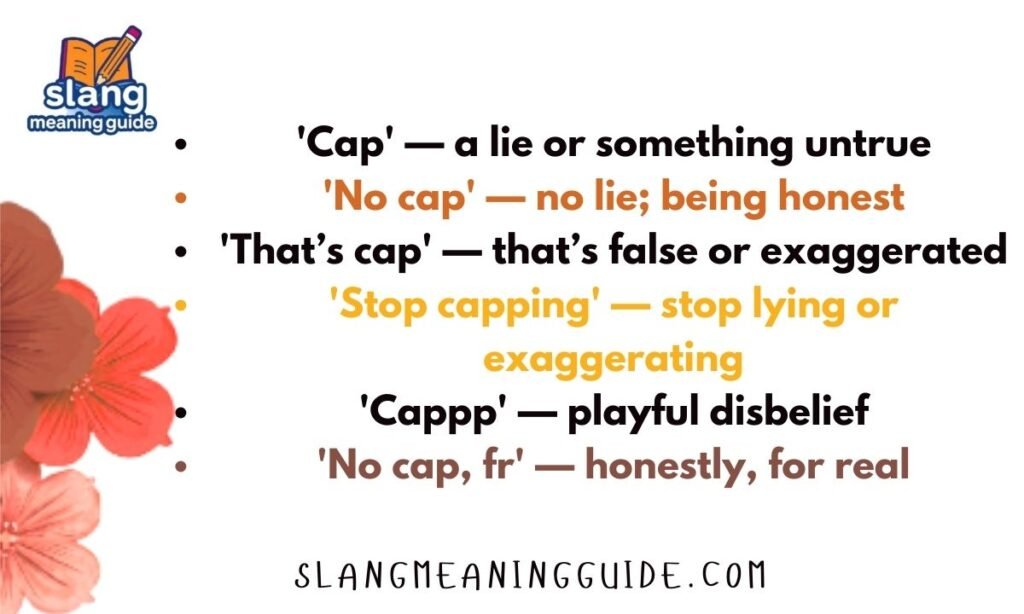
In texting and online chat, cap simply means a lie, exaggeration, or something untrue. When someone types “that’s cap,” they are calling out a statement as false or hard to believe. On the flip side, no cap means no lie, honestly, or for real, used to stress that the speaker is being truthful.
People like using “cap” because it is short, expressive, and emotionally clear. Instead of writing a full sentence like “I don’t believe that,” one word does the job. It also adds personality and tone to otherwise plain text conversations.
- Cap: a lie, fake, not true
- No cap: no lie, honest, serious
Examples in everyday texting:
- No cap, that exam was harder than I expected.
- You finished all that work in one hour? That’s cap.
- Stop capping, we know what really happened.
In casual chat, “cap” often feels playful rather than aggressive. Tone depends heavily on context, emojis, and your relationship with the person you are texting.
Cap Slang Meaning Origin
The slang meaning of cap comes from African American Vernacular English (AAVE) and has roots in early 20th-century expressions. Originally, “capping” referred to boasting, mocking, or exaggerating. Over time, this sense of exaggeration evolved naturally into the modern meaning of lying or stretching the truth.
Hip-hop culture played a major role in popularizing the phrase. Rappers frequently used no cap in lyrics to emphasize honesty and authenticity. As hip-hop shaped mainstream internet culture, these expressions moved into everyday online language, especially among younger users.
- Early meaning: boasting, exaggeration
- Modern meaning: lying or telling the truth (no cap)
- Cultural roots: AAVE and hip-hop culture
With the rise of social platforms like TikTok and Instagram, “cap” spread rapidly, becoming one of the most recognizable slang terms worldwide. Its simplicity and emotional clarity helped it cross cultural and language boundaries.
Social Media Usage on Snapchat, TikTok, Instagram & More
On social media, cap is used as a fast reaction to content that feels exaggerated, unbelievable, or impressively honest. While the meaning stays consistent, the tone shifts slightly depending on the platform.
Each platform gives “cap” its own style, driven by emojis, trends, and audience behavior. It is often used in captions, comments, and quick replies.
- Snapchat: casual disbelief, playful teasing
- TikTok: viral humor, trend captions, reaction memes
- Instagram: comments, story replies, short call-outs
- WhatsApp: friendly chats, light arguments
Examples across platforms:
- TikTok caption: POV: they said they’re fine 🧢
- Instagram comment: That glow-up is no cap 🔥
- Snapchat reply: Cappp 😂
- WhatsApp text: Bro, that excuse sounds like cap.
The emotional tone is usually light, humorous, and expressive, making “cap” ideal for fast-moving digital conversations.
Formal vs Informal Use of Cap
“Cap” is firmly rooted in informal language. It works well in casual conversations, social media, texting, and friendly debates, but it does not belong in formal writing or professional communication.
In academic, business, or professional contexts, using “cap” can sound unprofessional or unclear. Instead, direct words like “incorrect,” “false,” or “inaccurate” are more appropriate.
- Informal use: texting, memes, comments, casual speech
- Formal alternatives: incorrect, false, misleading, inaccurate
Examples:
- Informal: That report is cap.
- Formal: That report contains inaccurate information.
Understanding where to use slang helps maintain credibility while still sounding natural in relaxed settings.
Common Misunderstandings About Cap
Many people misunderstand “cap,” especially when they first encounter it. The most common mistake is assuming that it is an acronym or abbreviation. In reality, cap does not stand for anything. It is a standalone slang term.
Another misunderstanding is assuming “cap” is always rude. While it can sound confrontational in some contexts, it is often playful, especially among friends.
- Wrong: Thinking cap is an acronym
- Wrong: Believing cap is always aggressive
- Correct: Understanding it as casual slang
Examples:
- That’s cap, bro 😂 (playful teasing)
- That’s cap, and you know it. (direct challenge)
Tone, context, and relationship between speakers decide how the word is perceived.
Usage Tips and Emotional Context
Using “cap” correctly is about emotional timing and social awareness. It works best when the situation is casual and the audience understands internet slang. When used properly, it adds humor, emphasis, and clarity.
Emotionally, “cap” expresses disbelief, skepticism, honesty, or playful teasing. Emojis often strengthen its tone, making messages friendlier or more expressive.
- For humor: That story is cap 😂
- For honesty: No cap, I needed that break.
- For disbelief: You did all that? Cap.
Tips for natural usage:
- Use it with friends, not in professional settings.
- Pair it with emojis for tone clarity.
- Avoid overusing it to prevent sounding forced.
Comparisons With Similar Slang Terms
“Cap” is part of a larger family of truth-related slang. Understanding its alternatives helps you switch tone and style based on context.
| Slang Term | Meaning | Tone |
| Cap | Lie, fake | Casual |
| No cap | Honest, real | Emphatic |
| FR | For real, seriously | Confirming |
| BS | Nonsense, lie | Strong, blunt |
| Fake | Not genuine | Neutral |
Each term carries slightly different emotional weight. “Cap” is lighter and more playful than harsher alternatives like “BS,” making it safer for everyday use.
Another helpful comparison:
| Expression | Best Used When |
| That’s cap | Calling out exaggeration |
| No cap | Emphasizing honesty |
| For real | Showing agreement |
| Not true | Formal correction |
This flexibility explains why “cap” remains popular across platforms and age groups.
Practical Examples of Cap in Real Conversations
Seeing real examples helps clarify how “cap” fits naturally into daily communication. These examples reflect common texting and social media patterns.
- You woke up at 4 a.m. to study? That’s cap.
- No cap, this coffee saved my life today.
- Stop capping, you didn’t finish the series in one night.
- That deal sounds like cap, not gonna lie.
In all these cases, “cap” replaces longer explanations, keeping messages quick, expressive, and emotionally clear.
When to Avoid Using Cap
Despite its popularity, “cap” is not always appropriate. In professional, academic, or sensitive discussions, slang can reduce clarity and seriousness.
Situations where you should avoid it:
- Workplace emails and meetings
- Academic writing and exams
- Formal presentations
- Serious emotional conversations
Examples:
- Instead of: That data is cap
- Use: That data appears inaccurate
Using proper language in formal settings maintains credibility and avoids confusion.
Summary Table: Cap vs No Cap
| Phrase | Meaning | Example |
| Cap | A lie, not true | That story is cap. |
| No cap | Honest, real | No cap, I’m exhausted. |
This quick reference helps you instantly understand the emotional direction of a message.
Frequently Asked Questions
What does cap mean in slang?
It means a lie or something untrue.
What does no cap mean?
It means no lie or honestly.
Is cap rude?
Usually no, it is often playful.
Is cap still popular in 2026?
Yes, especially on TikTok and social media.
Can cap be used in formal writing?
No, it is best kept informal.
Conclusion
The cap slang meaning is simple yet powerful. Cap means a lie, while no cap means truth and honesty. What makes this slang so effective is its speed, emotional clarity, and adaptability across platforms.
From playful teasing to serious honesty, “cap” helps people express belief, doubt, and sincerity in a single word. As online language continues to evolve, this term remains a key part of modern digital communication.
Understanding how and when to use “cap” not only helps you decode messages but also allows you to respond naturally and confidently in today’s fast-moving online world. No cap, it is one of the most useful slang terms to know right now.