
You’ve probably seen “OG” pop up in texts, comments, memes, and captions. It’s short, punchy, and everywhere. But its meaning isn’t always obvious, and its background is deeper than most people realize.
What started as a street term decades ago has evolved into a powerful expression of respect, authenticity, and originality. Understanding what “OG” really means gives insight into how language changes, how culture spreads, and how slang becomes mainstream.
In this guide, we’ll unpack the full meaning of OG in texting, explore its history, show how it’s used today, and explain the subtle differences in tone depending on context. By the end, you’ll not only know what OG means, but how to use it naturally and correctly.
What Does OG Mean in Texting?
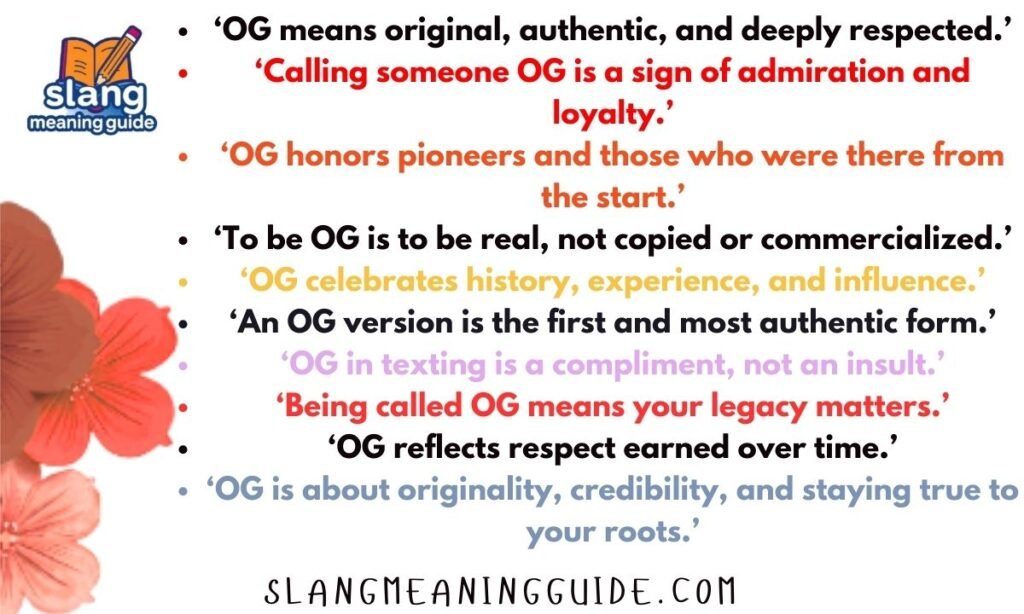
In modern texting and online communication, OG usually means “original,” “authentic,” or “respected veteran.” It’s a compliment. When someone calls a person, object, or idea “OG,” they are recognizing originality, long-standing presence, or deep respect.
In simple terms:
OG = someone or something that is authentic, original, respected, or foundational.
It can apply to people, music, movies, games, fashion, food, brands, ideas, and even memories.
Core meanings of OG in text
- Original – the first or classic version of something
- Authentic – real, genuine, not fake or copied
- Respected – someone admired for experience or influence
- Veteran – someone who has been around a long time
- Pioneer – someone who did something before it became popular
Example text uses
- “That old song is so OG.”
- “You’re the OG of this group.”
- “I only like the OG version of that movie.”
- “He’s an OG gamer, been playing since day one.”
In all of these, OG signals admiration, nostalgia, and respect.
The Original Meaning of OG
OG originally stood for “Original Gangster.” The term emerged in 1970s and 1980s Los Angeles street culture, where it referred to senior, respected members of gangs, especially within the Crips. These individuals were considered pioneers, leaders, and veterans.
Early meaning characteristics
- A person who had been part of the group from the beginning
- Someone who commanded respect
- A senior figure with experience and authority
- A symbol of loyalty and survival
This original meaning carried weight and seriousness. Being called an OG was not casual. It meant you had status, history, and credibility.
In its earliest form, OG was a title earned, not casually given.
How OG Entered Mainstream Culture
OG spread into mainstream language largely through hip-hop and rap music, especially during the late 1980s and early 1990s. Artists used the term to describe authenticity, experience, and respect, bringing it to a global audience.
Key cultural influences
- Rap lyrics emphasizing realness and credibility
- Hip-hop culture celebrating pioneers and originality
- Media coverage of urban culture
- Street language blending into everyday slang
One of the biggest moments in popularizing OG was Ice-T’s 1991 album titled O.G. Original Gangster. This helped move the term beyond street culture and into mainstream vocabulary.
From there, OG evolved into a general slang term meaning:
Someone who is original, respected, and authentic, regardless of gang involvement.
Over time, the association with crime faded, while the meanings of respect, originality, and admiration remained.
Modern Meanings of OG in Texting
Today, OG is a multi-purpose slang term with several overlapping meanings. Context determines which meaning is most relevant.
1. OG as “Original”
Used to describe the first version of something.
Examples:
- “The OG iPhone design was the best.”
- “I like the OG recipe, not the new one.”
- “The OG movie was way better.”
Here, OG signals nostalgia, authenticity, and preference for the classic version.
2. OG as “Respected Person”
Used to praise someone as experienced, skilled, or admirable.
Examples:
- “She’s the OG of this team.”
- “That teacher is an OG.”
- “My dad is the real OG.”
In this context, OG is a strong compliment.
3. OG as “Veteran or Pioneer”
Used for people who were involved from the beginning.
Examples:
- “He’s an OG player, been here since day one.”
- “Those are the OG members of the group.”
This highlights loyalty, longevity, and dedication.
4. OG as “Authentic or Real”
Used to describe something that feels genuine and not commercialized or diluted.
Examples:
- “That’s real OG hip-hop.”
- “This brand keeps it OG.”
Here, OG means staying true to roots and values.
How OG Is Used in Different Contexts
OG in Text Messages
In texting, OG is casual, friendly, and positive.
Examples:
- “Thanks for the help, you’re an OG.”
- “Only OGs remember that show.”
- “That playlist is straight OG.”
Tone: Friendly, appreciative, nostalgic.
OG on Social Media
On platforms like Instagram, TikTok, and X, OG is used to show respect, nostalgia, and credibility.
Examples:
- “OG vibes only.”
- “This is an OG throwback.”
- “Shoutout to the OGs.”
Tone: Playful, trendy, expressive.
OG in Gaming Culture
In gaming, OG refers to players, items, or content that existed early in a game’s life.
Examples:
- “He’s an OG Fortnite player.”
- “That skin is OG.”
- “Only OGs remember that map.”
Here, OG emphasizes seniority, rarity, and respect.
OG in Fashion and Style
In fashion, OG often describes classic designs, iconic looks, or original trends.
Examples:
- “Those sneakers are OG.”
- “That jacket has OG style.”
Meaning: timeless, authentic, respected.
OG in Music and Entertainment
OG is heavily used in music culture.
Examples:
- “That album is OG.”
- “He’s an OG rapper.”
- “Only OG fans know this track.”
This usage blends nostalgia, respect, and authenticity.
Is OG Always Positive?
In modern usage, yes, OG is overwhelmingly positive. It is used to compliment, praise, and show respect.
However, its historical origin in gang culture means that:
- Some older generations may associate it with crime.
- In formal settings, it may seem too casual or slang-heavy.
That said, among younger generations and online communities, OG is purely complimentary.
If someone calls you an OG, they are almost always showing respect.
Can OG Mean “Old Guy”?
In some casual contexts, especially humorously, OG can stand for “Old Guy.”
Example:
- “Ask the OG, he knows everything.”
This is usually playful and affectionate, not insulting. Tone matters. When used kindly, it suggests wisdom and experience.
Other Meanings of OG in Different Fields
While slang dominates, OG can have different meanings depending on context.
Sports
- OG = Own Goal
In soccer, OG means a player accidentally scored against their own team.
Example:
- “That was an unfortunate OG.”
Science
- Og = Oganesson, a chemical element on the periodic table.
Cannabis Culture
- OG = Ocean Grown, often used in strains like OG Kush.
Military
- OG = Officer of the Guard, in British contexts.
Why OG Became So Popular
OG exploded in popularity because it hits several emotional triggers:
- Nostalgia
- Respect
- Identity
- Belonging
- Authenticity
It allows people to:
- Honor pioneers
- Celebrate classics
- Show loyalty
- Signal cultural awareness
OG feels meaningful because it recognizes history, effort, and originality.
How to Use OG Naturally in Texting
Best practices
- Use OG as a compliment
- Apply it to people, memories, or classics
- Keep it casual and friendly
- Match tone to context
Good examples
- “Thanks for helping me, you’re an OG.”
- “That movie is an OG classic.”
- “Only OGs remember this game.”
Avoid when
- Writing formal emails
- Professional reports
- Academic writing
- Legal or official communication
OG vs Similar Slang Terms
OG vs GOAT
- OG = Original, pioneer, respected veteran
- GOAT = Greatest of All Time
While OG emphasizes history and authenticity. GOAT emphasizes unmatched excellence.
OG vs Real One
- OG = Long-standing respect, authenticity
- Real one = Loyal, trustworthy person
Both are compliments, but OG has more historical depth.
OG vs Classic
- OG = Original version or respected pioneer
- Classic = Timeless, high-quality
OG often implies being first, not just excellent.
Why People Love Being Called OG
Being called OG taps into powerful emotional needs:
- Feeling respected
- Feeling experienced
- Feeling valued
- Feeling acknowledged
It says:
You matter. Your history matters. Your authenticity matters.
That’s why people take pride in being called OG.
Common Examples of OG in Everyday Texting
Friendship
- “You’ve been my OG since day one.”
- “That’s my OG right there.”
Family
- “My grandma is the OG of cooking.”
- “Dad is the real OG.”
Work
- “She’s the OG of this company.”
- “Ask him, he’s the OG here.”
Entertainment
- “The OG Star Wars trilogy is unbeatable.”
- “That song is OG.”
How OG Reflects Language Evolution
OG is a perfect example of how language evolves:
- Street slang
- Music influence
- Pop culture adoption
- Mainstream usage
What once belonged to a niche subculture is now global vocabulary.
OG shows how words travel from the margins to the mainstream.
Is It Okay for Anyone to Use OG?
Yes. Today, OG is widely accepted across cultures, ages, and backgrounds. However:
- Use respectfully
- Understand its roots
- Avoid mocking tone
Using OG as a genuine compliment is always appropriate.
Frequently Asked Questions
Is OG rude?
No. It is typically respectful and positive.
Can OG describe objects?
Yes.
Examples:
- “That phone model is OG.”
- “This is the OG recipe.”
Does OG mean friend?
Not exactly. It can describe a respected friend, but it doesn’t simply mean friend.
Is OG outdated slang?
No. It remains extremely popular across generations.
Final Thoughts
OG is more than slang. It represents:
- Respect
- Authenticity
- History
- Loyalty
- Influence
From its roots in street culture to its modern role in texting and social media, OG has become one of the most powerful and positive expressions in casual language.
Whether used to praise a person, celebrate a classic, or honor a pioneer, OG carries a sense of admiration that few slang terms achieve.
To be called OG is to be recognized as original, respected, and real.
And in today’s world of trends and fleeting attention, that kind of recognition matters more than ever.