

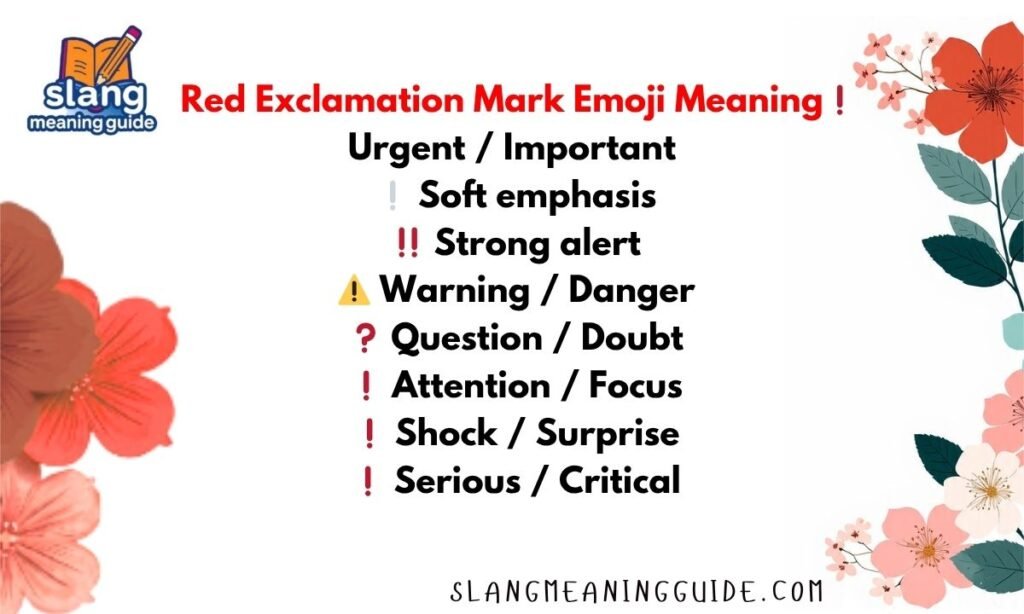
It looks small but demands attention instantly.
It appears in urgent messages, warnings, and reactions.
But its meaning goes deeper than just emphasis.
What Is the Red Exclamation Mark Emoji?
The red exclamation mark emoji is a bold symbol used to show urgency or strong emotion. It highlights importance, draws attention, and adds intensity to digital messages.
Core Meaning of the Exclamation Mark Emoji
Urgency: This emoji signals something important that needs immediate attention. People use it to emphasize warnings or critical updates in conversations.
Strong emotion: It expresses excitement, shock, or concern. The tone depends on context, making it flexible in both casual and serious messages.
Origin and Unicode History
The red exclamation mark emoji has a structured origin in digital encoding systems. It evolved from a simple punctuation mark into a visual communication tool.
Unicode and Emoji Standardization
Unicode 5.2 approval: The symbol was officially approved in 2009 under the name “Heavy Exclamation Mark Symbol.” This allowed it to be recognized across systems.
Emoji 1.0 inclusion: In 2015, it became part of the emoji set. This step expanded its use in messaging apps and social platforms worldwide.
Visual Design and Variations
The appearance of the red exclamation mark emoji may differ slightly across platforms. Despite design changes, its meaning remains consistent.
Platform Differences
Color intensity: Some platforms use bright red tones, while others use darker shades. The visual weight still conveys urgency and importance.
Shape and style: Minor differences exist in thickness and outline. These changes do not affect interpretation but influence visual appeal.
Common Uses of the Red Exclamation Mark Emoji
This emoji appears in many types of communication. Its meaning shifts based on tone, audience, and context.
Everyday Communication
Warnings: People use it to signal caution or alert others. It works well in messages that require attention or quick action.
Emphasis: It strengthens statements and adds urgency. Writers use it to highlight key points in a message.
Social Media Usage
Engagement trigger: The emoji grabs attention in captions and headlines. It encourages users to stop scrolling and read.
Emotional reaction: It reflects surprise, excitement, or alarm. This makes it useful in storytelling and reactions.
Psychological Impact of the Emoji
The red exclamation mark influences how people perceive messages. Its color and shape trigger quick emotional responses.
Why It Feels Urgent
Color psychology: Red signals danger, urgency, or importance. This makes the emoji naturally attention-grabbing.
Visual simplicity: The symbol is easy to recognize instantly. Users process it faster than text, improving communication speed.
When to Use the Red Exclamation Mark Emoji
Using this emoji correctly improves clarity and engagement. Overuse can reduce its impact and create confusion.
Best Use Cases
Important updates: Use it when sharing critical information. It helps readers identify priority messages quickly.
Calls to action: It strengthens prompts like announcements or reminders. This increases response rates.
When to Avoid It
Professional overload: Excessive use may seem aggressive or unprofessional. Use it sparingly in formal communication.
Misleading tone: Using it without real urgency can confuse readers. It may weaken trust over time.
Comparison with Similar Emojis
Other emojis also express emphasis or urgency. Understanding differences helps you choose the right one.
| Emoji | Name | Meaning |
|---|---|---|
| ❗ | Red Exclamation Mark | Urgency, warning |
| ❕ | White Exclamation Mark | Soft emphasis |
| ‼️ | Double Exclamation Mark | Strong urgency |
| ⚠️ | Warning Sign | Caution, danger |
| ❓ | Question Mark | Inquiry, confusion |
Choosing the Right Emoji
Tone control: Select based on message intensity. A single mark suits mild urgency, while double marks signal stronger emotion.
Context clarity: Match the emoji with your message purpose. This avoids confusion and improves readability.
Cultural Interpretation of the Emoji
The red exclamation mark emoji works across languages, but culture shapes how strongly people react to it.
It carries a shared core meaning, yet tone and intensity shift based on local communication habits.
Global Understanding
Universal recognition: The exclamation mark has long existed in written language, so its emoji version feels familiar worldwide. People instantly associate it with urgency, alerts, or emphasis.
Cross-platform consistency: Whether on mobile or desktop, the symbol looks similar enough to retain meaning. This consistency supports global communication without confusion.
Digital standardization: Because emoji sets follow global standards, users from different regions interpret it similarly. This makes it reliable in international messaging.
Visual priority: The bold red color amplifies its universal meaning. Even without text, users understand that something important is being highlighted.
Context Variation
Tone sensitivity: In some cultures, direct emphasis feels normal, while others prefer softer communication. The emoji may appear too strong in reserved communication styles.
Professional norms: In formal cultures, excessive emphasis may seem unprofessional. In casual environments, it may feel engaging and expressive.
Emotional interpretation: Some audiences read it as urgency, while others see excitement or alarm. Context decides whether it feels positive or negative.
Generational differences: Younger users often use emojis more freely. Older audiences may interpret them more literally or with caution.
Role in Digital Marketing and SEO
The red exclamation mark emoji has become a tactical element in digital content strategy.
It helps content stand out in crowded spaces and improves user interaction signals.
SEO and Engagement Benefits
Visual interruption: Emojis break text patterns in search results. This helps titles stand out and increases the chance of clicks.
CTR improvement: A well-placed emoji can boost click-through rates by signaling urgency or value. Users feel prompted to act quickly.
Snippet enhancement: Search engines sometimes display emojis in meta descriptions. This adds visual appeal and improves readability.
Mobile optimization: On small screens, visual elements matter more. Emojis help content remain noticeable and scannable.
Social amplification: Posts with emojis often receive more engagement. Likes, shares, and comments increase due to visual attraction.
Content Highlighting
Key message focus: The emoji directs attention to important points. Readers quickly identify what matters most in the content.
Scanning behavior: Modern users skim content. Emojis act as markers that guide the eye through sections.
Call-to-action boost: Adding the emoji near action phrases increases response rates. It creates a sense of urgency.
Emotional reinforcement: It strengthens the tone of the message. Readers feel the intended urgency or excitement more clearly.
Overuse and Misinterpretation
While powerful, the emoji loses value when used excessively.
Misuse can distort meaning and weaken communication clarity.
Risks of Overuse
Desensitization: Repeated exposure reduces impact. Users start ignoring the emoji if it appears too often.
Visual clutter: Too many emojis make content look messy. This reduces readability and professionalism.
Reduced credibility: Overuse may make content seem exaggerated. Readers may question the seriousness of the message.
Algorithm impact: Excessive symbols in metadata may appear spammy. This can negatively affect search performance.
Tone Confusion
Mixed signals: Using the emoji in non-urgent contexts creates confusion. Readers may misinterpret the message intent.
Aggressive perception: Multiple exclamation symbols can feel forceful. This may push users away instead of engaging them.
Context mismatch: A serious message paired with excessive emphasis may seem inconsistent. This reduces trust.
Audience disconnect: Different users interpret tone differently. Misalignment can lead to misunderstanding.
Best Practices for Effective Use
A focused approach ensures the emoji enhances rather than distracts.
Use it as a support tool, not the main message carrier.
Practical Tips
Use with purpose: Add the emoji only where urgency or emphasis is genuine. This preserves its strength and meaning.
Limit frequency: One well-placed emoji works better than many. It keeps the message clean and impactful.
Align with tone: Match the emoji with the message intent. Avoid using it in neutral or low-priority communication.
Test performance: In marketing, experiment with and without emojis. Measure which version performs better.
Combine with clarity: Always pair the emoji with clear text. This ensures the message remains understandable.
Audience awareness: Consider who you are addressing. Adapt usage based on their expectations and communication style.
Frequently Asked Questions
What does the red exclamation mark emoji mean?
It signals urgency, warning, or strong emphasis.
When should I use this emoji?
Use it for important or attention-grabbing messages.
Is it appropriate for professional use?
Yes, but only in moderation.
Does it have the same meaning everywhere?
Mostly yes, but tone may vary slightly.
Can overusing it reduce impact?
Yes, it can make messages feel less meaningful.
Conclusion
The red exclamation mark emoji is simple but powerful. It captures attention and adds urgency to communication. Use it wisely to make your message clear and effective.