
The phrase snow bunny sounds light, playful, and harmless. But beneath its cheerful tone, it carries layered meanings shaped by culture, history, and social context. Over time, it has evolved from a simple winter sports nickname into a term with multiple interpretations.
Understanding what snow bunny truly means helps you use it thoughtfully, avoid misunderstandings, and appreciate its broader cultural impact. Let’s explore its origins, meanings, and modern relevance in a clear and balanced way.
What Does “Snow Bunny” Mean?
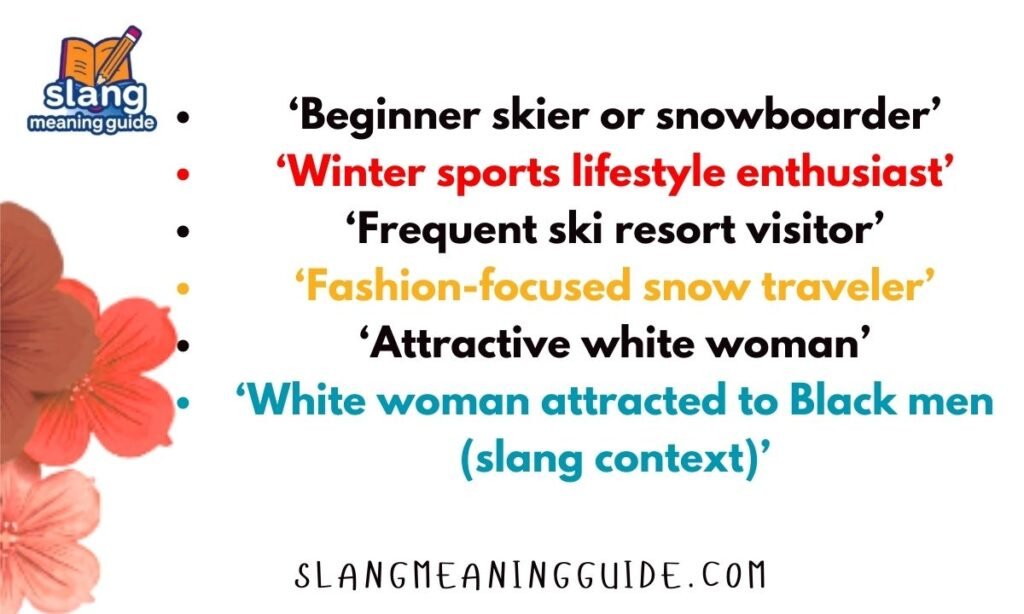
The term snow bunny traditionally refers to a beginner skier or snowboarder, especially a young woman who enjoys spending time at ski resorts, even if she lacks advanced skills. In this original sense, the phrase is lighthearted and often affectionate, describing someone who embraces winter culture for fun, fashion, and social experiences rather than athletic performance.
In more recent decades, snow bunny has taken on additional slang meanings. It has been used to describe an attractive white woman, a sexually promiscuous white woman, or a white woman who is romantically or sexually attracted to Black men. Within certain cultural contexts, especially African-American Vernacular English (AAVE), the term can carry racial, sexual, and social undertones.
“The meaning of ‘snow bunny’ depends heavily on context, tone, and cultural setting.”
Because of these layered meanings, the term should be used with caution. In some situations, it may be perceived as demeaning, objectifying, or fetishizing, particularly when applied to people without sensitivity or consent. Understanding the social implications behind the phrase helps prevent misunderstandings and promotes respectful communication.
The Historical Origins of the Term
The term snow bunny emerged in the mid-20th century alongside the growing popularity of skiing in North America. As ski resorts became social hotspots, new slang naturally developed to describe different types of visitors.
Where It All Began
In early usage, snow bunny was a playful term used to describe beginners on the slopes, particularly women who were new to skiing. These individuals often spent as much time socializing, enjoying hot drinks, and relaxing at lodges as they did skiing.
The word bunny was commonly used in American slang to describe someone youthful, lively, or charming. Pairing it with snow connected the term directly to winter sports and resort culture.
Early Cultural Meaning
- Associated with ski resorts and mountain tourism
- Focused on fun, fashion, and social interaction
- Not meant as an insult in its original context
- Often lighthearted and affectionate
This original meaning remains common today, especially in outdoor recreation communities.
How the Meaning Has Evolved Over Time
Language evolves alongside culture, and snow bunny is no exception. As social dynamics changed, the term expanded into broader slang usage, sometimes taking on more complex or sensitive meanings.
Modern Interpretations
Today, the phrase can mean:
- Someone who enjoys winter fashion and lifestyle
- A regular visitor to ski resorts for social reasons
- In some cultural contexts, a term referring to a white woman attracted to Black men
- A label sometimes used in pop culture, dating slang, and social media
This shift introduced cultural and racial dimensions that can be sensitive or controversial.
“Words evolve, but awareness determines whether they build understanding or reinforce stereotypes.”
Cultural Context and Sensitivity
One of the most important aspects of understanding snow bunny today is recognizing how context shapes meaning. In some circles, especially within African-American Vernacular English (AAVE), the term has been used to describe interracial dating dynamics. In these contexts, it may carry undertones of fetishization or stereotyping.
Why Context Matters
- It can be interpreted as harmless slang or as demeaning, depending on tone
- Some people find the term playful; others see it as objectifying
- Cultural sensitivity is essential when using socially loaded terms
Guidelines for respectful usage:
- Avoid using it to label people without consent
- Be mindful of racial and gender implications
- Understand that humor does not always translate across cultural lines
Respectful language builds trust and prevents unnecessary offense.
Snow Bunny in Winter Sports Culture
Despite newer meanings, the original sports-related definition remains widely used. In ski and snowboard communities, snow bunny often describes someone who enjoys the overall winter atmosphere rather than focusing purely on performance.
Lifestyle and Experience
A classic snow bunny lifestyle includes:
- Skiing or snowboarding at beginner or casual levels
- Enjoying après-ski culture like hot cocoa, warm lodges, and social gatherings
- Wearing fashionable winter outfits
- Taking part in scenic mountain experiences
Common traits:
- Social and outgoing
- Style-conscious
- Enthusiastic about winter settings
- Less competitive, more experience-focused
This version of the term is generally positive and lighthearted.
Snow Bunny as a Lifestyle Concept
In recent years, social media has helped turn snow bunny into a full lifestyle identity centered on winter fashion, travel, and aesthetics.
Core Elements of the Snow Bunny Lifestyle
- Fashion: Stylish winter outfits, boots, scarves, jackets
- Travel: Ski resorts, mountain retreats, snowy destinations
- Activities: Snow walks, skiing, cozy lodge evenings
- Mindset: Joyful, adventurous, relaxed
This modern lifestyle meaning focuses on celebrating winter, rather than labeling skill levels.
“Being a snow bunny today often means embracing the magic of winter, not just mastering the slopes.”
Fashion and Style Identity
Winter fashion plays a major role in how the snow bunny identity is expressed. The look combines warmth, comfort, and visual appeal.
Signature Style Features
- Insulated jackets with sleek design
- Faux fur accents and layered textures
- Waterproof boots with strong grip
- Knitted hats, gloves, and oversized scarves
The focus is on function meets fashion, balancing safety, comfort, and style.
Social Media and Pop Culture Influence
Platforms like Instagram, TikTok, and Pinterest have popularized the snow bunny aesthetic. Influencers showcase winter outfits, resort trips, and scenic snow adventures, turning the term into a digital identity.
Online Trends
- Snow-themed photo shoots
- Ski lodge lifestyle reels
- Cozy winter content
- Mountain vacation vlogs
This exposure has expanded the meaning beyond physical skiing into a broader seasonal persona.
Common Misconceptions About Snow Bunny
Because the term has multiple meanings, misunderstandings are common.
Frequent Myths
- It only means a beginner skier
- It is always derogatory
- It is only used for women
- It has a single fixed meaning
In reality, snow bunny is highly context-dependent. Tone, audience, and setting shape how it is perceived.
Language, Identity, and Responsibility
Words influence perception. Using culturally loaded terms without awareness can unintentionally reinforce stereotypes or cause discomfort.
Responsible Usage Principles
- Understand the context before using slang
- Avoid labeling individuals based on race or gender
- Respect personal identity and preferences
- Use inclusive language whenever possible
“Respectful communication begins with thoughtful word choice.”
Snow Bunny vs Similar Terms
Understanding how snow bunny differs from similar expressions clarifies its usage.
Related Terms
- Ski bunny: Focused purely on ski resort culture
- Powder hound: A dedicated, skilled skier
- Après-ski enthusiast: Someone who enjoys post-ski social life
- Winter lover: General appreciation for snow and cold weather
Each term reflects different aspects of winter lifestyle.
Why the Term Remains Popular
Despite controversy, snow bunny persists because:
- It sounds playful and light
- It connects to leisure and enjoyment
- It reflects aspirational winter lifestyles
- It is visually evocative
The imagery of snow, warmth, fashion, and adventure keeps it appealing.
The Psychological Appeal of the Snow Bunny Identity
The snow bunny concept taps into deeper emotional desires:
- Escape from routine
- Connection with nature
- Cozy comfort
- Seasonal excitement
Winter environments create a sense of calm, novelty, and romance that many find emotionally refreshing.
Snow Bunny in Travel and Tourism
The tourism industry frequently uses snow bunny imagery to promote ski resorts and winter vacations.
Marketing Elements
- Cozy lodges
- Snow-covered landscapes
- Stylish winter outfits
- Social experiences
This branding emphasizes relaxation and enjoyment, not athletic performance.
Ethical Considerations in Modern Usage
Because of its layered meanings, ethical communication is essential.
Best Practices
- Avoid objectifying language
- Use neutral descriptors when possible
- Focus on activities, not personal attributes
- Respect cultural sensitivities
Ethical usage helps maintain respectful dialogue.
How Language Shapes Social Perception
Slang terms like snow bunny demonstrate how words influence identity formation, group belonging, and cultural narratives.
Language can:
- Reinforce stereotypes
- Promote inclusivity
- Create social bonds
- Shape public attitudes
Being conscious of word choice encourages thoughtful communication.
Frequently Asked Questions
What is the original meaning of snow bunny?
It originally referred to a beginner skier or snowboarder who enjoyed winter sports culture.
Is snow bunny a negative term?
It can be neutral or negative depending on cultural context, tone, and usage.
Is the term only used for women?
Traditionally yes, but modern usage sometimes applies it more broadly.
Can snow bunny be offensive?
In some contexts, yes, especially when linked to racial or sexual stereotypes.
Is snow bunny still used today?
Yes, especially in winter sports culture and social media lifestyle trends.
Final Thoughts
The meaning of snow bunny has expanded far beyond its origins on ski slopes. What began as a playful nickname for winter sports beginners now carries cultural, social, and linguistic complexity. Understanding its history, evolution, and sensitivities allows us to use the term thoughtfully. Language reflects society, and when used carefully, it can connect people rather than divide them. By staying aware, we keep communication respectful, meaningful, and inclusive.