
Ever seen someone drop “sus” in a message and wondered what just happened? This tiny word carries big meaning, shifting tone, emotion, and intent in just three letters. Let’s unpack how “sus” works, where it comes from, and how to use it the right way.
What Does “SUS” Mean in Texting?
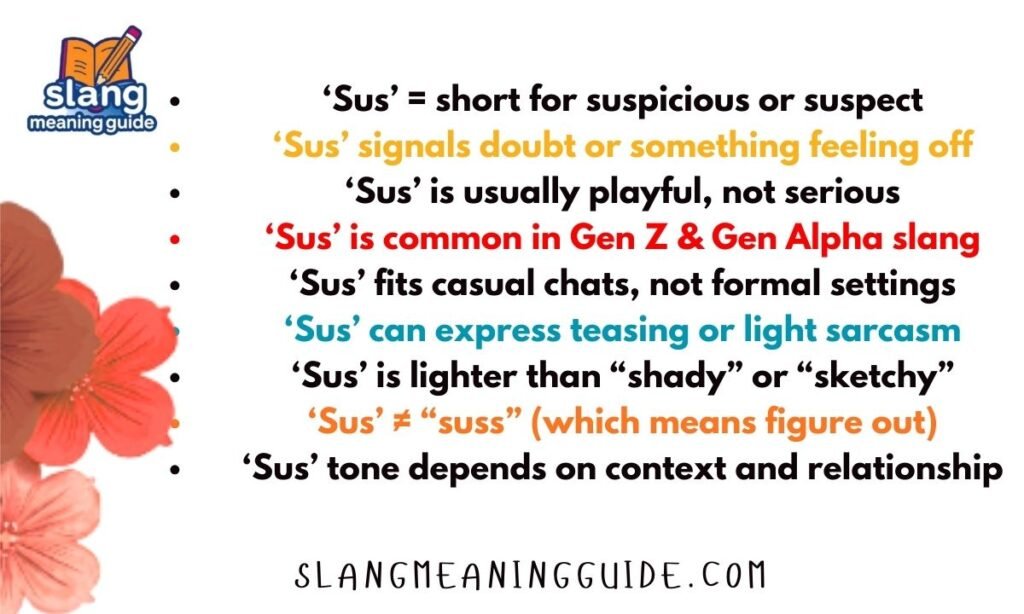
“SUS” is short for suspicious or suspect. In texting, it’s used to describe someone, something, or a situation that feels questionable, odd, or untrustworthy. Gen Z and Gen Alpha use it constantly in casual digital conversations to express doubt or playful accusation.
In most cases, “sus” signals mild skepticism rather than serious suspicion. It often carries humor, sarcasm, or teasing energy rather than real concern. The tone depends on context, delivery, and relationship.
Common texting uses include:
- Someone acting strange or secretive
- A story that doesn’t quite add up
- A joke accusation among friends
- Reacting to odd behavior online
Examples:
- That excuse sounds kinda sus.
- You logged off real fast… sus.
- This deal looks way too good. Super sus.
How “SUS” Is Used on Social Media
On social media, “sus” exploded in popularity due to gaming culture, memes, and TikTok trends. It is now a core part of internet language, especially among teens and young adults. The term often appears in captions, comments, reaction videos, and memes.
On platforms like TikTok, Instagram, Snapchat, and Discord, “sus” is used for humor, irony, and exaggeration. It rarely carries serious accusations and instead functions as a playful way to call out odd or awkward behavior.
Typical social media usage:
- Commenting on weird or dramatic posts
- Reacting to sketchy behavior in videos
- Meme captions involving exaggeration
- Friendly teasing in comments
Examples:
- This outfit choice is kinda sus.
- That explanation feels sus, not gonna lie.
- Bro really said that? Sus behavior.
How “SUS” Works in Personal Chats
In personal messaging, “sus” is usually lighthearted and informal. Friends use it to joke, tease, or express playful doubt. It adds tone without sounding harsh, which makes it popular in casual conversation.
Because tone is harder to convey in text, “sus” helps clarify emotional intent. It often signals curiosity, skepticism, or teasing rather than criticism.
Common chat scenarios:
- Teasing friends about strange behavior
- Reacting to vague explanations
- Questioning unexpected changes
- Light accusations in jokes
Examples:
- You’re being real quiet today, kinda sus.
- That late-night errand sounds sus.
- Why you deleting messages? Sus.
Formal vs Informal Use of “SUS”
“SUS” is strictly informal. It belongs in casual conversations, social media, gaming chats, and friendly messaging. It should never be used in professional, academic, or formal settings.
Using “sus” in work emails, business conversations, or academic writing can appear unprofessional and unclear. In formal contexts, it is better to use full descriptive language instead.
Use “sus” in:
- Text messages with friends
- Group chats
- Gaming chats
- Social media comments
Avoid using “sus” in:
- Work emails
- School assignments
- Business presentations
- Formal conversations
Formal alternatives:
- Questionable
- Suspicious
- Concerning
- Unclear
- Doubtful
Common Misunderstandings About “SUS”
Many people assume “sus” always means someone is guilty or dangerous. In reality, it is usually playful and exaggerated. The tone is often joking unless clearly stated otherwise.
Another misunderstanding is confusing “sus” with “suss.” While “sus” means suspicious, “suss” is a verb meaning to figure something out, mainly used in British English.
Frequent misconceptions:
- Thinking “sus” implies serious wrongdoing
- Confusing “sus” with criminal accusations
- Mixing up “sus” and “suss”
- Assuming it’s always negative
Clarifying examples:
- That move was sus doesn’t mean illegal.
- I sussed it out means I figured it out.
- You’re acting sus can be playful teasing.
Practical Tips for Using “SUS” Naturally
Using “sus” correctly means understanding tone, context, and audience. When used with friends, it adds humor and personality. When misused, it can sound awkward or forced.
To sound natural, keep usage casual and sparing. Overusing slang can make messages feel artificial or cringeworthy.
Helpful tips:
- Use it playfully, not aggressively
- Match tone to the conversation
- Avoid using it in serious topics
- Keep it casual and natural
Examples of smooth use:
- That timing feels kinda sus.
- You sure about that? Sounds sus.
- This situation is getting sus.
Emotional Context Behind “SUS”
“SUS” often conveys emotional undertones like curiosity, mild doubt, amusement, or playful accusation. It allows people to question something without sounding confrontational.
Because tone matters, “sus” can express skepticism in a non-threatening way. It softens the message and keeps conversations light.
Common emotional tones:
- Playful suspicion
- Light teasing
- Curious doubt
- Friendly sarcasm
Examples:
- That laugh was suspiciously loud. Sus.
- You’re smiling way too much. Sus vibes.
- This story feels off. Low-key sus.
Comparing “SUS” With Similar Slang Terms
“SUS” fits into a broader family of slang words that express doubt or uncertainty. Each carries its own nuance.
| Slang Term | Meaning | Tone | Example |
| Sus | Suspicious | Playful | That excuse is sus |
| Sketchy | Untrustworthy | Serious | That place feels sketchy |
| Shady | Deceptive | Negative | That deal sounds shady |
| Weird | Strange | Neutral | That was weird |
| Cringe | Embarrassing | Judgmental | That post was cringe |
Key differences:
- “Sus” is lighter than “shady”
- “Sketchy” implies more serious risk
- “Cringe” focuses on embarrassment
- “Weird” is emotionally neutral
Practical Examples of “SUS” in Everyday Conversations
Here’s how “sus” shows up in real-world digital interactions across different contexts.
| Scenario | Example Message |
| Friend late reply | You vanished for 3 hours… sus |
| Strange excuse | That reason sounds kinda sus |
| Online shopping | This deal feels super sus |
| Group chat | Why everyone quiet? Sus |
| Gaming | That move was sus, bro |
Natural phrasing patterns:
- Kinda sus
- Low-key sus
- Super sus
- Pretty sus
- Acting sus
When You Should Avoid Using “SUS”
Even though “sus” is popular, there are times when using it can cause confusion or appear disrespectful. In serious discussions, emotional conversations, or professional settings, avoid slang.
Using “sus” in sensitive topics can minimize concerns or sound dismissive. Context always matters.
Avoid using “sus” when:
- Discussing serious issues
- Talking about safety concerns
- In professional communication
- Addressing sensitive emotions
Better alternatives:
- I’m concerned about this
- That seems unclear
- I have doubts
- This feels questionable
Frequently Asked Questions
Is “sus” always negative?
No, it’s often playful and joking, depending on context.
Where did “sus” come from?
It became popular through the game Among Us and social media.
Can adults use “sus”?
Yes, but mainly in casual conversations.
Is “sus” professional?
No, it’s informal slang and not suited for work or academic settings.
What does “sussy baka” mean?
It’s a meme phrase meaning “suspicious fool,” used humorously.
Final Takeaway
“SUS” is a fast, flexible slang term that adds tone, emotion, and humor to digital communication. When used thoughtfully, it keeps conversations light, expressive, and culturally current.