
Language changes fast. New slang appears, old words get recycled, and ordinary names suddenly take on hidden meanings. Some of these terms spread widely, while others stay limited to niche groups, online communities, or inside jokes. “Susan” falls into this second category.
Its slang meaning is not universal, not standardized, and often misunderstood. Yet, in certain contexts, it carries a clear message, emotional tone, and social function.
Understanding how “Susan” works as slang requires more than a simple definition. It involves cultural patterns, internet meme traditions, social psychology, and the way language gets repurposed for humor, pressure, and identity signaling.
This article provides a comprehensive analysis of “Susan” as slang, exploring its origins, meanings, tone, usage, examples, limitations, and evolution. It also explains how it compares with similar slang terms and when its use can become inappropriate.
Susan as Slang: Meaning and Core Definition
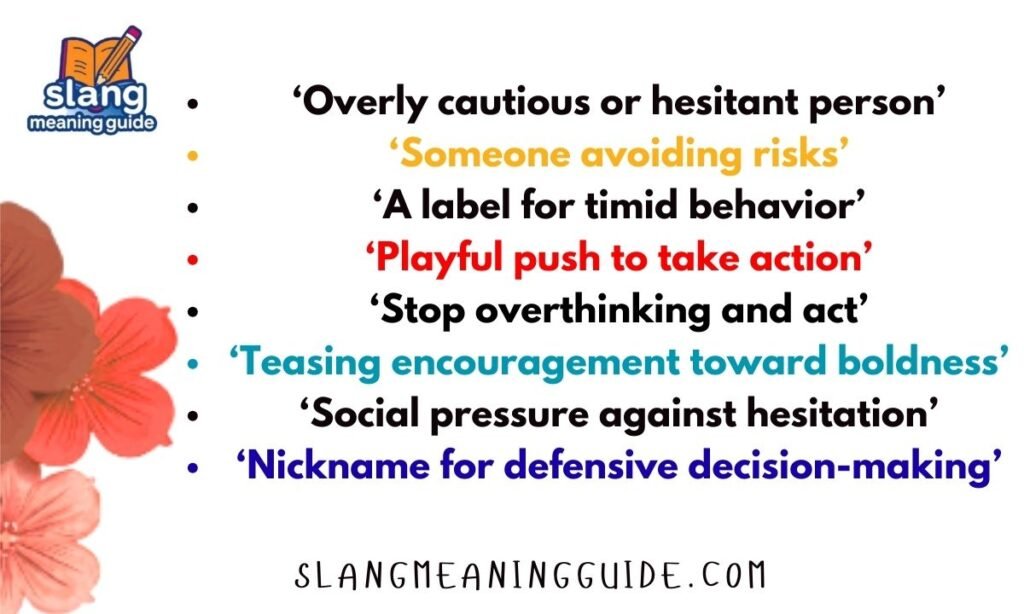
In slang usage, “Susan” generally refers to a person who is overly cautious, timid, risk-averse, anxious, or reluctant to act. The phrase “Don’t be a Susan” is used to push someone to stop hesitating and take action.
At its core, the slang meaning of “Susan” centers on behavioral restraint. It describes someone who avoids risk, resists spontaneity, or blocks action due to fear, uncertainty, or excessive caution.
Core Meaning Summary
- Someone overly careful or hesitant
- A person who avoids risks or bold action
- A behavior marked by fear, anxiety, or reluctance
- A social label used to push for bolder decisions
This meaning is not formal or standardized. It is shaped heavily by context, social group norms, and tone of delivery.
How “Don’t Be a Susan” Is Commonly Used
“Don’t be a Susan” is a social nudge. It is rarely meant as a serious insult. More often, it is playful pressure designed to encourage someone to step outside their comfort zone.
The phrase typically appears when:
- Someone is holding back group momentum
- A person refuses to try something new
- A teammate plays too defensively
- A friend hesitates over a spontaneous decision
It acts as shorthand for: stop overthinking, stop being scared, take the chance, move forward.
Functional Purpose of the Phrase
- Encourages risk-taking
- Pushes action over hesitation
- Signals impatience with excessive caution
- Reinforces group norms of boldness
Social and Cultural Origins of Susan as Slang
The slang use of “Susan” likely evolved from internet meme culture, where ordinary names become symbolic labels for behavioral stereotypes. This linguistic pattern has produced widely known slang terms like “Karen,” “Chad,” and “Kyle.”
Naming as Stereotype in Internet Culture
The internet often repurposes common first names to represent personality types. These names become shorthand symbols for recognizable social behaviors.
| Name | Common Slang Meaning |
| Karen | Entitled, demanding, argumentative |
| Chad | Confident, dominant, socially successful |
| Kyle | Aggressive, impulsive, reckless |
| Susan | Timid, cautious, hesitant |
“Susan” fits into this tradition. It does not originate from one single viral moment but appears to have emerged gradually through meme usage, gaming culture, and informal speech.
The Behavioral Traits Associated with “Susan”
In slang usage, “Susan” does not describe identity. It describes behavior. This is important. The term is typically applied to actions, not to a person’s character as a whole.
Common Traits Associated with the Label
- Risk avoidance
- Overthinking
- Fear of embarrassment
- Excessive caution
- Defensive decision-making
These traits are often framed negatively in fast-paced, competitive, or creative environments.
Susan vs. Sus: Understanding the Common Confusion
One major reason “Susan” creates confusion is its similarity to the slang term “sus,” which means suspicious or questionable.
Differences Between Susan and Sus
| Term | Meaning | Origin | Usage |
| Susan | Timid, hesitant, overly cautious | Meme-based naming culture | Behavioral teasing |
| Sus | Suspicious, shady, untrustworthy | Short for suspicious | Gaming and online slang |
“Sus” gained massive popularity through games like Among Us. Because of phonetic similarity, people often mishear or misinterpret “Susan” as “sus.” This confusion contributes to inconsistent understanding of “Susan” as slang.
Typical Contexts Where “Susan” Appears
The phrase shows up most often in informal, fast-paced, and peer-driven environments.
Social Settings
Friends teasing one another to encourage spontaneity.
Example: “Stop being a Susan and come with us. You’ll have fun.”
Workplace and Creative Teams
Used during brainstorming or decision-making sessions to encourage bold thinking.
Example: “Don’t be a Susan. Say the idea. We can refine it later.”
Gaming Culture
Used to criticize overly defensive or passive gameplay.
Example: “Quit being a Susan and push mid.”
Startup and Innovation Culture
Used to promote risk-taking and experimentation.
Example: “Don’t be a Susan. Ship the prototype and test it.”
Emotional Tone and Social Impact of the Phrase
Tone determines meaning. “Don’t be a Susan” can feel playful, encouraging, or dismissive depending on delivery, relationship, and context.
When It Feels Playful
- Among close friends
- In lighthearted teasing
- During shared risk-taking
When It Feels Negative
- In professional hierarchies
- Toward people with real anxiety
- In sensitive emotional contexts
Tone matters more than the words themselves.
Psychological Subtext of the Term
At a deeper level, “Susan” as slang reflects society’s tension between caution and risk.
Modern culture often celebrates:
- Confidence
- Boldness
- Speed
- Experimentation
Caution, reflection, and restraint can be seen as obstacles rather than strengths. Calling someone a “Susan” reinforces this bias toward action over deliberation.
What the Term Socially Encourages
- Risk-taking
- Group conformity
- Rapid decision-making
- Emotional suppression
What It May Discourage
- Thoughtful caution
- Emotional vulnerability
- Safety concerns
- Mental health awareness
When Using “Susan” Can Become Problematic
While often harmless, the phrase can cross lines when used insensitively.
Situations Where It Can Be Harmful
- Pressuring someone with anxiety
- Dismissing legitimate safety concerns
- Undermining emotional boundaries
- Encouraging reckless behavior
Example of Harmful Use: “Don’t be a Susan. Just get on the motorcycle.”
If the person fears serious injury, this becomes dismissive.
Safer Alternatives to Saying “Don’t Be a Susan”
There are many ways to encourage action without minimizing concerns.
More Supportive Alternatives
- “Let’s try a small step.”
- “What would help you feel more comfortable?”
- “We can test it safely first.”
- “I get the hesitation. Want to talk it through?”
These approaches balance encouragement with respect.
Comparison With Other Name-Based Slang Terms
“Susan” belongs to a broader category of name-based slang.
| Name | Stereotype | Tone |
| Karen | Entitled, aggressive | Critical |
| Chad | Dominant, confident | Neutral to admiring |
| Kyle | Aggressive, reckless | Mocking |
| Susan | Timid, hesitant | Mild teasing |
Compared to “Karen,” which carries heavy negativity, “Susan” tends to be lighter and more situational.
Regional and Cultural Variability in Meaning
Unlike established slang, “Susan” does not have universal recognition. Its meaning varies by:
- Region
- Age group
- Online community
- Social circles
In some areas, it may have no slang meaning at all. In others, it may carry entirely different connotations, including positive traits like kindness and loyalty.
Alternative Definitions Found Online
Some informal sources define “Susan” as:
- Generous
- Intelligent
- Caring
- Loyal
These meanings are unrelated to the caution-based slang meaning and usually come from name-based personality descriptions rather than behavioral slang. This highlights the fragmented nature of the term.
Linguistic Evolution of Susan as Slang
“Susan” demonstrates how modern slang evolves:
- A common name becomes associated with a stereotype.
- Meme culture reinforces the association.
- Usage spreads through gaming and online communities.
- Meaning becomes context-driven rather than universal.
Unlike traditional slang, which often emerges from subcultures or music scenes, name-based slang emerges from social humor and digital shorthand.
Why Susan Did Not Become Mainstream Slang
Several reasons explain why “Susan” remains niche:
- Lack of viral origin moment
- Absence of a major media trigger
- Competition from stronger slang terms like “sus” and “Karen”
- Ambiguity and inconsistency of meaning
Without mass adoption, the term remains localized.
Practical Guide: When to Use and When to Avoid
Appropriate Use
- Casual settings
- Among close friends
- Playful teasing
- Low-risk decisions
Inappropriate Use
- Professional authority settings
- Sensitive emotional situations
- Mental health contexts
- Safety-related decisions
Real-World Usage Examples
Social Example: “Stop being a Susan and try the new restaurant.”
Work Example: “Don’t be a Susan. Let’s pitch the idea.”
Gaming Example: “You’re playing too safe. Don’t be a Susan.”
Final Words
“Susan” as slang is a context-driven label that describes overly cautious or hesitant behavior. It is typically used in a teasing or encouraging way to push someone toward action, boldness, or spontaneity.
It does not carry a fixed dictionary definition. Instead, it reflects modern internet culture, where names become behavioral shorthand. While often lighthearted, its impact depends heavily on tone, relationship, and emotional context.
Used carefully, it can motivate. Used carelessly, it can dismiss legitimate concerns. Understanding that balance is key to using the term responsibly.