
Short messages move fast online. Sometimes they move so fast that meaning gets lost, reactions get misunderstood, and a single line can raise more questions than answers.
That moment of confusion is where WDYM usually appears. You have likely seen it in a text, a comment, or a group chat and paused for a second before replying.
WDYM is one of those internet abbreviations that feels simple, yet carries different tones depending on how, where, and why it is used. This guide breaks it all down clearly so you never have to guess again.
WDYM Meaning in Texting
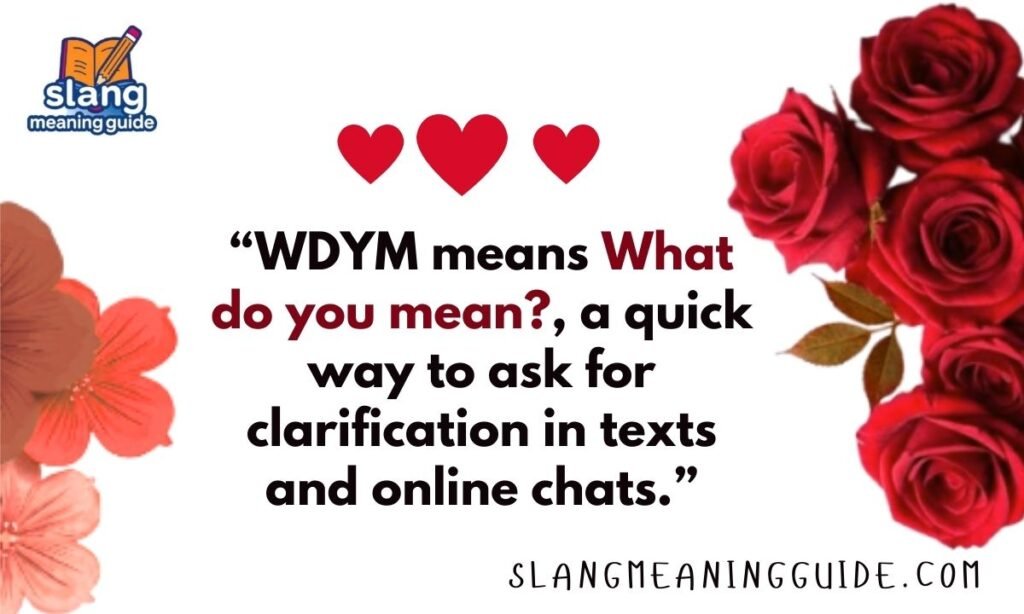
WDYM means “What do you mean?” in texting.
It is used when someone wants clarification, feels confused, or needs more details about a previous message. Instead of typing a full sentence, people shorten it to WDYM to keep conversations quick and casual. WDYM often appears when a message is vague, surprising, or unexpected.
Texting examples:
- “We need to talk later.”
“WDYM?” - “I can’t come tonight.”
“WDYM? Everything okay?” - “That wasn’t the plan.”
“wdym?”
In texting culture, WDYM is neutral by default. The tone comes from context, punctuation, and emojis.
WDYM Meaning on Social Media
On social media, WDYM still means “What do you mean?”, but it often carries stronger emotional tone. People use it in comments and replies to:
- Question unclear posts
- React to shocking statements
- Express disbelief or sarcasm
Examples:
- “WDYM this is your first time seeing snow?”
- “wdym that’s normal behavior?”
On platforms like TikTok, Instagram, and X, WDYM sometimes acts more like a reaction than a genuine question.
WDYM Meaning in Personal Chats
In one-on-one or group chats, WDYM asks for explanation, but tone depends heavily on the relationship.
With close friends, it feels casual and natural. With someone sensitive, it may feel sharp or impatient.
Examples:
- Friend chat: “WDYM you forgot again?”
- Family chat: “WDYM by that message?”
- Flirty chat: “wdym 😳 explain”
Personal chats rely on shared context, which makes WDYM work smoothly.
WDYM Meaning in Formal vs Informal Usage
WDYM is a common internet abbreviation that stands for “What do you mean?” Its meaning stays consistent, but how it feels changes dramatically depending on where and how it is used. Understanding the difference between informal and formal usage helps you avoid sounding rude, confused, or unintentionally confrontational.
Informal Usage
Meaning: Asking for clarification in a casual way
Tone: Neutral, curious, playful, or emotional depending on context
WDYM works best in relaxed environments where shorthand language is expected. These include:
- Texting with friends
- Social media replies
- Group chats
- Gaming chats
- Casual Discord servers
In these spaces, WDYM feels natural and efficient. People expect quick responses and don’t read into tone as much.
Example:
- “I’ll explain later.”
- “WDYM later?”
Here, WDYM simply signals curiosity or mild confusion, not frustration.
Formal Usage
Meaning: Still “What do you mean?” but perceived as abrupt
Tone: Can feel rushed, blunt, or unprofessional
WDYM is generally avoided in formal or professional environments such as:
- Emails
- Workplace communication
- Academic settings
- Client or customer interactions
In these contexts, abbreviations can come across as careless or impatient, especially if there is no existing casual team culture.
Formal Alternatives:
- “Could you clarify?”
- “What do you mean by that?”
- “Can you explain further?”
- “I’m not sure I understand. Could you expand?”
Using WDYM at work can feel abrupt unless you already have a relaxed relationship with colleagues and frequently use casual language internally.
Why People Use WDYM
Meaning: A fast way to ask for clarity or express confusion
WDYM exists because digital conversations lack tone, facial expression, and immediate feedback. In face-to-face conversations, confusion can be shown through body language or tone. Online, people rely on short phrases to fill that gap.
People use WDYM to:
- Ask for clarification quickly
- Signal confusion without writing a long sentence
- Push back gently without starting an argument
- Keep conversations moving
- React emotionally in real time
It saves time and allows conversations to flow naturally, especially in fast-paced chats where long explanations feel unnecessary.
Common Meanings of WDYM Explained
WDYM almost always means the same phrase, but the intention behind it changes based on tone, timing, and context.
Genuine Confusion
Meaning: The sender truly does not understand
This is the most common and neutral use.
Example:
- “The meeting got moved.”
- “WDYM the meeting moved?”
Here, the sender simply wants clarification.
Surprise or Disbelief
Meaning: Emotional reaction to unexpected information
This version often appears after shocking news.
Example:
- “I quit my job today.”
- “WDYM you quit already?”
The confusion is mixed with surprise, not criticism.
Sarcasm or Challenge
Meaning: Questioning logic or fairness
This usage can sound sharp if tone is unclear.
Example:
- “That’s totally fair.”
- “WDYM that’s fair?”
Without emojis or context, this can feel confrontational.
WDYM Usage
| Situation | Meaning | Tone |
| Vague message | Asking for clarity | Neutral |
| Shocking news | Disbelief | Emotional |
| Argument | Challenge | Sharp |
| Joke or banter | Playful confusion | Light |
This table highlights how the same three letters can communicate very different emotions depending on the situation.
Common Misunderstandings of WDYM
Meaning: WDYM is easy to misinterpret
Because WDYM is short, it removes emotional cues. This can lead to misunderstandings, especially with people who are sensitive to tone.
Common issues include:
- Sounding rude when not intended
- Feeling confrontational without emojis
- Being mistaken for sarcasm
- Confusion with similar abbreviations like WDYT (What do you think)
To soften the tone, people often add:
- A question mark
- An emoji
- A follow-up sentence
Example:
- “WDYM? 😅”
- “WDYM exactly? Just curious.”
Small additions can significantly change how the message is received.
WDYM vs WYM
Meaning: Both ask for clarification, but usage differs
- WDYM = What do you mean
- WYM = What you mean
WDYM feels more complete and grammatically clear. It is also far more common across platforms. WYM is shorter and more casual but less widely used.
Key difference:
- WDYM sounds clearer and more intentional
- WYM feels looser and can sound abrupt
If you want to avoid confusion, WDYM is usually the safer choice.
When to Use WDYM
Use WDYM When:
- A message is unclear
- You need clarification quickly
- The conversation is casual
- You are chatting with friends or peers
- Speed matters more than tone
Avoid WDYM When:
- Emotions are already high
- You are speaking to a superior
- The conversation is formal
- Tone matters more than speed
- You are communicating with clients or customers
Choosing when to use WDYM is less about meaning and more about social awareness.
Real Conversation Examples
Friend Chat
- “I might move next month.”
- “WDYM move?”
Casual and expected.
Social Media
- “Everyone does this.”
- “wdym everyone?”
Often skeptical but not aggressive.
Work Chat
- “The deadline changed.”
- “Can you clarify what you mean?”
Professional and respectful.
Family Chat
- “We need to discuss something.”
- “WDYM? You’re scaring me.”
Emotionally charged but still informal.
Alternatives to WDYM
| Alternative | Best Used For |
| What do you mean? | Neutral clarity |
| Can you explain? | Polite tone |
| I’m confused | Softer response |
| Explain that | Direct response |
| Please clarify | Professional use |
WDYM in Different Platforms
WDYM may look simple, but its meaning and tone shift depending on the platform where it appears. Each app has its own communication style, pace, and social expectations. Knowing how WDYM functions across platforms helps you avoid misunderstandings and respond appropriately.
WhatsApp & Messenger
Meaning: Casual request for clarification
Tone: Neutral, friendly, or mildly confused
On WhatsApp and Facebook Messenger, WDYM is very common. These platforms are mostly used for private or semi-private conversations with friends, family, and familiar groups. Because messages are conversational and ongoing, WDYM feels natural and rarely rude.
People often use WDYM when:
- A message is vague
- Someone changes plans suddenly
- A statement feels incomplete
Examples:
- “I’ll tell you later.”
- “WDYM later?”
- “We need to talk.”
- “WDYM? Everything okay?”
Adding emojis is common and helps soften tone, especially in sensitive conversations.
Tip: In family chats, WDYM can sound anxious or emotional. Adding context helps prevent worry.
Snapchat
Meaning: Emotional reaction, surprise, or playful confusion
Tone: Dramatic, expressive, or teasing
Snapchat conversations are fast, visual, and emotion-heavy. Messages are often short-lived, and reactions matter more than precision. WDYM on Snapchat often carries extra emotion, even when it’s meant lightly.
Common uses include:
- Reacting to unexpected photos or videos
- Expressing disbelief
- Teasing friends
Examples:
- “I dyed my hair.”
- “WDYM 😭”
- “That was you last night.”
- “WDYM that was me?”
On Snapchat, WDYM is rarely neutral. It usually signals surprise, humor, or exaggerated confusion.
Tip: Emojis and bitmoji reactions are almost expected. Without them, WDYM can feel too blunt.
Instagram & TikTok
Meaning: Reaction slang or subtle challenge
Tone: Curious, skeptical, or ironic
On Instagram and TikTok, WDYM is often used publicly in comments or replies. Here, it functions more as reaction slang than a genuine request for explanation.
Common scenarios include:
- Responding to opinions
- Reacting to captions
- Questioning bold claims
Examples:
- “This is the best movie ever.”
- “wdym best?”
- “Everyone lies.”
- “WDYM everyone?”
In public comment sections, WDYM can feel confrontational even if it’s not meant that way. Tone is easily misread because there’s no relationship context.
Tip: Lowercase “wdym” often feels softer and more conversational, while uppercase “WDYM” can seem aggressive in public threads.
Discord & Gaming Chats
Meaning: Fast clarification during live interaction
Tone: Direct, functional, time-sensitive
In Discord servers and gaming chats, WDYM is used for speed. Players need information quickly while multitasking during gameplay. There is little concern for formality.
WDYM is used to:
- Clarify instructions
- Question sudden changes
- Respond mid-game
Examples:
- “Switch roles.”
- “WDYM switch?”
- “We’re rotating now.”
- “wdym now”
Here, WDYM is rarely emotional. It’s practical and efficient.
Tip: In competitive games, WDYM can sound sharp due to pressure. Adding one extra word like “wdym exactly” can reduce tension.
Slack & Microsoft Teams
Meaning: Asking for clarification, but discouraged
Tone: Can feel abrupt or unprofessional
In workplace platforms like Slack and Teams, WDYM is uncommon. While these tools resemble chat apps, they operate within professional expectations. Short abbreviations can come across as rushed or dismissive.
Most teams prefer full sentences such as:
- “Could you clarify?”
- “What do you mean by this?”
- “Can you explain further?”
WDYM may appear:
- Between close teammates
- In very casual startup environments
- In private messages, not public channels
Example (avoided):
- “WDYM the deadline changed?”
Preferred version:
- “Could you clarify what changed about the deadline?”
Tip: Even if your team is casual, mirroring the language style of senior members is safer than defaulting to WDYM.
Frequently Asked Questions
What does WDYM stand for?
It stands for “What do you mean?”
Is WDYM rude?
Not by default, but tone matters.
Can WDYM be sarcastic?
Yes, depending on context.
Is WDYM formal?
No, it is informal slang.
Is WDYM the same as WYM?
Yes, both mean the same thing.
Conclusion
WDYM is a small acronym with a big role in modern communication. It helps people pause conversations, ask for clarity, and react to confusing messages without slowing things down.
While its meaning is simple, its tone changes with context. Knowing when and how to use WDYM makes your digital conversations clearer, smoother, and less awkward. Once you understand it, WDYM stops being confusing and becomes a natural part of everyday online language.