
Short forms and slang shape how we communicate online. A single abbreviation can express emotion, attitude, and intent in just a few letters. One of the most powerful examples is IDGAF.
You may have seen it in texts, social media posts, memes, or online comments and wondered what it really means. Its tone can feel bold, emotional, funny, or even aggressive, depending on context.
Understanding how and when to use IDGAF helps avoid confusion, awkward moments, and misunderstandings. Let’s break it down clearly, practically, and in detail.
Meaning in Texting: IDGAF Means “I don’t give a f*ck,”
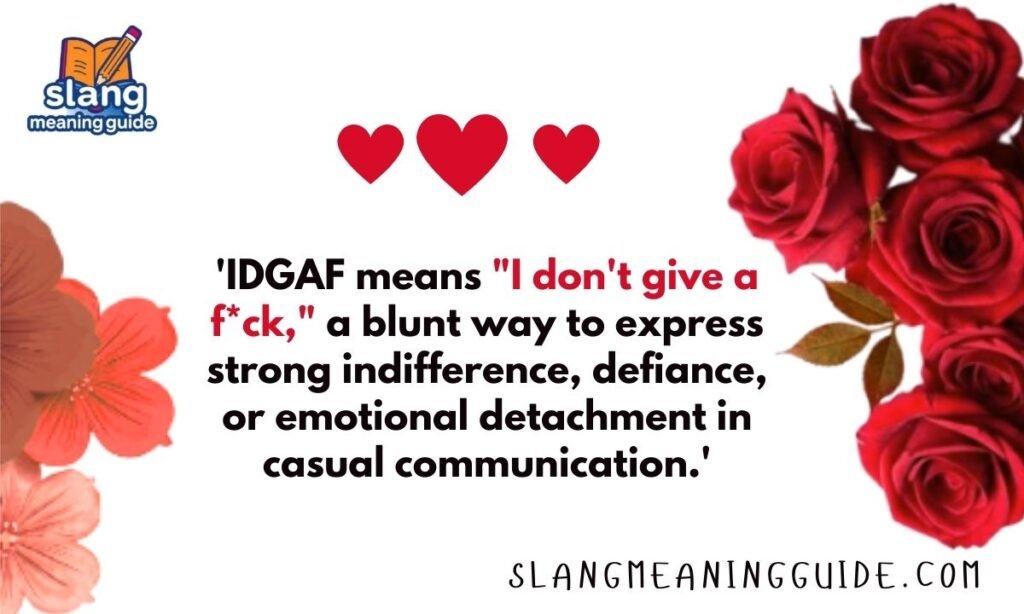
In texting and everyday messaging, IDGAF stands for “I don’t give a f*ck,” It is a blunt, informal expression used to show strong indifference, emotional detachment, frustration, or defiance.
People use IDGAF when they want to communicate that they do not care about a topic, opinion, rule, expectation, or situation. The phrase often carries emotional weight and can sound bold, rebellious, or dismissive.
What IDGAF Communicates in Text
- Strong indifference
- Emotional detachment
- Annoyance or irritation
- Rebellion against expectations
- Confidence or defiance
Clear Text Examples
- “IDGAF what people think about my outfit.”
- “They canceled the event, but IDGAF.”
- “Honestly, IDGAF anymore.”
In casual conversations, IDGAF often adds emotional intensity. It goes far beyond simply saying “I don’t care.”
Meaning on Social Media: IDGAF Expresses Attitude and Emotion
On social media platforms like Instagram, TikTok, Snapchat, Twitter (X), and Facebook, IDGAF is used to express attitude, personality, emotion, and self-confidence.
It frequently appears in captions, comments, memes, and video overlays to communicate bold self-expression, humor, sarcasm, or rebellion.
Common Social Media Uses
- Confident self-expression
- Humorous exaggeration
- Sarcastic dismissal
- Emotional release
- Meme culture
Social Media Examples
- “Living my life, IDGAF 💅”
- “Haters gonna hate, IDGAF.”
- “This song on repeat, IDGAF.”
On social media, IDGAF often symbolizes independence, emotional strength, and personal freedom.
Meaning in Personal Chats: IDGAF Shows Strong Feelings
In personal conversations with friends, siblings, or close contacts, IDGAF is used to show intense feelings of frustration, annoyance, or indifference.
Common Personal Chat Situations
- Gossip discussions
- Minor arguments
- Personal frustration
- Emotional venting
- Casual banter
Real Chat Examples
- “They keep talking about him, but IDGAF.”
- “Exams tomorrow, but honestly IDGAF 😂”
- “Stop stressing, IDGAF what they say.”
This usage often reflects emotional release, sarcasm, or humor, depending on tone.
Formal vs Informal Usage: IDGAF Is Strongly Informal
IDGAF is highly informal and contains profanity, which makes it inappropriate for professional, academic, or formal environments.
Informal Usage (Appropriate)
- Friends
- Family chats
- Social media
- Casual group chats
Formal Usage (Avoid)
- Workplace emails
- Business meetings
- Academic writing
- Customer communication
- Professional networking
Professional Alternative Examples
Instead of:
- “IDGAF about this task.”
Use:
- “This is not a priority for me.”
- “I don’t believe this is necessary.”
- “This doesn’t concern me at the moment.”
Common Misunderstandings of IDGAF
Many people misunderstand IDGAF due to its emotional strength and slang nature.
Misunderstanding 1: It Only Means Mild Disinterest
IDGAF is stronger than “I don’t care.” It often expresses frustration, anger, rebellion, or emotional detachment.
Misunderstanding 2: It Is Always Aggressive
While it can sound aggressive, IDGAF can also be humorous, sarcastic, or playful depending on context.
Misunderstanding 3: It Is Acceptable Everywhere
Because it contains profanity, IDGAF is not appropriate in formal, professional, or sensitive conversations.
Usage Tips: How to Use IDGAF Correctly
Using IDGAF effectively requires emotional awareness and situational judgment.
Practical Usage Tips
- Know your audience before using it.
- Avoid it in professional or academic settings.
- Use it sparingly to prevent sounding rude.
- Be mindful of emotional sensitivity.
- Understand tone before sending.
When IDGAF Works Well
- Casual humor
- Friendly teasing
- Emotional venting
- Informal conversations
When to Avoid IDGAF
- Serious discussions
- Professional communication
- Conflict resolution
- Emotional support conversations
Examples of IDGAF in Different Contexts
Casual Humor
- “That meme is wild, IDGAF 😂”
Emotional Frustration
- “I tried everything, IDGAF anymore.”
Friendly Tease
- “You’re late again, IDGAF 😆”
Rebellious Expression
- “They told me not to go, but IDGAF.”
IDGAF Meanings by Context
| Context | Meaning | Tone |
| Texting with friends | I don’t care | Casual |
| Social media captions | Emotional indifference | Bold |
| Group chats | Playful dismissal | Friendly |
| Arguments | Emotional frustration | Aggressive |
| Work communication | Not appropriate | Unprofessional |
Alternatives to IDGAF
If you want softer or more polite expressions, here are alternatives:
| Alternative | Meaning | Tone |
| IDC | I don’t care | Neutral |
| Meh | Mild disinterest | Casual |
| Whatever | Indifference | Relaxed |
| Not bothered | Calm dismissal | Polite |
| I couldn’t care less | Strong indifference | Firm |
Why IDGAF Became Popular in Digital Culture
The rise of texting, memes, and social media created a demand for short, expressive language. IDGAF became popular because it:
- Expresses emotion clearly
- Saves typing time
- Adds personality
- Fits meme culture
- Matches casual digital tone
Music, pop culture, memes, and viral trends further boosted its popularity.
Psychological Impact of Using IDGAF
Using IDGAF can signal emotional independence, rebellion, confidence, or emotional exhaustion. In casual use, it often communicates humor and emotional release. In intense situations, it may reflect frustration, stress, or emotional overload.
IDGAF vs Similar Slang
| Term | Strength | Tone |
| IDC | Mild | Neutral |
| Meh | Very mild | Casual |
| Whatever | Moderate | Relaxed |
| IDGAF | Strong | Bold |
| I couldn’t care less | Moderate-strong | Formal |
IDGAF is one of the strongest expressions of indifference in texting slang.
How to Respond When Someone Says IDGAF
Your response depends on emotional context.
Friendly Conversations
- “Same.”
- “Fair enough.”
- “I feel you.”
Emotional Situations
- “Is everything okay?”
- “Want to talk about it?”
Professional Context
- “Let’s revisit this calmly.”
- “Let’s clarify the priorities.”
IDGAF in Teen Communication and Youth Culture
Among teens and young adults, IDGAF often expresses:
- Identity building
- Emotional independence
- Peer influence
- Rebellion
- Humor
It plays a major role in youth slang and meme culture.
IDGAF in Music, Memes, and Pop Culture
Many artists have songs titled “IDGAF,” which has cemented its place in modern slang. Memes and viral videos frequently feature the term, reinforcing its emotional tone and cultural relevance.
SEO Summary: What IDGAF Means in Text
IDGAF means “I don’t give a f*ck,” It is a slang abbreviation widely used in texting, social media, and informal chats to express indifference, emotional detachment, frustration, humor, or rebellion. Its tone depends on context, relationship, and platform.
Frequently Asked Questions
What does IDGAF mean in texting?
It means “I don’t give a f*ck,”
Is IDGAF rude?
Yes, it can sound rude or aggressive depending on tone and context.
Can IDGAF be used at work?
No, it is too informal and unprofessional.
Is IDGAF slang?
Yes, it is modern internet slang.
What is a polite alternative to IDGAF?
“I don’t care” or “It doesn’t matter to me.”
Conclusion
Understanding what IDGAF means in text helps decode emotional intent, tone, and attitude in digital communication. While the phrase literally means “I don’t give a f*ck,” its real-world usage ranges from playful humor and sarcasm to emotional frustration and rebellion.
Used casually, it adds personality and emotional clarity. Used carelessly, it can appear rude or dismissive. Knowing when and where to use IDGAF allows you to communicate confidently, naturally, and respectfully.
Whether you are texting friends, browsing social media, or navigating modern slang, understanding IDGAF ensures clearer communication and fewer misunderstandings in today’s digital conversations.