
You’ve probably seen sigma pop up in TikTok comments, gaming chats, memes, or text messages. Someone posts a calm response, ignores drama, or handles pressure effortlessly, and the replies flood in with one word: sigma. It sounds simple, but the meaning goes much deeper.
This guide breaks down Gen Z slang: sigma meaning, where it came from, how it’s used in texting and TikTok, what it really implies, and when it’s smart to use it or avoid it.
Sigma Origins
The modern slang meaning of sigma did not appear overnight. While the word itself comes from the Greek alphabet, its internet meaning developed through online culture, forums, and social media.
Originally, sigma emerged from early 2010s online communities focused on self-improvement, masculinity, and personal development. These spaces introduced the idea of personality archetypes such as alpha, beta, and eventually sigma.
Unlike the alpha male, who dominates social hierarchies, the sigma male was defined as someone who operates independently, quietly, and confidently outside traditional power structures.
Over time, Gen Z and Gen Alpha transformed the term. What began as a niche personality label evolved into mainstream slang used across TikTok, memes, gaming communities, and casual texting. Today, sigma is less about rigid personality theory and more about vibe, behavior, and attitude.
Early development highlights include:
- Self-improvement forums exploring alternative masculinity models
- YouTube motivation and mindset videos
- Meme culture exaggerating the “lone wolf” archetype
- TikTok trends turning sigma into humor and aesthetic
This evolution helped reshape sigma into a flexible slang term that blends irony, admiration, and humor.
Sigma Meaning in Texting
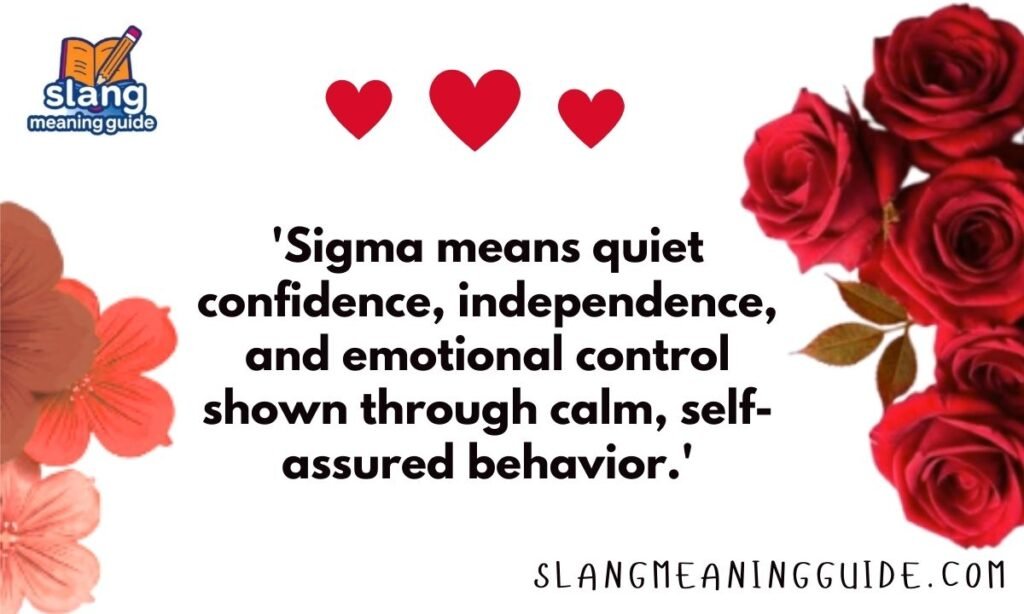
In texting, sigma meaning slang refers to calm, confident, emotionally controlled behavior. It often describes someone who reacts quietly, avoids drama, and stays focused on their own path.
Rather than labeling a fixed personality, sigma in texts usually comments on a specific action or response. It highlights moments where someone handles pressure maturely, ignores negativity, or chooses independence over attention.
Common texting examples include:
- “He left the group chat and didn’t explain.” → “Sigma behavior.”
- “Didn’t argue. Just handled it quietly.” → “Pure sigma.”
- “Didn’t chase. Just moved on.” → “That’s sigma.”
In everyday texting, sigma works as shorthand for emotional control and confidence. It can be both serious and playful, depending on tone. Among friends, it often carries humor, irony, or light admiration.
What Does Sigma Mean on TikTok
TikTok is where what does sigma mean became globally popular. Short-form videos, dramatic edits, and meme culture turned sigma into a viral trend that spread rapidly among Gen Z and Gen Alpha.
On TikTok, sigma typically describes a lone wolf archetype. This character appears calm, mysterious, emotionally detached, and highly capable. Videos often feature slow-motion walking clips, cinematic music, and captions that highlight independence and silent confidence.
Typical TikTok sigma content includes:
- Quiet confidence edits
- Dramatic silence scenes
- Gym and grind visuals
- Cold one-liners
- Dark aesthetic filters
Popular captions often say:
- “Sigma doesn’t explain.”
- “Stay silent. Stay sigma.”
- “They laughed. Sigma moved on.”
In comments, users often write “sigma” to praise someone who handles situations calmly, avoids drama, or shows emotional maturity. While much of this content is exaggerated, ironic, or meme-driven, the core idea remains: sigma equals quiet strength.
Is “Sigma” Positive or Negative?
In most contexts, sigma meaning slang is positive. It highlights independence, confidence, emotional control, and self-respect. When someone is called sigma, it usually means admiration for their composure or self-reliance.
However, context matters. Overuse or misuse can shift the tone. In some cases, sigma can be twisted into arrogance, emotional detachment, or antisocial behavior. This happens mainly in exaggerated memes or extreme online communities.
Positive sigma traits include:
- Emotional balance
- Confidence without arrogance
- Independence
- Calm problem-solving
- Strong boundaries
Negative misuse can imply:
- Emotional unavailability
- Disrespect for others
- Social isolation
- Superiority complex
Healthy sigma energy reflects confidence combined with emotional intelligence, not emotional coldness or ego.
Formal vs Informal Use
Sigma slang is almost entirely informal. It belongs in casual conversations, social media, gaming chats, and friendly texting. Using it in professional or academic contexts can sound awkward or immature.
In informal spaces, sigma works naturally. Among friends, it adds humor, relatability, and personality to conversations. In online communities, it fits meme culture and trend-based language.
In formal communication, however, sigma should be avoided. Business emails, professional messaging, academic writing, and workplace discussions require clarity and professionalism.
Informal examples include:
- “Handled that quietly. Sigma move.”
- “Bro stayed calm. Sigma energy.”
Formal alternatives include:
- “That showed confidence.”
- “That was a thoughtful response.”
- “He handled it professionally.”
Understanding when to switch language helps maintain credibility and communication clarity.
Common Misunderstandings
Despite its popularity, what does sigma mean is often misunderstood. Many assume it refers to a strict personality type or a psychological category, which is inaccurate.
Sigma is not a scientific or psychological classification. It is internet slang that reflects behavior and attitude, not a fixed identity. Anyone can show sigma traits in certain situations.
Common misconceptions include:
- Sigma is a real personality type
- Sigma means being antisocial
- Sigma equals emotional coldness
- Sigma is only for men
In reality, sigma is flexible slang. Women, nonbinary individuals, and anyone can be described as sigma if their actions reflect independence and calm confidence.
Another misunderstanding is assuming sigma always implies superiority. Healthy sigma behavior is about self-control, not dominance or ego.
Comparisons With Similar Abbreviations and Slang
To fully understand Gen Z slang: sigma meaning, it helps to compare it with similar internet terms. These comparisons clarify tone, usage, and social meaning.
Sigma vs Similar Slang Terms
| Term | Meaning | Tone | Common Usage |
| Sigma | Quiet confidence, independence | Calm, mysterious | Memes, TikTok, texting |
| Alpha | Social dominance, leadership | Loud, assertive | Motivation culture |
| Chad | Confident, attractive personality | Playful, humorous | Memes |
| Lone wolf | Independent individual | Neutral | Self-descriptions |
| Main character | Self-focused energy | Trendy | TikTok, captions |
Sigma Usage Across Platforms
| Platform | Typical Usage | Tone |
| Texting | Compliment behavior | Casual |
| TikTok | Meme-based archetype | Ironic, dramatic |
| Gaming | Skillful solo play | Respectful |
| Aesthetic captions | Trendy |
These comparisons show how sigma stands out as a blend of humor, admiration, and cultural identity.
Practical Examples
Understanding sigma meaning slang becomes easier through real-life examples across different contexts.
In texting, sigma usually comments on calm behavior. Someone avoids drama, stays focused, or moves on without emotional reactions. The word highlights emotional maturity.
Text examples include:
- “He didn’t argue, just blocked and moved on.” → “Sigma.”
- “Didn’t explain himself, just kept working.” → “That’s sigma.”
On social media, sigma often praises composure and restraint. Users apply it to videos showing confidence, silence, or controlled reactions.
Social media examples include:
- “She stayed calm while everyone panicked. Sigma energy.”
- “Didn’t respond to hate comments. Sigma move.”
In gaming, sigma describes players who stay calm under pressure, avoid trash talk, and rely on skill rather than attention.
Gaming examples include:
- “Solo carried the team.” → “Sigma player.”
- “Didn’t rage. Just clutched.” → “Sigma.”
When to Avoid It
Despite its popularity, there are times when sigma slang is best avoided. Using it incorrectly can cause misunderstanding, awkwardness, or unintentional disrespect.
Avoid using sigma:
- In professional emails
- In academic writing
- During serious emotional conversations
- In formal presentations
In emotional discussions, calling someone sigma might feel dismissive or cold. In professional spaces, slang reduces credibility.
Better alternatives include:
- “That shows confidence.”
- “That was a calm response.”
- “You handled that maturely.”
Using thoughtful language ensures clarity, respect, and professionalism.
Frequently Asked Questions
What does sigma mean in slang?
It means independent, confident, and emotionally controlled behavior.
Is sigma a compliment?
Yes, it usually praises calm confidence and self-reliance.
Is sigma male a real personality type?
No, it is internet slang, not psychology.
Can women be sigma?
Yes, sigma refers to mindset, not gender.
Is sigma toxic?
Only when misused; healthy sigma is balanced and respectful.
Final Thoughts
Gen Z slang: sigma meaning represents a shift in how confidence is expressed online. Instead of loud dominance or attention-seeking behavior, sigma highlights calm strength, emotional control, and independence. It reflects modern values of self-respect, focus, and boundary-setting.
While TikTok and memes exaggerate sigma energy for humor, the core idea remains grounded in emotional maturity and self-direction. When used thoughtfully, sigma becomes a compliment. When overused or misused, it loses meaning.
Understanding context, tone, and intention allows you to use sigma naturally, without sounding forced. True sigma energy does not need constant validation. It simply exists, quietly confident and self-assured.