

Every day, we scroll, click, watch, and compare. Somewhere between checking messages and browsing social media, a subtle anxiety creeps in. It whispers that something better is happening elsewhere, and we are not part of it. This feeling quietly shapes our choices, moods, and even our self-worth, often without us realizing it. Understanding this mindset is the first step toward taking back control and finding peace in the present moment.
What Does FOMO Mean?
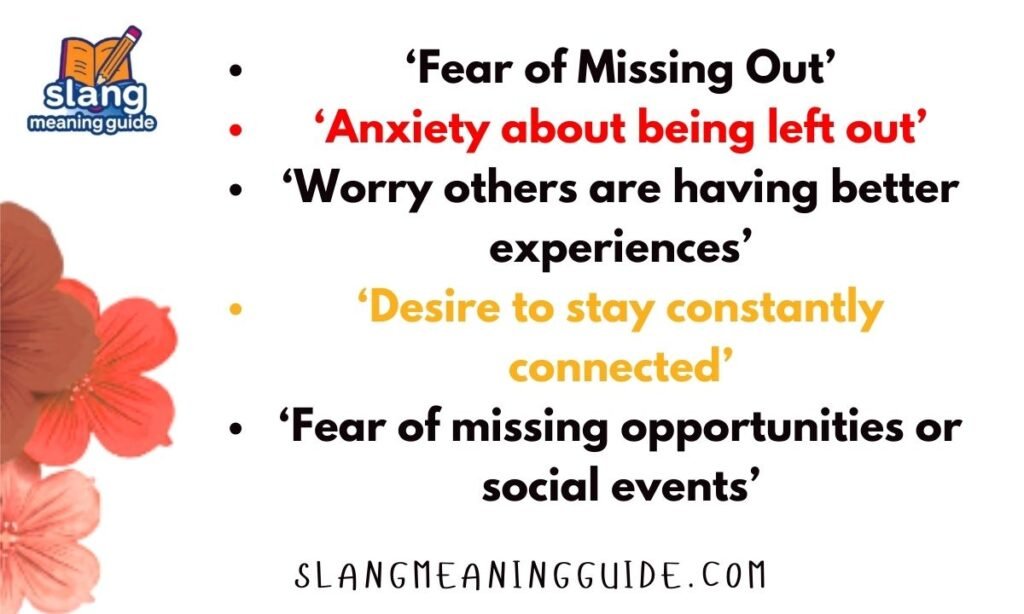
FOMO stands for Fear of Missing Out. It is the anxiety or uneasy feeling that others are enjoying rewarding experiences while you are absent. This fear creates a strong desire to stay constantly connected, updated, and involved, so you do not miss opportunities, events, or social moments.
In simple terms, FOMO is the emotional response to the belief that life is happening elsewhere, and you are being left behind.
“FOMO is not about what you are missing. It is about what you believe others are gaining.”
The Psychological Definition of FOMO
From a psychological perspective, FOMO is rooted in our basic human need for belonging, acceptance, and social connection. Humans evolved in groups, and being excluded once meant real danger. That instinct still operates in modern society, even though social exclusion today is rarely life-threatening.
Psychologists explain FOMO as a mix of:
- Social comparison
- Fear of regret
- Need for validation
- Desire for belonging
When we see others sharing highlights of their lives, our brain automatically compares, often unfairly.
Key psychological drivers of FOMO:
- Fear of social exclusion
- Anxiety about missing opportunities
- Low self-esteem and insecurity
- Desire to stay relevant
“FOMO grows when we measure our life against the highlight reels of others.”
How Social Media Triggers FOMO
Social media is one of the strongest triggers of FOMO in modern life. Platforms constantly show curated snapshots of success, happiness, fun, and achievement. These images rarely reflect everyday reality.
Every scroll exposes us to:
- Friends traveling
- Colleagues achieving milestones
- Influencers living seemingly perfect lives
- Social events we were not invited to
This creates the illusion that everyone else is always doing something better, more exciting, or more meaningful.
How social media fuels FOMO:
- Constant notifications keep attention fragmented
- Highlight-only content distorts reality
- Comparison becomes habitual
- Fear of being offline increases
“Social media does not show life as it is. It shows life as people want it to appear.”
Common Causes of FOMO
FOMO does not appear out of nowhere. It develops due to a combination of emotional, social, and environmental factors.
Main causes include:
- Overuse of social media
- Lack of clarity about personal goals
- Low self-confidence
- Social pressure and expectations
- Fast-paced lifestyle
- Fear of regret
When life feels uncertain or directionless, FOMO becomes stronger because we start looking outward for reassurance and validation.
“When purpose is unclear, distraction becomes attractive.”
Behavioral Effects of FOMO
FOMO directly influences how people think, act, and make decisions. It can push individuals toward extremes, either overcommitment or complete indecision.
Common behavioral patterns linked to FOMO:
- Saying yes to everything
- Constant phone checking
- Difficulty focusing
- Trouble making decisions
- Impulsive purchases
- Overloaded schedules
Some people try to attend every event, accept every opportunity, and stay online nonstop. Others become paralyzed, afraid to commit because something better might appear.
“FOMO steals peace by convincing you that now is never enough.”
Emotional Impact of FOMO
Emotionally, FOMO can quietly drain mental well-being. While it starts as curiosity or mild anxiety, prolonged exposure can lead to deeper emotional challenges.
Emotional effects include:
- Anxiety
- Stress
- Loneliness
- Dissatisfaction
- Envy
- Low self-worth
Ironically, FOMO can make people feel more isolated, even though it stems from a desire for connection.
“The more we chase connection through comparison, the more disconnected we feel.”
FOMO in Decision-Making
FOMO strongly affects how people make choices, both big and small. From selecting careers to choosing weekend plans, fear of missing out can override rational thinking.
Examples of FOMO-driven decisions:
- Accepting jobs that do not align with goals
- Buying products impulsively
- Attending events out of obligation
- Switching goals too frequently
This leads to scattered focus and reduced long-term satisfaction.
“Clarity disappears when every option feels urgent.”
FOMO in Consumer Behavior and Marketing
In marketing, FOMO is a powerful psychological trigger. Brands intentionally use scarcity, urgency, and exclusivity to stimulate quick decisions.
Common FOMO-based marketing strategies:
- Limited-time offers
- Flash sales
- Countdown timers
- Low-stock alerts
- Exclusive member deals
These tactics create a sense of urgency, encouraging consumers to buy quickly out of fear of missing a deal.
“Scarcity creates urgency, and urgency creates action.”
Long-Term Consequences of FOMO
If left unmanaged, FOMO can gradually erode emotional health, productivity, and satisfaction.
Potential long-term effects:
- Chronic anxiety
- Reduced focus
- Burnout
- Poor decision-making
- Decreased happiness
- Lower self-esteem
Over time, people lose touch with their authentic desires and begin living reactively instead of intentionally.
“A life driven by FOMO becomes reactive, not reflective.”
How to Overcome FOMO
Overcoming FOMO does not mean disconnecting completely from society or social media. It means developing awareness, boundaries, and purpose.
Practical strategies to reduce FOMO:
- Clarify personal goals
- Limit social media usage
- Practice gratitude
- Focus on present experiences
- Reduce comparison habits
- Build meaningful offline connections
When individuals align actions with personal values, external distractions lose their power.
“Peace begins when your attention returns to what truly matters.”
The Role of Gratitude in Reducing FOMO
Gratitude shifts attention from what is missing to what already exists. This simple mental shift reduces comparison and strengthens emotional resilience.
Ways gratitude helps:
- Increases contentment
- Reduces envy
- Enhances emotional balance
- Improves mental clarity
Daily gratitude practices, such as journaling or reflection, help anchor the mind in appreciation rather than scarcity.
“Gratitude transforms enough into abundance.”
Building a Healthy Digital Relationship
Technology itself is not harmful. The problem lies in uncontrolled usage and emotional dependence.
Tips for healthier digital habits:
- Set screen-time limits
- Disable unnecessary notifications
- Schedule offline time
- Avoid endless scrolling
- Engage intentionally
These habits restore control over attention and reduce digital overload.
“You control your devices, not the other way around.”
Developing Inner Security to Beat FOMO
Inner security reduces reliance on external validation. When people feel confident in their identity and direction, FOMO weakens naturally.
Ways to strengthen inner security:
- Self-reflection
- Goal setting
- Skill development
- Healthy routines
- Mindfulness practices
Confidence grows when actions align with personal values, not social expectations.
“When your path is clear, others’ paths stop distracting you.”
FOMO vs JOMO: The Healthy Alternative
The opposite of FOMO is JOMO, the Joy of Missing Out. It represents peace, intentional living, and comfort with saying no.
Characteristics of JOMO:
- Contentment
- Selective engagement
- Mental clarity
- Emotional balance
Choosing JOMO allows individuals to enjoy life without pressure or constant comparison.
“JOMO is freedom disguised as simplicity.”
FOMO in Different Age Groups
FOMO affects all age groups, though its expression varies.
Teenagers:
Experience FOMO mainly through social validation, peer acceptance, and online presence.
Young Adults:
Struggle with career comparison, social life, and lifestyle expectations.
Professionals:
Face FOMO around success, promotions, and financial milestones.
Older Adults:
May feel FOMO regarding missed life goals or social connections.
Understanding these variations helps tailor coping strategies effectively.
The Science Behind FOMO and Brain Chemistry
Neuroscience suggests that FOMO activates dopamine pathways, similar to addiction mechanisms. Social rewards and novelty stimulate dopamine release, reinforcing repeated checking behaviors.
This explains why:
- Notifications feel irresistible
- Scrolling becomes compulsive
- Breaking habits feels difficult
Awareness of this biological loop helps individuals regain conscious control.
“Awareness weakens the grip of unconscious habits.”
Practical Daily Habits to Reduce FOMO
Small daily changes can significantly reduce FOMO over time.
Helpful daily habits:
- Morning reflection
- Digital detox periods
- Focused work sessions
- Gratitude journaling
- Mindful breathing
Consistency matters more than intensity.
“Small habits create lasting peace.”
Frequently Asked Questions
What does FOMO stand for?
FOMO stands for Fear of Missing Out, the anxiety that others are enjoying experiences without you.
Why does social media increase FOMO?
Because it constantly exposes users to curated highlights, triggering unhealthy comparison.
Is FOMO a mental disorder?
No, but chronic FOMO can contribute to anxiety, stress, and emotional imbalance.
Can FOMO affect productivity?
Yes, it disrupts focus, increases distraction, and weakens decision-making.
How can I reduce FOMO quickly?
Limit social media use, focus on personal goals, and practice daily gratitude.
Final Thoughts
FOMO is a natural human response shaped by biology, culture, and technology. Yet, it does not have to control how we live. By building awareness, setting boundaries, and focusing on meaningful goals, we can shift from anxious comparison to intentional living. Peace grows when we stop chasing every moment and start appreciating the one we are in. A life guided by clarity and purpose leaves little room for fear.