
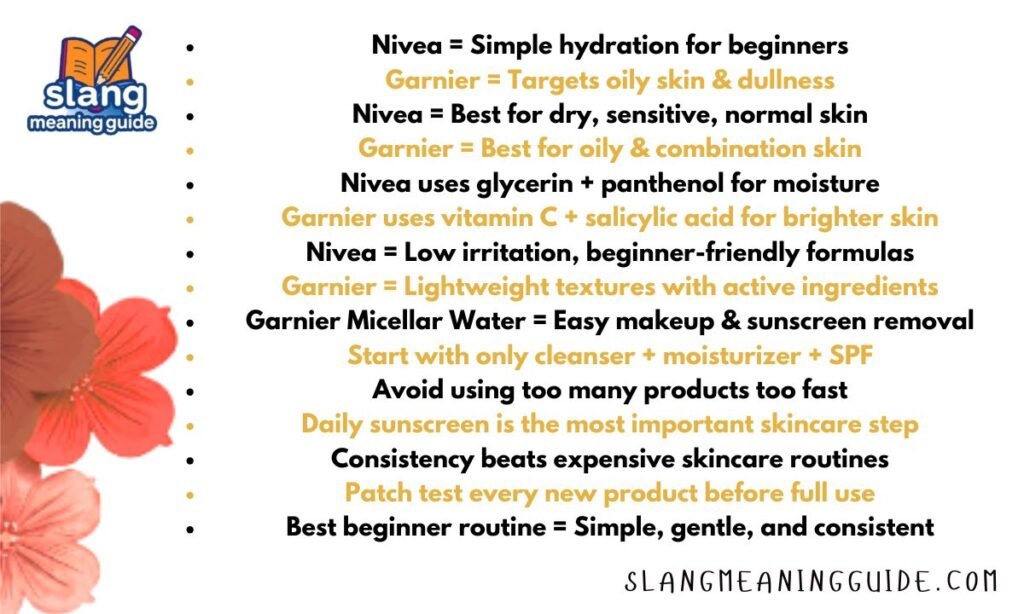
You’re standing in the drugstore aisle staring at two very different brands. Both are affordable. Both are everywhere. But one is probably right for you and one probably isn’t.
Picking the wrong starting brand wastes time and money — and can leave you thinking skincare “doesn’t work” when the routine was just wrong for your skin. Here’s exactly what Nivea and Garnier do, who each one suits, and which one to grab first.
If you’re a skincare beginner wondering whether Nivea is a good starting brand compared to Garnier, the short answer is: Nivea is the easier starting point for most people. But Garnier is the better pick for specific concerns like oily skin or dullness. The real answer depends on your skin type, and this guide will help you figure that out fast.
Both brands are affordable, widely available, and genuinely effective. Neither is a bad choice. But they are built around very different ideas. Nivea is about reliable daily hydration. Garnier is about targeted, goal-oriented skincare. For a complete beginner, those are very different starting experiences.
Nivea vs Garnier: Key Differences for Newbies
Nivea has been making moisturizers for over a century, and that heritage shows in how its products are built — straightforward formulas, thick hydrating textures, and very few active ingredients that could irritate new skin.
Garnier takes a more modern approach, leaning into ingredients like vitamin C, salicylic acid, and micellar technology that target specific skin concerns. For a beginner, Nivea asks less of you.
Garnier gives you more to learn. Neither is better in absolute terms, but they suit different people at different stages of building a routine.
Nivea
- Classic, barrier-first formulas
- Glycerin, panthenol, mineral oil base
- Thick creams for dry and normal skin
- Minimal actives — very low irritation risk
- Ideal for total beginners
Garnier
- Ingredient-led, goal-oriented products
- Micellar water, vitamin C, salicylic acid
- Lightweight textures for oily and combo skin
- More variety and targeted options
- Slightly more to navigate as a beginner
Which Brand Fits Your Skin Type Best
Your skin type matters more than brand loyalty. Choosing a rich Nivea cream for oily skin will leave you greasy and broken out. Choosing a lightweight Garnier gel for very dry skin won’t give you enough hydration.
Before you buy anything, figure out your skin type — dry, oily, combination, or sensitive — and let that guide the decision. The table below makes it simple.
| Skin Concern | Better Pick | Why It Works |
| Dry skin | Nivea | Thick creams provide lasting hydration without stripping |
| Oily or combination skin | Garnier | Lightweight, oil-free options and micellar cleansing |
| Sensitive skin | Nivea | Fewer irritants in core formulas; lower reaction risk |
| Dullness or uneven tone | Garnier | Vitamin C brightening formulas address discoloration |
| Beginner wanting simplicity | Nivea | Three products, no complicated layering, low risk |
| Acne-prone skin | Garnier | Salicylic acid and oil-control options target breakouts |
| Makeup removal | Garnier | Micellar water is fast, gentle, and requires no rinsing |
Nivea Strengths for Dry and Sensitive Skin
Nivea’s biggest strength is consistency. Its core products — the iconic blue tin Creme, the Soft Moisturising Crème, and the body lotions — have been trusted for decades because they work reliably without fuss.
For beginners with dry or sensitive skin, this reliability matters a lot. You want a moisturizer that hydrates well and doesn’t surprise you with breakouts or redness. Nivea’s simple formulas make that easy to achieve from the first week.
Core Ingredients in Nivea Moisturizers
Nivea’s moisturizers are built on glycerin, panthenol, and mineral oil — three of the most well-tested hydrating ingredients in skincare. Glycerin draws water into the skin and holds it there. Panthenol (also called pro-vitamin B5) soothes the skin and supports the barrier.
Mineral oil creates a light protective layer that locks moisture in without clogging pores. These aren’t exciting, trend-driven ingredients, but that’s the point. They have decades of safety data and they work reliably across skin types, which is exactly what a beginner needs before adding anything more complex.
The Nivea Soft Moisturising Crème is a strong first product for most beginners. It absorbs reasonably quickly for a cream, feels comfortable on the skin, and works on both face and body.
The blue tin Creme is richer and better suited to very dry skin, cracked hands, or extremely dry patches. Neither product contains strong actives like retinol or acids, so there is very little risk of irritation. For a beginner who wants to build a basic, effective routine without reading ingredient labels for an hour, Nivea removes that friction entirely.
Glycerin, Panthenol (Vitamin B5), Mineral Oil, Eucerit, Vitamin E
Garnier Strengths for Oily and Dull Skin
Garnier’s advantage is variety and targeted effectiveness. If your skin leans oily, looks dull, or you’re dealing with clogged pores from the start, Garnier has products built specifically for those issues.
The lightweight textures feel better on oily skin, the micellar water is one of the best beginner cleansers at any price point, and the vitamin C formulas address uneven tone without requiring a complicated multi-serum routine. For oily and combination skin beginners, Garnier often delivers more visible results in the first few weeks.
Garnier Micellar Water Benefits
Garnier’s Micellar Cleansing Water is genuinely one of the best beginner products on the market. It uses tiny cleansing molecules (micelles) that attract dirt, oil, and makeup.
You apply it to a cotton pad, wipe across your face, and you’re done — no rinsing required. For a beginner who finds multi-step routines overwhelming, this is a useful shortcut.
It’s gentle enough for daily use, works on all skin types including sensitive skin, and removes light makeup effectively without the stripping feeling you can get from foaming cleansers.
Beyond micellar water, Garnier’s SkinActive range includes lightweight gel moisturizers and targeted serums with vitamin C that suit oily and combination skin much better than Nivea’s thicker creams.
The vitamin C formulas address dullness and uneven tone — skin concerns that Nivea’s hydration-focused products don’t target directly.
If your main concern is skin that looks flat or tired rather than dehydrated, Garnier gives you a direct solution. The caveat is that vitamin C products require a little care — they work best in the morning, they need SPF layered over them, and some skin types need time to adjust.
Micellar Technology, Vitamin C, Salicylic Acid, Hyaluronic Acid, Zinc
Building a Simple Beginner Routine
A beginner skincare routine does not need to be complicated. Three products cover everything your skin actually needs: a cleanser, a moisturizer, and sunscreen.
Adding more than three products in the first month just increases the chance of irritation and makes it harder to figure out what’s working. Build the habit first, then add products slowly once your skin is stable and you know how it responds.
Daily Routine Steps for Beginners
Morning and evening routines for beginners follow the same basic logic: cleanse gently, hydrate, and in the morning, protect with SPF. The products you use from Nivea or Garnier will differ based on your skin type, but the structure stays the same.
Starting with this three-step framework means you’re not overwhelmed, your skin barrier stays intact, and you can add one product at a time as you learn more about what your skin needs. Give each new product at least three to four weeks before deciding if it works.
Consistency matters more than the specific products you choose at this stage. Washing your face every evening with a gentle cleanser and applying moisturizer is more valuable than owning twelve serums you use inconsistently. The brands below give you a workable starting point for both Nivea and Garnier, depending on which direction suits your skin type based on the table above.
Morning Routine — Both Brands
1_Cleanse
Garnier Micellar Water (all types) or Nivea Gentle Face Wash (dry/sensitive)
2_Moisturize
Nivea Soft Crème (dry/normal) or Garnier SkinActive Hydrating Gel (oily/combo)
3_Sunscreen — non-negotiable
Any SPF 30+ broad-spectrum. This is the most protective step in any routine
Evening Routine — Both Brands
1_ Remove makeup or sunscreen first
Garnier Micellar Water is perfect here — gentle and thorough
2_Cleanse gently
Keep this mild. No scrubs or strong actives in your first month
3_Moisturize
Apply while skin is slightly damp. Nivea Soft or Garnier depending on your skin type
Common Mistakes to Avoid
The most common beginner mistake is using too many products too fast. It’s tempting to try everything at once, but if your skin reacts to something you can’t tell which product caused the problem. Start with three products. Add one new product per month at most.
This approach protects your skin barrier and makes your routine something you’ll actually stick to long-term. Skincare results take weeks to show up, not days — patience is part of the process.
The second most common mistake is skipping sunscreen. This applies to every skin type, every season, and every skin tone. UV damage is the leading cause of premature aging, hyperpigmentation, and uneven texture.
No moisturizer, serum, or vitamin C product will give you good skin if you’re skipping SPF every morning. Both Nivea and Garnier offer affordable SPF options. Pick one that feels comfortable and use it every day without exception. Everything else in your routine works better when this step is included.
Using too many products in the first month — leads to irritation and confusion
Skipping sunscreen — undoes the benefit of everything else in your routine
Switching products every two weeks — skin needs time to adjust and show results
Over-cleansing or using hot water — strips the skin barrier and causes more dryness or oil
Expecting overnight results — consistent use over 4–6 weeks is where the real change happens
⚠️ Patch test everything. Even gentle, beginner-friendly products can cause reactions in some people. Apply a small amount behind your ear or on your inner wrist and wait 24–48 hours before using on your full face. This takes one minute and can save you a week of dealing with irritated skin.
Final Pick: Start Here in 2026
For most skincare beginners in 2026, Nivea is the safer, simpler starting point. Its straightforward moisturizers work reliably for dry, normal, and sensitive skin, and the product range doesn’t overwhelm you with choices.
Garnier is the smarter pick if you have oily or combination skin, want a no-rinse micellar cleanser, or want to address dullness with vitamin C from the beginning. The decision isn’t really about which brand is better — it’s about which one matches what your skin actually needs right now.
Affordable Drugstore Upgrades Over Time
Once your three-step routine feels natural and your skin is stable, you can think about adding one targeted product. For dry skin, consider adding a simple hyaluronic acid serum under your Nivea moisturizer — Garnier has an affordable option.
For oily skin, Garnier’s niacinamide products or a salicylic acid cleanser can be added once per day. These upgrades don’t need to cost much, and adding them one at a time means you’ll know exactly whether they’re helping. Drugstore skincare in 2026 is genuinely effective — you don’t need luxury products to get good results.
The real upgrade at any price point is consistency. A simple three-product routine used every day for three months will do more for your skin than an expensive ten-step routine you abandon after two weeks.
Both Nivea and Garnier are available in most drugstores and supermarkets, which makes restocking easy. That convenience matters for building a habit. Pick one brand to start based on your skin type, stay consistent for at least six weeks, and only then consider adding or changing products based on what you notice.
Quick Pick Guide
New to skincare, dry or normal skin? Start with Nivea Soft + a gentle cleanser + SPF.
New to skincare, oily or dull skin? Start with Garnier Micellar Water + a lightweight moisturizer + SPF.
Not sure of your skin type? Start with Nivea. It’s the lower-risk choice.
Frequently Asked Questions
Is Nivea good for beginners in skincare?
Yes — Nivea is one of the easiest brands to start with because its formulas are simple, effective, and unlikely to irritate new skin.
Which brand is better for oily skin?
Garnier suits oily and combination skin better, thanks to its lightweight textures and ingredients like salicylic acid and micellar water.
Can I use Nivea and Garnier products together?
Yes — many beginners use Garnier micellar water to cleanse and Nivea moisturizer to hydrate, and the combination works well.
How long before I see results from a basic skincare routine?
Most people notice changes in skin texture and hydration within two to four weeks of consistent use — not overnight.
Do beginners need a serum or just a moisturizer?
Just a moisturizer at first — serums are targeted treatments you add later once your basic cleanse-moisturize-SPF routine is consistent.
Conclusion
If you’re a skincare beginner deciding between Nivea and Garnier, Nivea is the easier starting point for most people — especially if your skin is dry, normal, or sensitive — while Garnier is the stronger pick for oily skin, gentle cleansing, or addressing dullness from day one.
Either way, the most important thing is to start simple: cleanser, moisturizer, and sunscreen every day, chosen for your skin type, used consistently for at least six weeks before adding anything else. Good skin doesn’t come from having the most products — it comes from using the right ones regularly.