
You’ve seen it in texts, Instagram DMs, and TikTok comments. Someone types “WTV” and moves on like it’s obvious. But what exactly are they saying — and more importantly, how are they saying it? The tone behind those three letters matters more than you think.
What Does WTV Mean in Slang?
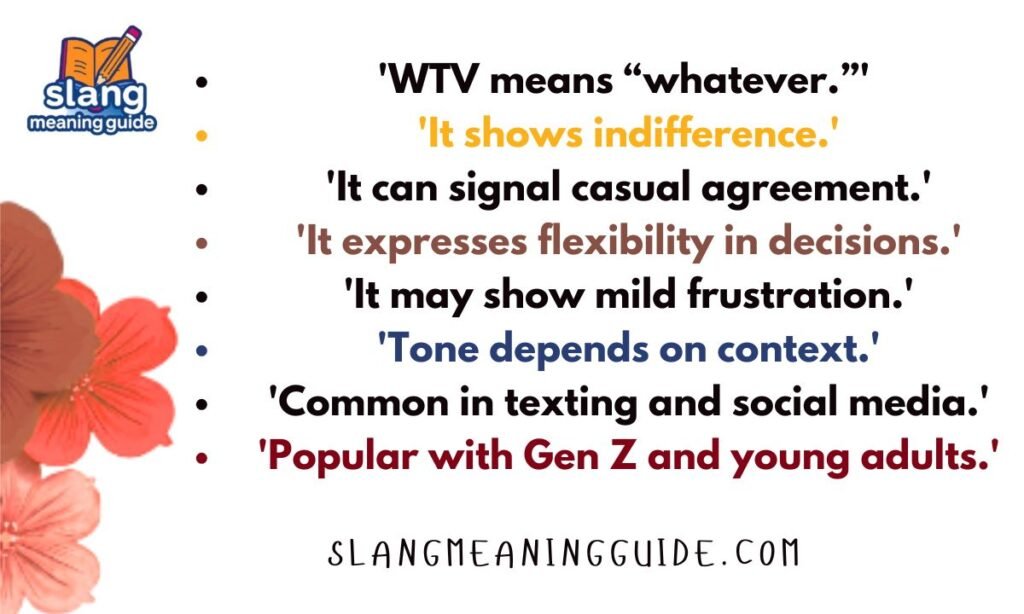
WTV means “whatever.” It’s a shorthand way to express indifference, casual agreement, or sometimes mild frustration — all packed into three letters.
When someone says WTV, they’re basically shrugging through a screen. It signals they don’t have strong feelings about something, or they’re done debating a point.
Origin and Full Form of WTV
WTV is an abbreviation of the word “whatever.” It follows the same pattern as other internet shorthand — drop the vowels and extra letters, keep it fast.
It started spreading through texting culture in the early 2010s as people looked for quicker ways to type common responses.
Platforms like Twitter and Tumblr helped normalize this kind of compressed language, and by the time Gen Z took over social media, WTV was already baked into the vocabulary.
The full form is straightforward: W-T-V = Whatever.
WTV Meaning in Text, Chat, and Social Media
The meaning stays the same across platforms, but the context shifts slightly depending on where you see it.
| Platform | How WTV Is Typically Used |
| WhatsApp / iMessage | Casual replies, ending small arguments |
| TikTok Comments | Reacting to opinions, dismissing drama |
| Instagram DMs | Agreeing without enthusiasm |
| Snapchat | Quick, low-effort responses in streaks |
| Twitter / X | Expressing mild sarcasm or disinterest |
On TikTok, you’ll often see it in comment sections where someone disagrees but doesn’t want to argue. On WhatsApp, it usually ends a conversation that’s going in circles.
Is WTV Rude or Casual? Understanding the Tone
This is where people get confused. WTV can be either rude or completely neutral — context is everything.
Casual / Neutral use:
- “Wanna get pizza or tacos?” → “WTV works for me”
- This version means “I’m fine with either, you decide.”
Dismissive / Slightly rude use:
- “Can you please just listen to me?” → “WTV man”
- Here, it’s a conversation ender. The person is checked out.
The tone usually comes from what’s around the word. A WTV with an emoji or lowercase letters often feels lighter. A standalone “WTV.” with a period? That’s a little cold.
How Gen Z Uses WTV in Daily Conversations
Gen Z uses WTV constantly, but rarely in a negative way. For most younger users, it’s just a filler — like saying “whatever works” or “I don’t really mind.”
A few common Gen Z patterns:
- Using WTV to avoid making decisions (“idk wtv you want”)
- Dropping it mid-sentence to show they’re easy-going
- Pairing it with other slang like “ngl wtv” or “wtv lol”
- Using it to end awkward convos without being harsh
It’s also popular in casual group chats where quick replies are the norm and full sentences feel like overkill.
Examples of WTV in Sentences
Real examples help more than definitions. Here’s how WTV actually looks in conversation:
“Are you mad at me?” → “No wtv forget it”
“Should we watch Netflix or go out?” → “Wtv you feel like”
“I think you were wrong.” → “Lol wtv, I’m not arguing”
“You never listen to me!” → “WTV I’m done talking about this”
“Pick a restaurant.” → “Wtv is closest tbh”
Similar Slang Words Like WTV
If you know WTV, these will feel familiar:
- IDC – I don’t care (stronger disinterest)
- NVM – Never mind (dropping a topic)
- Meh – Indifference, but more verbal
- Bruh – Mild disbelief or frustration
- It is what it is – Accepting something without liking it
WTV sits closest to IDC, but it’s slightly softer. IDC can sound more pointed; WTV often just sounds unbothered.
Common Confusions About WTV Meaning
Does WTV always mean someone is annoyed?
No. Most of the time it’s neutral. Annoyance only comes through if the conversation was already tense.
Is WTV the same as IDC?
Close, but not identical. IDC is more direct about not caring. WTV leans more toward indifference or flexibility.
Can WTV be used positively?
Yes. “Wtv makes you happy” is a genuinely warm thing to say.
Frequently Asked Questions
What does WTV mean in text?
It means “whatever” — used to show indifference, easy agreement, or mild frustration.
Is WTV rude?
It depends on the context. In a calm conversation, it’s casual. After an argument, it can feel dismissive.
Where did WTV come from?
It evolved from texting culture in the 2010s as a shorter way to type “whatever.”
Is WTV used by adults too?
Yes, though it’s most common among teens and young adults (Gen Z and late Millennials).
What’s the difference between WTV and IDC?
WTV is softer and more flexible. IDC is more blunt about not caring.