
Messages move fast online. One short abbreviation can carry a whole conversation. Yet many people see “WSP” and pause, unsure what it actually means.
It appears in texts, social media comments, and gaming chats every day. The letters are simple, but the intention behind them depends on context. Before you reply, it helps to understand why people use it and what they really mean.
This guide breaks down the meaning, origin, usage, and common misunderstandings of WSP in text messaging so you can use it naturally and confidently.
Core Meanings Explained
WSP – “What’s Up”
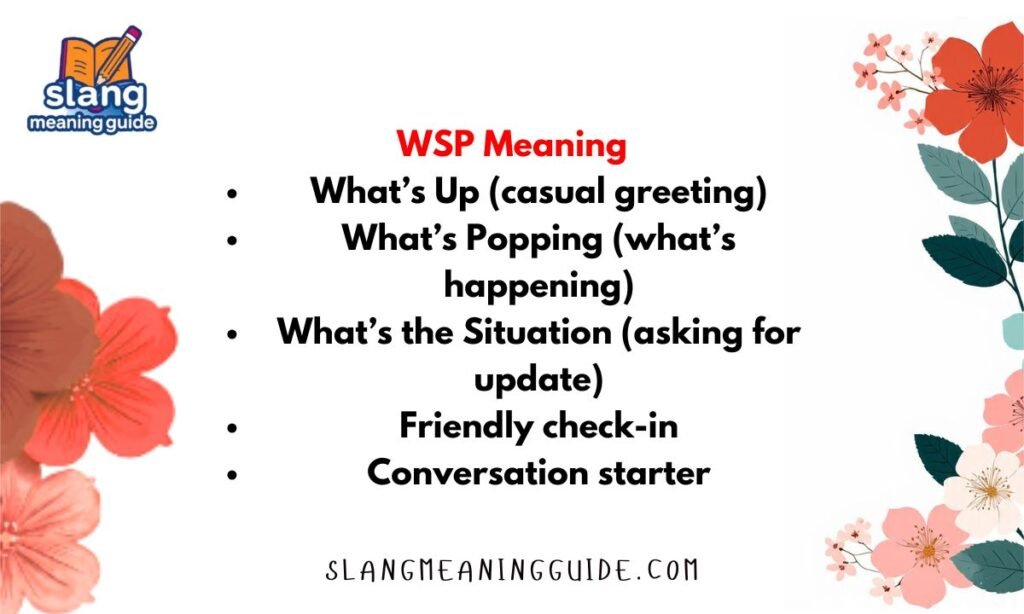
The most common meaning of WSP in texting is “What’s up.” It is a casual greeting used to start a conversation. People send it when they want to check in, ask what someone is doing, or simply say hello.
This abbreviation became popular because it saves time while typing. Instead of writing a full greeting, users quickly type three letters. It feels informal and friendly, especially in chats between friends.
Key usage examples
- “WSP bro, you free tonight?”
- “Hey, WSP? Haven’t talked in a while.”
- “WSP everyone in the group chat.”
- “WSP after work today?”
WSP – “What’s Popping”
Another meaning of WSP is “What’s popping.” This phrase is slang for asking what exciting things are happening. It often appears in youth culture, music communities, and social media conversations. The tone is energetic and relaxed. It usually implies interest in current activities, plans, or events.
Key usage examples
- “WSP tonight? Any plans?”
- “WSP in the city this weekend?”
- “WSP at the party later?”
- “Yo, WSP with the new game update?”
WSP – “What’s the Situation”
In some contexts, WSP can mean “What’s the situation.” This meaning appears when someone wants a quick update or clarification. It is common in group chats, project discussions, or gaming coordination when participants want to know what is happening.
Key usage examples
- “WSP with the meeting schedule?”
- “WSP with the delivery order?”
- “WSP on the project deadline?”
- “WSP with the match tonight?”
WSP – Friendly Check-In
Sometimes WSP is simply used as a friendly check-in message. The sender may not expect a detailed answer. Instead, they want to reconnect or start a casual conversation. It works similarly to greetings like “hey,” “hi,” or “how are things.”
Key usage examples
- “WSP, long time no see.”
- “WSP today?”
- “WSP my friend?”
- “WSP this morning?”
WSP – Conversation Starter
Another practical use of WSP is as a conversation opener. Many people use it before asking a bigger question or starting a discussion. This keeps messages short and informal while inviting a reply.
Key usage examples
- “WSP? Need help with something.”
- “WSP? Got a quick question.”
- “WSP, you online right now?”
- “WSP, can we talk?”
Origin and Evolution Timeline
Texting slang develops quickly as communication habits change. WSP followed a typical path from casual abbreviation to widely recognized internet shorthand.
Early internet users shortened phrases to save typing time. As mobile messaging grew, these abbreviations spread across multiple platforms.
Timeline Overview
| Term | Estimated Origin | Platform Where It Blew Up | Current Status |
| WSP | Early 2000s | SMS texting and instant messaging | Still common in casual chat |
| WSP | Mid-2000s | Social media and online forums | Popular among younger users |
| WSP | 2010s | Instagram, Snapchat, gaming chats | Widely recognized slang |
Key development points
- Early SMS users shortened greetings due to character limits.
- Online chat rooms and messaging apps increased adoption.
- Social media platforms amplified slang through memes and viral posts.
- Gaming communities used it for quick communication.
- Today it remains a casual, everyday texting abbreviation.
Common Misunderstandings
Although WSP is widely used, some people misunderstand its meaning. The abbreviation can look unclear to those unfamiliar with texting slang. Context usually determines the intended interpretation.
People sometimes assume it refers to technical terms or business abbreviations. In most casual conversations, however, it simply means “what’s up.”
Typical misunderstandings
- Thinking WSP is a formal acronym
- Confusing it with technical or corporate abbreviations
- Interpreting it as a question requiring a detailed response
- Assuming it has a negative tone
Understanding the casual nature of texting slang helps avoid confusion.
Formal vs. Informal Uses
WSP belongs almost entirely in informal communication. It fits relaxed conversations but rarely appears in professional writing. Using the abbreviation in the wrong setting may appear unprofessional.
Informal situations where WSP works
- Text messages between friends
- Social media comments
- Online gaming chats
- Group conversations
Examples
- “WSP tonight?”
- “WSP guys, ready to play?”
- “WSP everyone in the chat.”
Situations where it should be avoided
- Business emails
- Academic writing
- Formal communication
- Professional messaging
Better alternatives
- “Hello, how are you?”
- “What is the current status?”
- “Could you provide an update?”
Comparisons With Similar Abbreviations
Many texting abbreviations express similar ideas. Comparing them helps clarify when each one works best.
| Abbreviation | Meaning | Typical Use | Tone |
| WSP | What’s up | Casual greeting | Friendly |
| WYD | What you doing | Asking about activity | Curious |
| SUP | What’s up | Quick greeting | Relaxed |
| HBU | How about you | Reply question | Conversational |
| WYA | Where you at | Asking location | Direct |
These abbreviations often appear together in texting conversations.
Example conversation
- Person A: “WSP?”
- Person B: “Not much. WYD?”
- Person A: “Just relaxing. HBU?”
Everyday Situations Where People Use WSP
People use WSP in many daily messaging situations. The abbreviation works best when communication is quick and casual. It can appear at the beginning of a conversation or as a quick check-in.
Common scenarios
- Starting a conversation with friends
- Asking about plans for the evening
- Checking if someone is available
- Reconnecting after a long time
- Greeting a group chat
Example messages
- “WSP tonight?”
- “WSP everyone?”
- “WSP bro, you around?”
- “WSP after class?”
These short messages keep conversations relaxed and friendly.
Why Texting Abbreviations Like WSP Became Popular
The rise of texting slang is closely linked to how digital communication evolved. Early mobile phones limited message length, so users shortened words and phrases. Over time, these shortcuts became part of everyday online language.
Key reasons for popularity
- Faster typing on mobile devices
- Character limits in early SMS messages
- Influence of youth culture and internet communities
- Spread through social media platforms
- Convenience in quick conversations
Abbreviations like WSP remain popular because they are simple and efficient.
When to Respond to WSP
Receiving a WSP message usually means someone wants to start a conversation. A short, friendly response works best. You do not need a long reply unless the conversation develops further.
Typical responses
- “Not much, you?”
- “Just working. WSP with you?”
- “All good here.”
- “Getting ready for the weekend.”
The goal is to keep the conversation flowing naturally.
Frequently Asked Questions
What does WSP mean in texting?
It usually means “what’s up,” a casual greeting used to start a conversation.
Is WSP formal or informal?
WSP is informal slang used in texting and social media conversations.
Where is WSP commonly used?
It appears in text messages, social media chats, and gaming conversations.
Is WSP the same as “sup”?
Yes, both are casual greetings that mean “what’s up.”
Should WSP be used in professional communication?
No, formal communication should use complete phrases instead of slang.
Final Words
Understanding texting slang helps conversations feel more natural online. WSP is a simple abbreviation, but it reflects how modern communication favors speed, brevity, and casual connection.