

Ever bitten into a tiny pickle on a charcuterie board and wondered what it was? That little green gem has a name — and a surprisingly rich history. Here’s everything you need to know about the cornichon.
What Does Cornichon Mean?
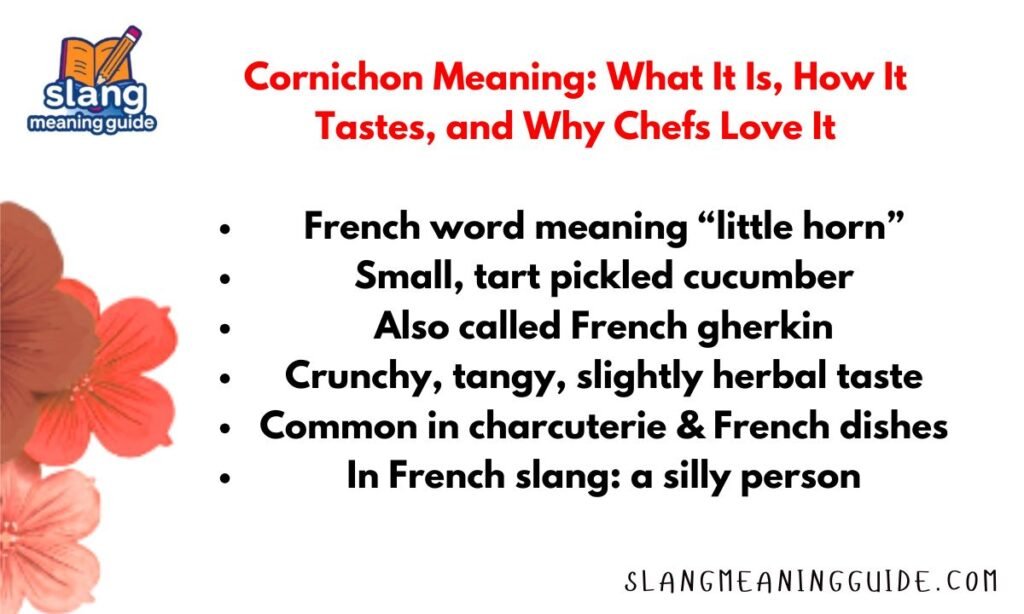
The word cornichon comes from French. It translates literally to “little horn,” a nod to the curved shape of the small cucumber it describes.
In everyday English, cornichon refers to a small, tart, pickled cucumber — typically the kind served alongside pâté, charcuterie, or smoked meats. It is also commonly known as a French gherkin.
Cornichon in French vs. English
In English, cornichon almost always means the pickle. People use it in food writing, restaurant menus, and recipes to describe those small, bumpy, tangy pickles.
In French, the word carries a second meaning. French speakers sometimes use cornichon as slang for a foolish person or “nitwit.” Think of it the way English speakers might say “dummy” — light-hearted and informal.
Is It Used as Slang in English?
Not commonly. If someone calls you a “cornichon” in English, they are likely joking and borrowing from the French slang meaning. Most English speakers will picture the pickle before anything else.
What Does a Cornichon Look, Feel, and Taste Like?
A cornichon is a tiny cucumber, usually 2 to 7 centimeters long. The shape is narrow and cylindrical, sometimes with a slight curve at the end.
The skin is dark green, firm, and bumpy. It often has small, soft spines on the surface. Inside, the flesh is crisp, pale green, and juicy — with few or no seeds.
Flavor Profile
Raw cornichons have a tart, vegetal taste. When pickled, that tartness intensifies. The brine is typically made with white vinegar, water, and salt, and most recipes add tarragon, black pepper, bay leaves, or cloves for extra flavor.
The result is a sharp, crunchy bite with herbal undertones. That signature tang is part of why they work so well with rich, fatty foods like pâté and cured meats.
Texture and Crunch
The crunch is a defining quality. Cornichons stay firm even after weeks in brine. They do not go soft the way larger pickles sometimes do. That satisfying snap is part of the appeal.
Cornichon vs. Gherkin: Are They the Same?
This is a fair question. Outside of France, cornichons are widely known as gherkins. The terms are often used interchangeably.
| Feature | Cornichon | Gherkin |
| Origin | France (French term) | Used across Europe and US |
| Size | Very small (2–7 cm) | Small to medium |
| Flavor | Tart, herbal, tangy | Tart to sweet, varies by recipe |
| Common use | Charcuterie, French cuisine | Sandwiches, condiments, snacking |
The main difference is cultural. In France, these small pickled cucumbers are called cornichons. In the UK, Germany, and the US, the same cucumbers are often labeled as gherkins. The French varieties, especially Parisienne Cornichon de Bourbonne and Fin de Meaux, are considered the gold standard for pickling.
Where Do Cornichons Come From?
Origins and History
Cornichons are botanically members of the Cucurbitaceae family — the same family as cucumbers, squash, and melons. They are native to India and spread across Europe and Africa over centuries.
They were integrated into French cuisine in the 1700s. French gardeners cultivated new varieties specifically for their small size and high acidity. These traits made them ideal for pickling.
Cornichons were even grown in the Potager du Roi — the royal vegetable garden at the Palace of Versailles, commissioned by King Louis XIV. That garden, now managed by the French National Landscape Architecture School, still grows over 700 varieties of fruits and vegetables.
When Are Cornichons in Season?
Fresh cornichons are available during summer and early fall. That is when cucumbers are harvested young, before they grow large and develop tough seeds. Pickled cornichons, however, are available year-round.
How Are Cornichons Made?
The pickling process is straightforward. Fresh cornichons are salted overnight to draw out moisture. They are then packed into jars with vinegar, water, salt, and aromatics. Common additions include tarragon, bay leaves, cloves, garlic, and black peppercorns.
The jars are sealed and left to ferment for at least three weeks. After that, the pickles are ready. Once opened, they keep in the refrigerator for 6 to 12 months. Fresh cornichons, before pickling, will last 1 to 2 weeks in the refrigerator’s crisper drawer.
How Are Cornichons Used in Cooking?
Cornichons are versatile. Their acidity cuts through fat and adds brightness to heavy dishes.
Classic Uses in French Cuisine
Charcuterie boards are the most iconic use. Cornichons have been served alongside smoked meats and terrines in French cuisine for centuries.
The word charcuterie itself traces back to French words meaning “cooked flesh” — originally referring to butcher shops specializing in pork products.
Cornichons also appear in:
- Steak tartare — finely chopped and mixed into the raw beef preparation
- Beef roulade — layered inside the rolled meat before cooking
- Raclette — served on the side with melted cheese, meats, and potatoes
- Sauce gribiche — a classic French sauce made with boiled eggs, mustard, cornichons, and herbs
- Tartar sauce — blended in for tanginess alongside mayonnaise and capers
Everyday Kitchen Uses
Beyond French cooking, cornichons are easy to use in everyday recipes. Chop them into potato salad or egg salad for a sharp, crunchy contrast. Slice them into sandwiches and sliders. Mince them into deviled eggs. Stir them into beef stroganoff.
They pair well with rich, fatty proteins: bacon, prosciutto, beef, smoked fish, and poultry. They also complement strong cheeses like gruyère, cheddar, and raclette.
Nutritional Value
Cornichons are low in calories. They contain small amounts of vitamin C, potassium, iron, magnesium, folate, and phosphorus. The vitamin C acts as an antioxidant and supports immune function.
That said, pickled cornichons are high in sodium. The pickling brine requires significant salt, so people watching sodium intake should eat them in moderation.
Frequently Asked Questions
What does cornichon mean in English?
In English, cornichon means a small, tart pickled cucumber — specifically a French-style gherkin, often flavored with tarragon.
What does cornichon mean in French?
In French, cornichon means a small pickle or gherkin, but it can also be used informally to mean a silly or foolish person.
Is a cornichon the same as a pickle?
A cornichon is a type of pickle — specifically a small, sour French-style gherkin pickled in vinegar with herbs like tarragon.
What does cornichon taste like?
Cornichons taste tart, tangy, and crunchy. The herbal notes from tarragon and other spices give them a distinct flavor compared to sweeter American pickles.
Are cornichons healthy?
Cornichons contain small amounts of vitamin C and minerals, but they are high in sodium due to the pickling brine. Enjoy them in moderation as a condiment.
Conclusion
Cornichon is a French word that means “little horn,” and it describes a small, tart pickled cucumber beloved in French cuisine. Whether you know it from a charcuterie board, a classic sauce gribiche, or a steak tartare, the cornichon earns its place on the plate. Small in size, bold in flavor — it is one of those ingredients that quietly makes everything around it taste better.