
You’re scrolling through TikTok comments or reading a Snapchat message and you see “ONB” — and you have no idea what it means. You’re not alone. It’s one of those acronyms that shows up everywhere but rarely gets explained.
This guide covers exactly what ONB means, where it came from, how it’s used across different platforms, and when the meaning actually changes.
What Does ONB Mean?
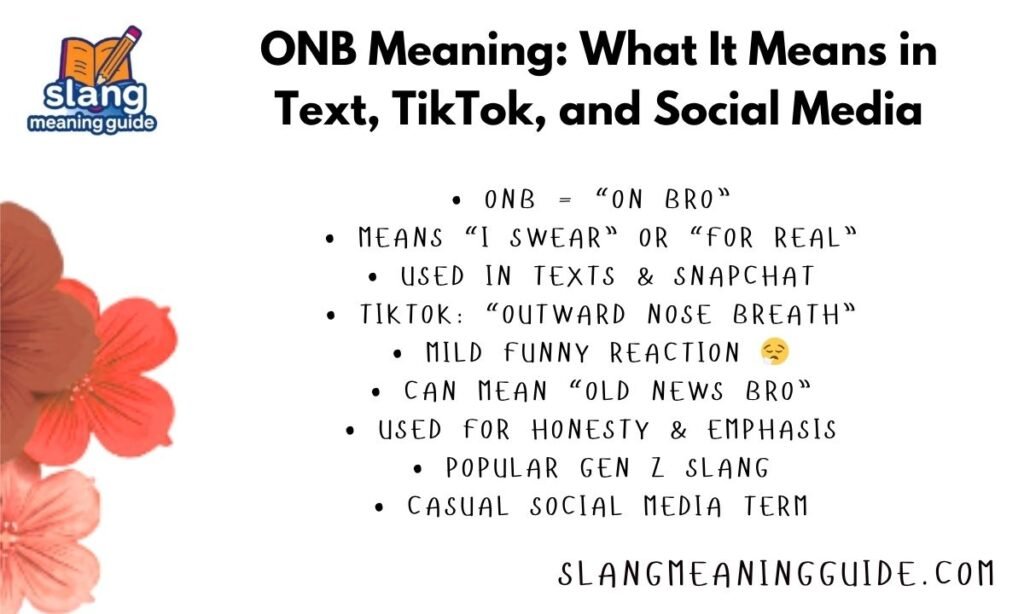
ONB most commonly stands for “On Bro.”
It’s a slang phrase used in casual online conversations to emphasize that something is true or serious. Think of it as the text equivalent of saying “I swear,” “I’m not lying,” or “on my life.”
When someone drops ONB into a message, they’re adding emotional weight — they want you to believe them or take what they’re saying at face value.
Simple example: “I’ll be there at 8, ONB.”
That one phrase turns a regular statement into a near-promise. It signals sincerity without requiring a long explanation.
What ONB Stands For
On Bro (Primary Meaning)
This is the meaning you’ll see most often, especially on Snapchat and in text messages. It comes from the tradition of “swearing on” someone or something you care about — similar to “on God,” “on my mom,” or “on my life.”
The “bro” here refers to a close friend or brother, someone the speaker values enough to stake their credibility on. ONB is believed to have originated from Chicago street slang and African American Vernacular English (AAVE).
The term then spread through younger communities on social media platforms, particularly Snapchat and TikTok. In internet culture, it’s similar to phrases like “On Folk” or “On God” — all expressions used to affirm the truthfulness of a statement.
Outward Nose Breath (TikTok Context)
On TikTok specifically, ONB often means something different. TikTok users often use ONB to mean “Outward Nose Breath.” This describes that small reaction when something’s kind of funny but not enough to laugh out loud — just enough to make you breathe out through your nose.
It’s a more honest reaction than typing “lol” when you didn’t actually laugh. If you smirked at a video but didn’t crack up, ONB covers that middle ground.
Old News Bro (Less Common)
A third meaning, less frequent but still in use, is “old news bro.” This one carries a dismissive or sarcastic tone. If someone shares something everyone already knew, replying with “ONB” tells them they’re late to the party. It’s usually paired with a 🙄 or 💀 emoji to make the tone clear.
Where ONB Is Used
TikTok
TikTok’s comment culture rewards precision. Using “onb” instead of generic “lol” or “haha” signals that you found something genuinely amusing but you’re being honest about the degree.
On TikTok, expect to see the “Outward Nose Breath” interpretation more than anywhere else, especially in comment sections under mildly funny or relatable videos.
Snapchat
Snapchat users use ONB almost exclusively to mean “On Bro” — a statement of genuine sincerity. When someone says “onb” in a Snap or message, they’re emphasizing that whatever they’re saying is real and true. Think of it as the digital version of putting your hand on your chest and saying “I mean it.”
Instagram sits between the two. In DMs and personal conversations, “On Bro” is the more common read. In comment sections under meme pages or funny videos, “Outward Nose Breath” shows up more often. Context and the type of account matter here.
Text Messages
In regular texting, ONB almost always means “On Bro.” People use it to back up a claim, stress they’re being real, or add emphasis when a plain statement doesn’t feel strong enough.
ONB Examples in Text and Comments
Seeing it in action makes the meaning click faster than any definition. Here are real-style usage examples across different contexts:
Sincere/Emphatic:
- “ONB I didn’t tell anyone about that.”
- “She was actually there, ONB.”
- “I’ll have it done by tonight, ONB.”
TikTok Comment (Outward Nose Breath):
- “ONB this is too relatable 😭”
- “That part got me — ONB”
Old News Bro:
- “They broke up two weeks ago, ONB 🙄”
- “ONB that movie came out last year.”
Each one has a different emotional tone, but you can read it correctly once you know which context you’re in.
Is ONB Always “On Bro”?
No — and that’s where a lot of confusion comes from.
Context Changes the Meaning
The same three letters mean different things depending on the platform, the tone of the conversation, and who’s sending it. Here’s a quick breakdown:
| Platform | Most Common ONB Meaning | Tone |
| Snapchat | On Bro | Sincere, serious |
| TikTok | Outward Nose Breath | Mild humor, honest reaction |
| Instagram DMs | On Bro | Casual, personal |
| Instagram Comments | Outward Nose Breath | Dry, understated |
| Text messages | On Bro | Emphatic, trust-building |
Understanding these subtle differences really matters in 2026’s digital world. When you know acronyms like ONB, you can stay relevant online and connect better with Gen Z.
When to Avoid Assuming
If you’re not sure which meaning applies, look at the rest of the message. Is the person making a claim they want you to believe? That’s “On Bro.” Are they reacting to something mildly funny? That’s probably “Outward Nose Breath.” Is someone being dismissive about information you just shared? “Old News Bro” fits there.
ONB vs. Similar Slang Terms
ONB sits in a category with several other honesty-emphasis phrases that Gen Z and younger millennials use regularly. Here’s how they compare:
| Slang | Full Meaning | Emotional Weight | Common Platform |
| ONB | On Bro | Strong, personal | Snapchat, text |
| ONG | On God | Very strong, near-oath | TikTok, Twitter |
| FR | For Real | Medium emphasis | All platforms |
| No Cap | Not lying | Casual sincerity | All platforms |
| NGL | Not Gonna Lie | Honest opinion | All platforms |
| ISTG | I Swear To God | Intense, serious | Text, Snapchat |
ONB lands somewhere between “FR” and “ONG” in terms of intensity. It’s more personal than “for real” but less dramatic than swearing on God. The “bro” element gives it a closeness that makes it feel more intimate in friend-group conversations.
When Not to Use ONB
ONB is casual slang. That means there are clear situations where it doesn’t belong:
- Professional emails or work messages
- Formal academic writing
- Talking to authority figures
- Customer-facing communication
- Any context where you need to sound credible to someone unfamiliar with internet slang
Using ONB in the wrong setting doesn’t just look out of place — it can actually undermine your credibility. Keep it for conversations with people who already speak the same language.
FAQ’s
What does ONB mean in texting?
It means “On Bro” — a way of swearing something is true or emphasizing sincerity, similar to “I swear.”
What does ONB mean on TikTok?
On TikTok it usually means “Outward Nose Breath,” used to react to something mildly funny rather than laugh-out-loud funny.
What does ONB mean on Snapchat?
On Snapchat, ONB almost always means “On Bro” — used to stress honesty or back up a claim.
Can ONB mean something else?
Yes. Less commonly, it means “Old News Bro,” used sarcastically when someone shares outdated information.
Is ONB offensive?
No, it’s not a slur or curse word. It can sound intense or confrontational depending on tone, but it’s generally just casual slang.
Can anyone use ONB?
Yes, it’s not gender-specific or tied to any particular group. Anyone comfortable with the slang can use it appropriately.
Is ONB appropriate at work?
No. It’s casual internet slang and should be kept out of professional or formal settings.
Where did ONB come from?
It originated in Chicago street slang and AAVE, then spread through social media, particularly Snapchat and TikTok.
Conclusion
ONB is one of those slang terms that looks simple but actually shifts meaning depending on where you’re reading it. On Snapchat and in texts, it’s “On Bro” — a personal way to emphasize you’re being straight with someone.
On TikTok comments, it often means “Outward Nose Breath,” a more honest alternative to LOL. In some cases, it’s “Old News Bro,” a light dig at someone who’s behind the curve.
The key is context. Once you know what platform you’re on and what kind of conversation is happening, reading ONB correctly becomes second nature. Use it with friends in casual conversations, keep it off professional channels, and you’ll have no trouble navigating it from here.