
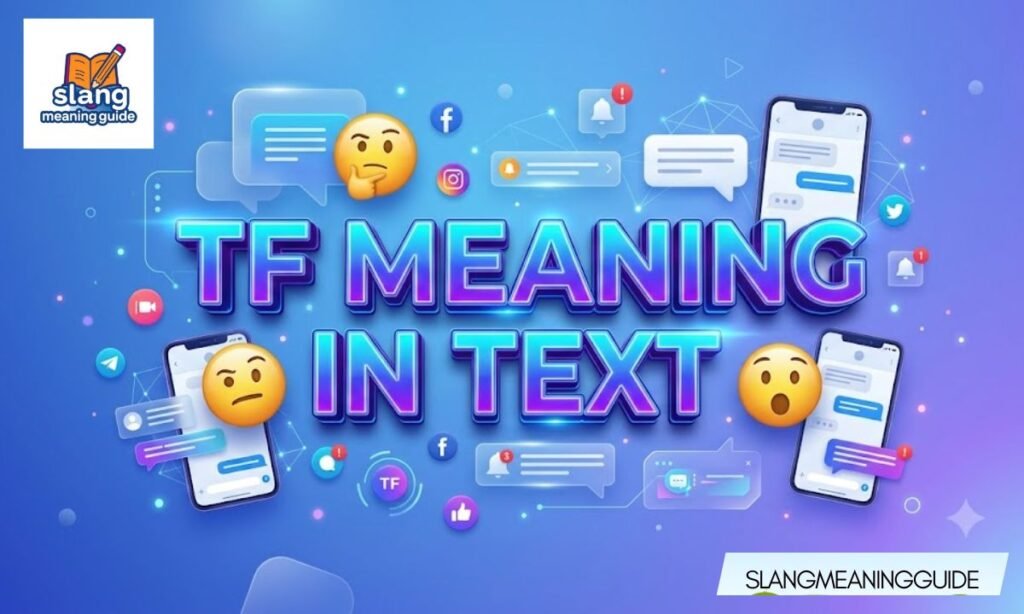
Someone texted you “tf,” and now you are trying to decipher what they could have possibly meant by it. It’s short, rude, and everywhere. Here is what it means and how to respond to it.
What Does TF Mean in Text?
TF is an abbreviation of “the fuck” that is used to help stress an exclamation or question.
It is commonly seen in questions like “What tf is happening?” or “Where tf are you?” and is meant to convey the same idea as “on earth.” It doesn’t really have much of a meaning itself and is just used for emphasis.
The Emotional Tone Behind TF
TF shows up when someone is surprised, confused, annoyed, or just can’t believe what they’re seeing. It’s less about the words and more about the reaction.
A lot of the time, it’s not even angry. People use it for funny, weird, or unexpected moments just as often as frustrating ones.
When TF Signals Confusion
- “TF is this app trying to do?”
- “Wait, tf just happened?”
- “TF does that even mean?”
These read like genuine head-scratchers. The person isn’t mad. They’re just baffled.
When TF Signals Frustration
- “TF, do you think you’re doing?”
- “TF is wrong with this Wi-Fi?”
- “How tf did I lose my keys again?”
Here, the tone shifts. It leans a bit sharper, though still short of full-on anger in most casual chats.
Common Ways People Use TF in a Sentence
TF almost always slots into a question. That’s part of what makes it easy to recognize once you know the pattern.
Some of the most common phrasings include:
- “TF is going on?”
- “TF is this?”
- “Where tf are you?”
- “How tf did that happen?”
- “TF do you mean by that?”
Notice it’s almost always written in lowercase. That casual styling matches the tone of the message itself.
TF vs WTF: What’s the Difference?
TF and WTF are similar but different abbreviations, since WTF stands for “what the fuck” while TF is usually the short form of fuck without “what” added to it.
Hence, the phrase “what tf” and WTF have almost the same meaning but are structured differently. TF is less specific than WTF because it is used both as an interjection and as a part of a question. By contrast, WTF is a complete phrase and always remains an interjection. For example, one can ask, “What the fuck?” instead of “What tf?” but rarely “WTF” without the addition of the word “fuck.”
Therefore, WTF is a more concrete representation of “what the fuck,” while TF is interchangeable with fuck depending on the context in which it is used. Overall, WTF is the short form of “what the fuck,” while TF is short for fuck.
Read Must: White Heart Emoji Meaning: What Really Says
Alternative Meanings of TF
TF isn’t always about swearing. Depending on where you see it, it can mean something completely different.
| Context | Possible Meaning |
| Casual texting | “The f***,” an intensifier |
| Reacting to a joke | “Too funny” |
| League of Legends chat | Twisted Fate, a character |
| Gaming communities | Team Fortress, a game title |
| Formal writing (rare) | “To follow” in some niche contexts |
Context does all the heavy lifting here. If you’re in a gaming Discord, TF probably isn’t about swearing at all.
How to Tell Which Meaning Applies
Look at the setting first. A gaming server leans toward game references. A group chat with friends usually points straight to the intensified meaning.
Is TF Appropriate to Use?
TF is casual and a little rough around the edges. It works fine with friends, but it’s not something to drop into a work email or a message to your boss.
If you’re not sure how someone will take strong language, it’s safer to skip it. A simple “the heck” gets a similar point across without the edge.
Safer Alternatives to TF
- “The heck”
- “On earth”
- “In the world”
- “Seriously, what?”
These keep the same energy without the vulgar undertone, which matters in more formal or mixed-company settings.
Where TF Shows Up Most
TF is everywhere online, but it’s especially common on platforms built around quick reactions and short comments.
You’ll spot it constantly on Twitter/X, TikTok comments, Instagram replies, and group chats. It fits naturally into fast, casual typing where full sentences feel too slow.
Younger users tend to use it more often, though it’s spread widely enough that plenty of adults use it too, especially in relaxed, non-professional settings.
Regional and Cultural Differences
Tolerance for TF isn’t the same everywhere. Some online communities treat it as totally normal, while others see it as too crude for regular use.
Age plays a role too. Younger users generally use it more freely, while older users might reach for softer phrasing or avoid it altogether.
If you’re texting someone new, it’s worth reading the room first. Match their tone rather than assuming everyone’s comfortable with strong language right away.
When Not to Use TF
There are a few clear situations where TF just doesn’t fit. Knowing these can save you from an awkward conversation.
- Professional emails or work Slack channels
- Messages to older relatives who might not use slang
- Formal customer service chats
- Any conversation where the other person hasn’t used casual language themselves
When in doubt, dial it back. You can always loosen up the tone later once you know how someone communicates.
Frequently Asked Questions
What does TF mean in a text message?
TF usually means “the f***,” used to add strong emotion to a question or reaction.
Is TF the same as WTF?
They’re closely related, but WTF spells out “what the f***” fully, while TF is a flexible piece that combines with other question words.
Is it rude to say TF to someone?
It can come across as rude or too casual, especially with people who aren’t comfortable with strong language.
Does TF always mean something negative?
No, it’s often used for surprise or humor, not just anger or frustration.
What’s a polite alternative to TF?
“The heck” or “on earth” get the same point across without sounding vulgar.
Conclusion
TF is a short, blunt way to add emotional punch to a message, and once you know the pattern, it’s easy to spot in almost any casual chat. It works well among friends but can come across poorly in formal settings, so reading the room matters. Understanding both its main meaning and its softer alternatives helps you use it, or avoid it, at the right moment.