
Your skin flares up at the slightest wrong move. You have tried dozens of creams and regretted half of them. Before you reach for either Nivea or Aveeno, here is exactly what sets them apart for reactive, sensitive skin.
Nivea vs Aveeno: Main Difference for Sensitive Skin
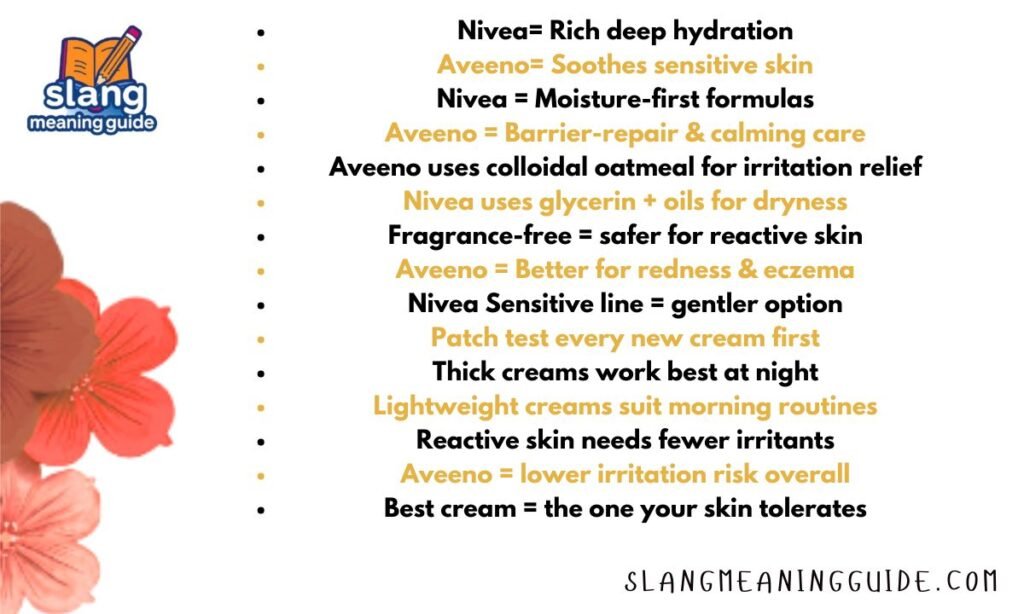
These two brands sit in the same drugstore aisle, but they are built around completely different skincare philosophies. Nivea has been around for over a century, and its reputation is built on rich, deeply moisturizing formulas designed to combat dryness.
Aveeno came at the problem from a different angle, centering its entire identity around colloidal oatmeal and soothing ingredients that calm reactive skin rather than just hydrate it. That difference in focus matters enormously when your skin is easily irritated, and it shapes every product both brands put out.
What Nivea Focuses On
Nivea’s core strength is intense moisture delivery. Its classic blue tin has been a household staple for generations, and for good reason — it works hard to hydrate and soften dry skin. The formulas lean on glycerin for water-binding hydration, shea butter and various oils for nourishment, and silicones for a smooth, soft finish.
These are all effective ingredients for replenishing dry skin. The issue for sensitive skin users is that several Nivea products, including some popular body creams and face creams, still contain fragrance.
Fragrance is one of the most commonly flagged contact allergens in skincare, and for truly reactive skin, even a subtle scent can trigger redness or itching.
Nivea does have a “Sensitive” sub-line that strips out some of the more problematic ingredients, and those versions are significantly better tolerated by people with reactive skin.
But the broader Nivea range — including many bestselling products — is not designed with sensitive skin as the priority. The focus is moisture first, and gentleness is a secondary consideration depending on which specific product you pick up.
Aveeno’s Oat-Based Soothing Approach
Aveeno built its identity around one standout ingredient: colloidal oatmeal. This is finely milled oat that has been processed into a form the skin can actually absorb and benefit from. Colloidal oatmeal has decades of research behind it showing it can reduce itching, calm inflammation, and support the skin’s natural moisture barrier.
The U.S. Food and Drug Administration recognizes it as a skin protectant — that is a meaningful distinction in the world of skincare claims. Most Aveeno sensitive-skin products also contain oat extract and oat oil, giving the formulas multiple oat-derived compounds that work together to soothe irritation.
The Aveeno Calm + Restore line takes this further by combining colloidal oatmeal with prebiotic oat extract to support the skin’s microbiome and barrier function. These products are marketed as fragrance-free and tested for sensitive skin.
Dermatologists frequently recommend Aveeno for patients with eczema, rosacea, and chronically dry, reactive skin because the ingredient philosophy aligns well with what damaged and sensitive skin barriers actually need: soothing, protection, and hydration without unnecessary additives.
Which Brand Is Gentler for Reactive Skin
Gentleness in skincare is not just about what a product feels like on your skin — it is about what is inside the formula and how likely those ingredients are to cause a reaction. Aveeno comes out ahead here for most people with genuinely sensitive or reactive skin.
Its fragrance-free positioning, shorter ingredient lists in key products, and oat-based soothing core make it the lower-risk option for skin that reacts easily to new products.
Fragrance-Free vs Scented Formulas
Fragrance is the single most important factor to check when buying a cream for sensitive skin. It is not just synthetic fragrance that causes problems — natural fragrance, essential oils, and botanical extracts can all trigger reactions in reactive skin.
Aveeno’s sensitive-skin range is largely fragrance-free, which removes one of the most common irritants from the equation right away. That alone makes a significant difference for anyone who has ever experienced stinging, redness, or a rash after applying a scented moisturizer.
Nivea’s range is more mixed. Some products are fragrance-free, but many popular Nivea creams, including the original blue tin, contain fragrance. If you pick up a Nivea product without checking the label first, there is a real chance it contains a scent that could irritate reactive skin.
That is not a dealbreaker for everyone — plenty of people with normal to mildly dry skin use scented Nivea creams with no issue. But if your skin is truly sensitive, reading the ingredient list before buying is non-negotiable.
Nivea Ingredients to Watch
Certain ingredients in the broader Nivea range are worth knowing about before you buy. Fragrance or parfum is the most significant one, as discussed above. Some Nivea creams also contain lanolin, which is a highly effective moisturizing ingredient but can cause reactions in people with wool allergy or lanolin sensitivity.
Mineral oil and petrolatum are heavy occlusives used in many Nivea products — they are generally considered safe and non-irritating, but on acne-prone sensitive skin, they can contribute to clogged pores. These are not bad ingredients universally, but they can be problematic depending on your specific skin concerns.
On the positive side, Nivea’s glycerin content is high in most formulas, and glycerin is a well-tolerated, gentle humectant that works well for most sensitive skin types.
The Nivea Sensitive range specifically removes fragrance and uses panthenol and vitamin E alongside glycerin to calm and protect, making it a much better option than the standard Nivea formulas for people with reactive skin.
Best Choice for Dryness, Redness, and Irritation
Matching the right cream to your specific concern makes all the difference. Here is a straightforward breakdown:
| Skin Concern | Better Pick | Why |
| Very sensitive or reactive skin | Aveeno | Oat-based soothing, broad fragrance-free range |
| Dry skin with mild sensitivity | Aveeno or Nivea Sensitive | Both hydrate well; Aveeno is usually less irritating |
| Rich, creamy hydration | Nivea | Thicker texture and stronger occlusive feel |
| Eczema-prone or chronically itchy skin | Aveeno | Better sensitive-skin positioning and oat support |
| Redness and barrier damage | Aveeno | Colloidal oatmeal directly targets inflammation |
| Budget-friendly deep moisture | Nivea | Affordable and widely available in richer formulas |
The pattern is clear. When skin is truly reactive — prone to redness, stinging, or eczema-like symptoms — Aveeno is consistently the safer starting point. And When the primary need is rich hydration and the skin can tolerate heavier formulas, Nivea holds its own.
When Nivea Can Still Work Well
Nivea is not the wrong choice across the board. For people with dry but not genuinely reactive skin, Nivea creams deliver excellent moisture and are often more affordable than Aveeno for a comparable product size.
The original Nivea Cream is one of the most effective occlusive moisturizers available at drugstore prices — it forms a layer over the skin that locks in hydration effectively, which is helpful for very dry skin that needs a richer texture.
Choosing the Right Nivea Formula
If you want to try Nivea with sensitive skin, go straight to the Sensitive line rather than the classic formulas. The Nivea Sensitive range removes fragrance, simplifies the formula, and includes calming ingredients like panthenol.
These products are significantly better tolerated by reactive skin than the original blue tin or many of the body lotions in the broader range. Look for “fragrance-free” or “sensitive” clearly labeled on the front of the packaging before buying.
Patch testing is essential before committing to any Nivea product on reactive skin. Apply a small amount to the inside of your wrist or elbow, leave it for 24 hours, and watch for any redness, itching, or swelling.
This one step can save you from a full-face or full-body reaction if a product turns out to be incompatible with your skin. No cream, regardless of brand, is guaranteed to work for every person with sensitive skin.
When Aveeno Is the Safer Option
Aveeno makes the most sense as your first choice when your skin is genuinely reactive — not just dry. If you experience redness easily, if your skin stings when you apply products, if you have been diagnosed with eczema or rosacea, or if you have had reactions to fragranced creams in the past, Aveeno’s philosophy aligns much more closely with what your skin needs.
Its oat-based formulas are clinically studied, dermatologist-recommended, and built around reducing irritation rather than just adding moisture.
How to Choose the Right Cream in 2026
The right moisturizer for sensitive skin in 2026 is not about brand loyalty. It is about reading labels, understanding your specific sensitivity triggers, and testing before committing. Both Nivea and Aveeno have improved their sensitive-skin offerings over the years, but they are still fundamentally different products for different skin needs.
Patch Testing Before First Use
Patch testing is the single most practical thing you can do before adding any new cream to your routine. It takes about 24 hours and can prevent a week of dealing with a reaction on a larger area of skin.
Apply a small amount of the product to a discreet area — the inner wrist or behind the ear work well — and leave it alone without washing for a full day. If you notice no redness, itching, or swelling after 24 hours, the product is likely compatible with your skin.
If you do react during a patch test, that is useful information. It tells you which product is not right for you before it causes a bigger problem.
Do not skip this step just because a cream is labeled “gentle” or “for sensitive skin” — those labels are not regulated in the same way as SPF or drug claims, and they do not guarantee your specific skin will tolerate the formula.
Best Cream for Morning and Night
Your morning and evening routines may actually call for different products, even for sensitive skin. In the morning, a lighter, fragrance-free moisturizer is usually better because it sits under sunscreen and, if you wear it, makeup. Heavier occlusive creams can pill under SPF or cause makeup to slide.
Aveeno’s lighter Calm + Restore formulas work well here. At night, your skin has hours to absorb a richer product without layering concerns. This is where a thicker cream — either Aveeno’s body cream or a Nivea Sensitive formula — can deliver deeper hydration while you sleep.
Frequently Asked Questions
Is Aveeno gentler than Nivea for sensitive skin?
Yes — Aveeno is generally gentler because its formulas are built around soothing oat ingredients and are widely available fragrance-free.
Can I use Nivea if I have very reactive skin?
You can, but stick to the Nivea Sensitive range, always patch test first, and check that the specific product is fragrance-free.
What makes colloidal oatmeal good for sensitive skin?
Colloidal oatmeal calms inflammation, reduces itching, and supports the skin’s moisture barrier — all key needs for reactive or irritated skin.
Which brand is better for eczema-prone skin?
Aveeno is the more consistently recommended choice for eczema-prone skin because of its oat-based calming formulas and fragrance-free positioning.
Do I need to patch test even if a cream says “for sensitive skin”?
Yes — “sensitive skin” labels are not regulated, and individual skin reactions vary, so patch testing is always the safest move with any new product.
Conclusion
If you have sensitive skin, Aveeno is the safer starting point because its oat-based formulas are designed specifically to calm irritation, support the skin barrier, and minimize common triggers like fragrance.
Nivea can still work well for mild sensitivity or dryness when you choose the right formula from its Sensitive range and patch test first. Ultimately, the best cream for your skin is the one your skin actually tolerates — so start gentle, check your labels, and let your skin tell you what works.