
You’ve seen both brands in every skincare routine on TikTok. But they’re not doing the same job. One repairs. One treats. Picking the wrong one — or using them wrong together — is the most common mistake Gen Z makes. Here’s exactly what each brand does, which is right for your skin, and how to stack them properly.
If you’re a Gen Z woman trying to figure out whether CeraVe or The Ordinary is worth your money, the short answer is: both — but for different reasons. These brands are not interchangeable. They solve different problems, and conflating them leads to routines that either do too little or end up irritating your skin.
This article breaks down what each brand actually does, which one performs better for specific skin concerns, and how to build a 2026 routine that gets the most out of both. No filler, no ingredient overwhelm. Just what you actually need to know.
CeraVe vs The Ordinary: Core Difference
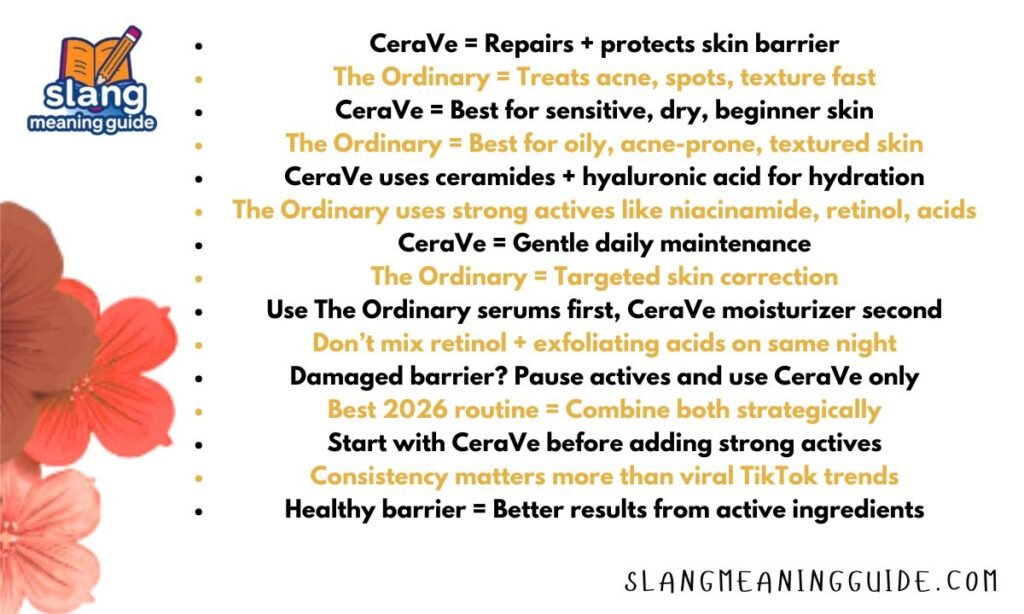
The Ordinary and CeraVe were built around completely different ideas. CeraVe is a barrier-first brand. Every product centers on keeping your skin’s protective layer intact using ceramides, hyaluronic acid, and niacinamide in gentle, balanced formulas. The Ordinary is an ingredient-led brand. It delivers high-concentration actives — acids, retinoids, niacinamide at clinical percentages — designed to treat specific concerns fast. One maintains. The other targets.
CeraVe
- Skin barrier repair and support
- Ceramides + hyaluronic acid base
- Fragrance-free, dermatologist-developed
- Gentle enough for daily, long-term use
- Best for beginners and sensitive skin
The Ordinary
- Targeted treatment with active ingredients
- Niacinamide, retinol, acids at high strength
- Minimalist, single-ingredient formulas
- Faster visible results for specific concerns
- Requires some ingredient knowledge
This core difference matters because it affects how you layer them, when you use each one, and what results you can realistically expect. CeraVe won’t fade your dark spots overnight. The Ordinary won’t nurse a damaged barrier back to health. But together, used strategically, they cover almost everything.
CeraVe Ingredients That Support the Skin Barrier
CeraVe’s formulas are built around three essential ceramides (1, 3, and 6-II). These lipids are naturally present in healthy skin. They hold the outer layer together and prevent water loss. When your barrier is compromised — from over-exfoliating, harsh weather, or stress — ceramides are what you need to restore it. CeraVe pairs these with hyaluronic acid for immediate hydration and niacinamide to reduce redness and calm inflammation.
The brand’s MVE (MultiVesicular Emulsion) delivery technology releases these ingredients slowly throughout the day rather than all at once. This sustained release is part of why CeraVe works so well for dry and sensitive skin. It doesn’t hit your skin barrier hard and fast. It works with it gradually, which is exactly what compromised or reactive skin needs. Fragrance-free formulas also lower the chance of irritation for almost any skin type.
Ceramides 1, 3, 6-II, Hyaluronic Acid, Niacinamide, Glycerin, Cholesterol.
The Ordinary Ingredients That Target Acne and Texture
The Ordinary built its reputation on giving people access to clinical-grade actives at drugstore prices. Its niacinamide 10% + zinc 1% serum is one of the best-selling skincare products globally, and for good reason. It targets oil production, minimizes pores, and reduces dark spots.
The brand’s AHA/BHA peeling solution delivers glycolic and lactic acid exfoliation that visibly resurfaces skin in a single use. Retinol formulas at 0.2%, 0.5%, and 1% make it possible to start retinoids gradually and work up over time.
The transparency is part of the appeal. Every product lists its active percentages clearly, which makes it easier to understand what you’re putting on your skin. But high concentrations also mean higher risk if you’re new to actives or if you layer incompatible ingredients.
The Ordinary rewards people who take the time to learn how the products work. Used well, the results are real. Used carelessly, you can damage your skin barrier fast — which is exactly where CeraVe becomes essential as a recovery tool.
Niacinamide 10%, Zinc PCA 1%, Retinol 0.2–1%, AHA 30% / BHA 2%, Salicylic Acid 2%, Alpha Arbutin 2%.
Which Brand Works Better for Your Skin Type
The right brand depends almost entirely on your main skin concern. Both brands have strong reputations, but they’re optimized for very different skin situations. Choosing based on what your skin actually needs — rather than what’s trending — is the single most useful thing you can do for your routine in 2026.
| Skin Concern | Better Pick | Why |
| Sensitive or reactive skin | CeraVe | Gentler, barrier-first, lower irritation risk |
| Dryness or weakened barrier | CeraVe | Ceramides lock in moisture and restore the barrier |
| Oily skin and clogged pores | The Ordinary | Niacinamide and salicylic acid target oil directly |
| Acne marks, dark spots, texture | The Ordinary | Higher-concentration actives treat hyperpigmentation |
| Beginner-friendly routine | CeraVe | Simpler, lower risk, easy to use consistently |
| Anti-aging and texture improvement | The Ordinary | Retinoids and exfoliating acids speed cell turnover |
Best Choice for Acne, Oil, and Breakouts
For acne-prone and oily skin, The Ordinary is the stronger performer. It addresses the root causes — excess sebum, clogged pores, and surface congestion — with targeted actives that CeraVe’s gentler formulas aren’t designed to match. But using only The Ordinary when your skin is breaking out is a mistake. Active ingredients dry out the skin and can damage the barrier, which triggers even more oil production as your skin tries to compensate.
When to Choose Active Treatments
The Ordinary’s niacinamide 10% + zinc 1% serum is the starting point for most oily and acne-prone skin types. Applied every morning, it visibly reduces oil production and shrinks the appearance of pores within three to four weeks of consistent use.
For persistent breakouts, adding the salicylic acid 2% solution two to three times per week helps unclog pores at a deeper level. The key word is consistent — these actives build results over time, not overnight. For hyperpigmentation and post-acne marks, the alpha arbutin 2% + HA serum is worth adding to a PM routine.
It’s gentler than glycolic acid and works well alongside niacinamide. If your skin is comfortable with those two and you want faster texture results, introducing a retinol (start at 0.2%) two or three nights per week is the next step. The AHA/BHA peeling solution is effective but should be used once a week at most and never alongside retinol on the same night.
⚠️ Don’t skip the moisturizer. The Ordinary’s actives work better on a hydrated skin barrier. Always seal active serums with a CeraVe moisturizer — especially when you’re using acids or retinol. This isn’t optional; it’s what protects your barrier while the actives do their job.
Best Choice for Sensitivity and Barrier Repair
If your skin is dry, sensitive, eczema-prone, or recovering from over-exfoliation, CeraVe is the clear choice. The brand’s entire design philosophy centers on restoring what your barrier has lost. This makes it far more effective than The Ordinary at calming reactive skin and maintaining long-term hydration — both of which are prerequisites for any active treatment to work properly.
When to Choose a Gentle Routine
A stripped or irritated skin barrier shows up as redness, tight or flaky patches, increased sensitivity, and breakouts that seem unrelated to anything you’ve changed. If this sounds familiar, stop layering actives and go back to basics. The CeraVe hydrating cleanser plus the moisturizing cream (the one in the tub) is enough.
Ceramides and hyaluronic acid, used consistently for two to three weeks, will do more for your skin than any serum stack while your barrier recovers. Add fragrance-free SPF in the morning and nothing else.
Once your skin feels stable — no tight patches, no unexpected breakouts, no stinging when you apply products — that’s when you can reintroduce one The Ordinary product at a time. Start with hyaluronic acid 2% + B5 layered underneath your CeraVe moisturizer. This adds hydration without any risk of irritation.
From there, niacinamide is the next safest option. Start with every other day and build up. Sensitive skin needs a slower introduction to any active, even the gentler ones.
Can You Use CeraVe and The Ordinary Together?
Yes, and for most people this is the smartest approach. The brands complement each other in a way that neither achieves alone. The Ordinary provides the treatment layer. CeraVe provides the protective layer. Stack them in the right order and you get targeted results without the barrier damage that often comes from using actives without adequate hydration support.
Morning Routine
1_CeraVe Hydrating or Foaming Cleanser
Choose based on skin type — hydrating for dry/combo, foaming for oily
2_The Ordinary Niacinamide 10% + Zinc 1%
Wait 1–2 minutes before layering. Controls oil and minimizes pores
3_CeraVe AM Facial Moisturizing Lotion SPF 30
Seals in the serum and provides sun protection — non-negotiable step
Evening Routine
1_CeraVe Hydrating Cleanser
Gentle enough to use nightly without stripping your barrier
2_The Ordinary Hyaluronic Acid 2% + B5
Apply to slightly damp skin for maximum hydration absorption
3_The Ordinary Retinol 0.2% (2–3 nights per week)
Skip on nights you use any exfoliating acid. Start slow
4_CeraVe Moisturizing Cream
Always seal with a ceramide moisturizer after any active treatment
General rule: actives from The Ordinary go first, then seal everything with CeraVe. This order protects your barrier while letting the treatments do their job.
How to Layer Both Brands Safely
A few ingredient combinations cause real problems and are worth knowing before you start. Vitamin C and niacinamide used at the same time can cause temporary flushing in some people. Retinol and exfoliating acids used on the same night push irritation risk significantly higher. Benzoyl peroxide from any brand can deactivate other actives in your routine.
These aren’t minor inconveniences — mismatched layering can result in visible peeling, redness, and a damaged barrier that takes weeks to repair. The simplest way to avoid conflicts is to alternate rather than stack. On nights you use retinol, skip acids entirely. On nights you use the AHA/BHA peel, skip retinol.
Keep your mornings to one active (niacinamide is the most versatile) and build the rest of your AM routine around protection with CeraVe. This structure gives each active the room it needs to work without competing with or destabilizing the others. You get better results, fewer reactions, and a much healthier skin barrier over time.
Final Verdict for Gen Z Skincare
Treating CeraVe and The Ordinary as competitors is the wrong frame. They do different things and the best Gen Z routines in 2026 use both. CeraVe handles daily skin health — hydration, barrier strength, and protection.
The Ordinary handles targeted correction — acne, texture, pigmentation, and aging. If you can only afford one right now, start with CeraVe and build a stable base before layering actives. If your barrier is already healthy and you want to treat a specific concern, that’s where The Ordinary earns its place in your routine.
Frequently Asked Questions
Is CeraVe or The Ordinary better for Gen Z acne?
The Ordinary is more effective at directly treating acne with niacinamide, salicylic acid, and retinol. CeraVe supports the routine by keeping your barrier hydrated so actives don’t cause more breakouts.
Can I use The Ordinary as a beginner?
Yes, but start with just one product. Niacinamide 10% + zinc 1% or hyaluronic acid 2% are the lowest-risk entry points. Avoid acids and retinol until you understand how your skin reacts.
Does CeraVe clog pores?
Most CeraVe products are non-comedogenic. The moisturizing cream (tub formula) is heavier and may not suit very oily skin — the PM facial moisturizing lotion is a lighter option for that skin type.
Which brand gives faster visible results?
The Ordinary delivers faster results for targeted concerns like oil control and skin texture. CeraVe produces gradual improvements in barrier health and hydration that build over weeks of consistent use.
What’s the best order for layering CeraVe and The Ordinary?
Apply The Ordinary serums first on clean skin, then seal with a CeraVe moisturizer. Actives go before occlusive and heavier moisturizing layers — this is true for both AM and PM routines.
Conclusion
For a Gen Z woman trying to build a skincare routine that actually works, CeraVe and The Ordinary are not an either-or choice — they’re two parts of the same strategy.
CeraVe gives you a stable, healthy skin barrier every day, and The Ordinary gives you the targeted treatments that address specific concerns like acne, texture, and uneven tone. Use them together in the right order and you get a complete routine that is both effective and sustainable in 2026.