
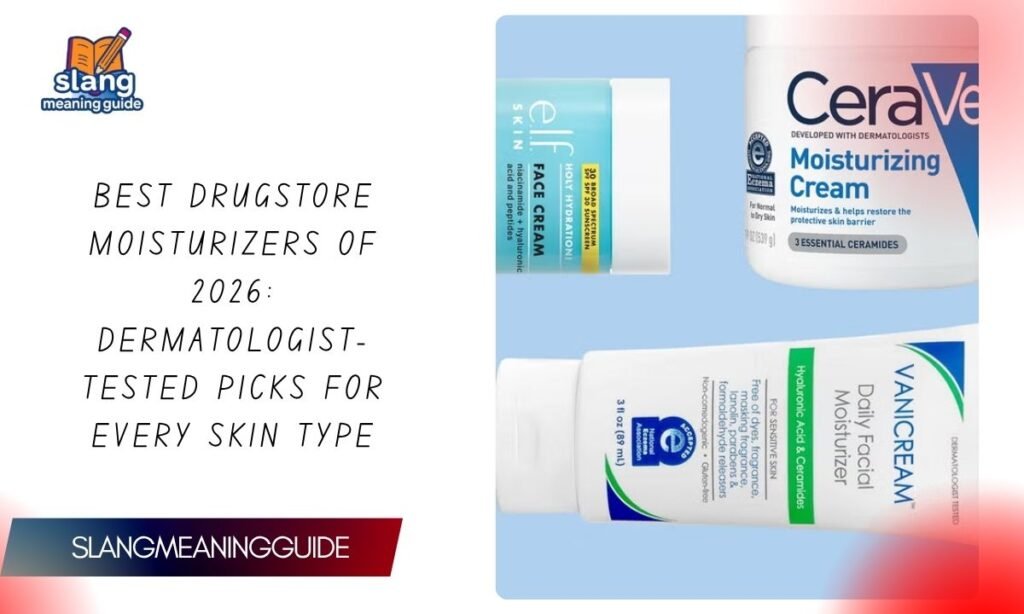
Finding a moisturizer that actually works shouldn’t cost you $200. The good news? It doesn’t have to. Whether you’re dealing with flaky winter skin, a damaged barrier from overusing actives, or just want a solid daily hydrator, the drugstore aisle has more to offer than most people realize.
The right formula — packed with ceramides, hyaluronic acid, or glycerin — can do everything a luxury cream does, without the markup.
This guide pulls from real-world testing, dermatologist input, and recent roundups to give you a clear, skin-type-specific breakdown of the best affordable moisturizers on shelves right now.
What Makes a Drugstore Moisturizer Actually Good?
Before getting into specific products, it helps to understand what you’re looking for on the label. Board-certified dermatologists consistently point to three ingredient categories that make or break a moisturizer:
- Humectants draw water into the skin. Look for glycerin, hyaluronic acid, and panthenol (vitamin B5).
- Emollients soften and smooth by filling gaps in the skin barrier. Squalane, niacinamide, and shea butter all fall here.
- Occlusives seal everything in by forming a protective layer on the surface. Petrolatum and ceramides are the most effective.
Dr. Mona Gohara, a board-certified dermatologist, put it plainly: drugstore moisturizers often contain the same tried-and-true ingredients as their pricier counterparts — just without the luxe packaging or marketing. If your moisturizer checks the ingredient boxes above, price isn’t a proxy for performance.
One other thing to keep in mind: more ingredients isn’t always better. Dermatologists frequently note that a shorter, cleaner ingredient list means fewer opportunities for irritation — especially important for sensitive or reactive skin types.
Best Drugstore Moisturizers by Skin Type (2026)
| Product | Best For | Key Ingredients | Price |
| CeraVe Moisturizing Cream | Dry skin | Ceramides, hyaluronic acid, petrolatum | ~$16 |
| Vanicream Moisturizing Cream | Sensitive skin | Glycerin, squalane, 5 ceramides | ~$14–$21 |
| Neutrogena Hydro Boost Gel Cream | Oily/combination | Hyaluronic acid, glycerin, urea | ~$20–$22 |
| La Roche-Posay Toleriane Double Repair | Damaged barrier/oily | Ceramides, niacinamide, probiotic water | ~$25 |
| Olay Super Cream SPF 30 | All skin types (AM) | Vitamins C & E, niacinamide, hyaluronic acid | ~$31–$35 |
| e.l.f. Holy Hydration! Face Cream | Normal/combo | Squalane, hyaluronic acid, niacinamide | ~$14 |
| Cetaphil Exfoliating Rough & Bumpy Cream | Keratosis pilaris | AHAs, emollients | ~$15 |
| Mustela Stelatopia+ Cream | Eczema-prone | Sunflower oil distillate, ceramides | ~$33 |
The Top Picks, Explained
CeraVe Moisturizing Cream — Best for Dry Skin
CeraVe’s classic tub is probably the most frequently dermatologist-recommended drugstore moisturizer on the market. Multiple board-certified dermatologists consistently flag it across testing roundups, and for good reason. The formula combines three essential ceramides with hyaluronic acid and petrolatum — covering humectants, emollients, and occlusives in one product.
It’s fragrance-free, non-comedogenic, and works on both face and body. Testers across several publications note that it absorbs faster than you’d expect from a rich cream and leaves no greasy film. The main critique is the tub packaging, which isn’t the most hygienic option for a face cream — but the newer pump version solves that.
Best for: Dry to very dry skin, eczema, harsh winter conditions.
Vanicream Moisturizing Cream — Best for Sensitive Skin
If your skin reacts to almost everything, Vanicream is the product dermatologists reach for first. With only 19 ingredients, it’s one of the cleanest formulas at any price point. It skips common contact allergens entirely — no fragrance, dyes, lanolin, parabens, or formaldehyde releasers.
What’s left is a genuinely effective blend: glycerin, squalane, hyaluronic acid, and five different ceramides. Testers consistently describe the texture as surprisingly silky for such a bare-bones formula. Dr. Britt Craiglow, a board-certified dermatologist, previously noted it provides strong barrier protection — making it a solid pick for anyone prone to eczema or post-procedure sensitivity.
Best for: Sensitive, reactive, or eczema-prone skin. Also great as a buffer layer when introducing retinoids.
Neutrogena Hydro Boost Gel Cream — Best for Oily and Combination Skin
Heavy creams on oily skin is a recipe for clogged pores. Neutrogena’s Hydro Boost Gel Cream gets around this with a bouncy, gel-based texture that delivers serious hydration without the weight. The star ingredient is hyaluronic acid, supported by glycerin and urea — a compound found naturally in skin that binds water and supports barrier function.
It goes on slightly slick but absorbs completely, leaving skin plump and smooth with no tackiness. Testers report compliments on their skin looking radiant hours after applying. It’s also available fragrance-free, which is the version worth buying.
Best for: Oily, combination, or dehydrated skin that still needs moisture without shine.
La Roche-Posay Toleriane Double Repair — Best for Barrier Repair
La Roche-Posay earns a consistent spot on best-of lists because its formulas are genuinely well-engineered. The Toleriane Double Repair face moisturizer has just 16 ingredients, but they’re doing real work: ceramides and hyaluronic acid for hydration, niacinamide for barrier support, and probiotic thermal spring water to support the skin’s microbiome.
Dr. Joshua Zeichner, a New York City-based board-certified dermatologist, has explained that supporting the skin’s microbiome is particularly helpful for people with sensitive or allergy-prone skin. The matte version of this formula also contains silica, starch, and perlite to absorb excess oil — making it one of the few moisturizers that works well for oily skin at night without looking shiny by morning.
Best for: Anyone recovering from over-exfoliation, prescription actives, or a compromised skin barrier.
Olay Super Cream SPF 30 — Best AM Moisturizer with Sun Protection
This is the rare drugstore product that genuinely simplifies a skincare routine without cutting corners. The formula delivers SPF 30 sun protection alongside niacinamide, vitamins C and E, hyaluronic acid, and collagen peptides — five benefits in one jar. CNN Underscored’s testing panel found it consistently outperformed other drugstore options, and dermatologist Dr. Alexis Stephens has called it a great all-in-one for anyone overwhelmed by multi-step routines.
It applies smoothly, doesn’t leave a white cast, and layers well under makeup. The one caveat: it contains fragrance, so skip it if your skin is particularly reactive.
Best for: All skin types in the morning, especially anyone wanting to streamline AM skincare.
e.l.f. Holy Hydration! Face Cream — Best Budget Face Moisturizer
At $14, this one punches well above its weight. The formula reads like a mid-range product: squalane, hyaluronic acid, niacinamide, and vitamin B5 all show up at meaningful concentrations. The texture is velvety and cushiony — it glides on, absorbs quickly, and leaves skin dewy without getting greasy.
It also layers cleanly under makeup with no pilling, which is a failure point for a surprising number of face creams. Testers from The Independent described it as feeling like a department store buy at a fraction of the price. Both vegan and cruelty-free if that’s a factor for you.
Best for: Normal to dry skin; anyone who wants a face-specific formula under $15.
How to Choose the Right Moisturizer for Your Skin Type
Matching the formula to your skin type matters more than brand loyalty. Here’s a quick guide:
- Dry skin: Go for rich creams with ceramides, petrolatum, or shea butter. Avoid gels and lightweight lotions.
- Oily skin: Lightweight, oil-free gels or fluid lotions work best. Look for non-comedogenic on the label.
- Combination skin: A gel-cream hybrid (like Neutrogena Hydro Boost) balances moisture on dry patches without overloading oily zones.
- Sensitive skin: Prioritize fragrance-free formulas with short ingredient lists. Ceramides and glycerin are your baseline.
- Acne-prone skin: Stick to non-comedogenic, oil-free options. Some formulas add low-dose salicylic acid (0.5%) to keep pores clear.
- Mature skin: Look for ceramides, peptides, and hyaluronic acid. Olay Regenerist and La Roche-Posay Toleriane are consistently recommended by dermatologists for this demographic.
How to Layer Moisturizer in Your Routine
Getting the product order right makes a real difference in how well your moisturizer performs.
Morning routine:
- Cleanser
- Serum or antioxidant (vitamin C, niacinamide)
- Moisturizer
- SPF (or a moisturizer with built-in SPF like Olay Super Cream)
Evening routine:
- Cleanser (double cleanse if you wear sunscreen or makeup)
- Treatment actives (retinoid, AHA, BHA) — on alternating nights if you’re starting out
- Moisturizer (richer formulas work better here when you have time to absorb overnight)
One note: if you’re using prescription actives like tretinoin, applying moisturizer before and after (the “sandwich method”) can reduce irritation significantly. Check with your dermatologist before adjusting a prescription routine.
Frequently Asked Questions
Do drugstore moisturizers work as well as expensive ones?
Yes, for most people. Dermatologists confirm that the core hydrating ingredients — ceramides, hyaluronic acid, glycerin — appear in both budget and luxury formulas. You’re often paying for packaging and marketing with premium brands.
How often should I apply moisturizer?
Twice daily is the standard: once in the morning after cleansing and once at night. People with very dry or eczema-prone skin may benefit from applying again after washing hands.
Can I use the same moisturizer on my face and body?
Some formulas like CeraVe Moisturizing Cream are designed for both. That said, face skin is generally more delicate, so body lotions can feel heavy or cause breakouts if used on the face regularly.
Should I moisturize if I have oily skin?
Yes. Oily skin can still be dehydrated. Skipping moisturizer can trigger your skin to produce more oil to compensate. Choose a lightweight, oil-free gel or fluid lotion instead.
What’s the difference between a moisturizer and a hydrator?
They’re often used interchangeably, but technically hydrators (like hyaluronic acid) add water to the skin, while moisturizers seal in that moisture. The best formulas do both.
The Bottom Line
The best drugstore moisturizer is the one that matches your skin type, fits your routine, and has the ingredient profile to back up its claims. CeraVe Moisturizing Cream remains the most universally recommended option across dermatologists and testing panels.
For sensitive skin, Vanicream is hard to beat. If you want SPF built in, Olay Super Cream handles both hydration and sun protection in a single step.
None of these will drain your wallet. And for most people, they’ll do everything a $150 cream promises to do — without the packaging ceremony.