
You have probably seen the name floating around body art forums or heard it whispered in a piercing studio. It sounds bold, daring, and a little mysterious. But what exactly is a Dirty Diana piercing — and is it what most people think it is?
What Is a Dirty Diana Piercing
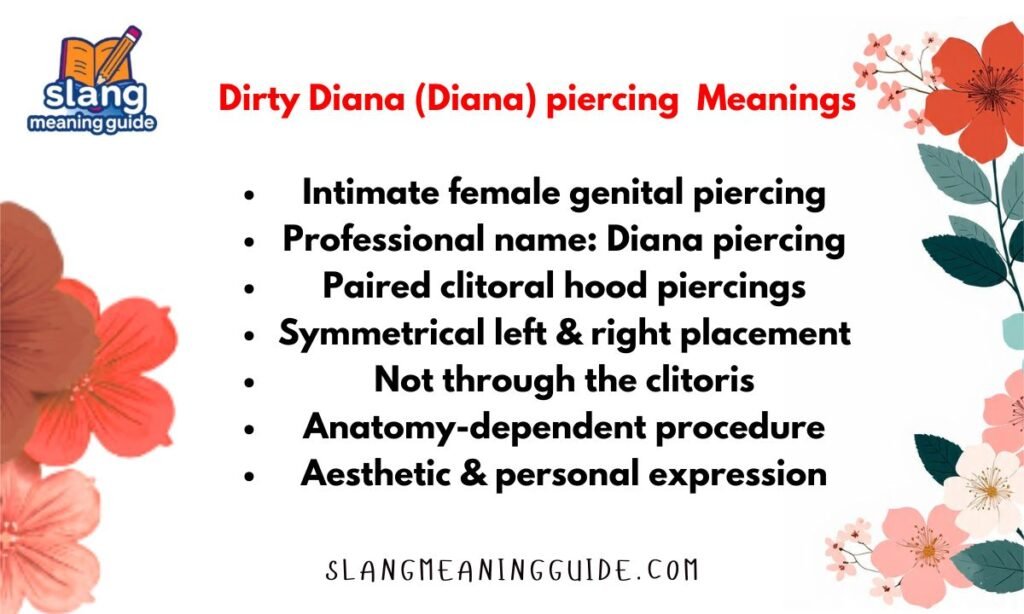
The Dirty Diana piercing is an intimate female genital piercing. It is closely related to — and often confused with — the Princess Diana piercing, which is the correct professional term used in body modification circles.
The Correct Professional Name
In professional piercing studios, this piercing is called the Princess Diana piercing or simply the Diana piercing. The “Dirty” prefix is informal slang. It picked up traction online through forums and social media, not through any official body art source.
Understanding the real name matters. When you walk into a reputable studio, asking for a “Diana piercing” will get you a clear, informed response. Using the professional term helps you communicate accurately with your piercer and get the safest result possible.
How It Differs From Similar Piercings
Many people mix up the Diana piercing with the VCH, or vertical clitoral hood piercing. They are not the same thing. The VCH is a single central piercing, while the Diana uses two separate channels — one on each side of the clitoral hood.
That paired placement is the defining characteristic of the Diana piercing. It creates a symmetrical, mirrored look that a single VCH cannot achieve. This visual difference is exactly why people specifically seek it out rather than choosing a standard clitoral hood piercing.
Placement and Anatomy
Placement is everything with this piercing. It is an anatomy-dependent procedure, which means not every person is automatically a candidate for it. A professional piercer must assess your individual anatomy before proceeding.
Where the Piercing Sits
The Diana piercing sits on the clitoral hood, with one piercing placed on the left side and one on the right. The jewelry exits on both sides of the clitoris without passing through the clitoris itself. This distinction is critical — it is a hood piercing, not a clitoral piercing.
The positioning creates a frame-like appearance around the clitoris. Many people find this placement visually striking compared to a single centered piercing. The symmetrical layout is the main reason the Diana piercing has grown in popularity within the body modification community.
Why Anatomy Determines Eligibility
Not every person has enough clitoral hood tissue to accommodate two separate piercing channels safely. A skilled piercer will examine the area carefully before agreeing to perform the procedure. Rushing this assessment is one of the most common mistakes people make when seeking intimate piercings.
If your anatomy does not suit a full Diana piercing, a professional may suggest a single VCH as an alternative. This is not a limitation — it is simply anatomy. Choosing the right piercing for your body always produces the best long-term result in both aesthetics and healing.
Pain Level and Healing
Pain and healing are the two most searched questions about this piercing. Both depend heavily on individual tolerance, aftercare, and the skill of your piercer. General estimates exist, but every experience is personal.
What to Expect During the Procedure
Most people describe the sensation as a sharp, brief pinch rather than prolonged pain. Because the procedure involves two separate piercings rather than one, there is a second moment of discomfort. However, the process is typically fast when performed by an experienced professional.
The clitoral hood area has significant nerve endings, which makes it sensitive. That same sensitivity is also why many people report that the pain passes very quickly. A calm mindset, controlled breathing, and trust in your piercer can make the entire experience significantly more manageable.
Healing Timeline and Aftercare
Initial healing for a Diana piercing can take approximately four to six weeks. However, full internal healing of genital piercings often takes longer — sometimes three to six months or more. Rushing the healing process is one of the most common causes of complications.
Aftercare involves gentle cleaning with saline solution twice daily. Avoid touching the jewelry with unwashed hands. Wear breathable, loose-fitting clothing during the healing period to minimize friction and irritation around the piercing site.
Read Must: Wu-Tang Meaning: The Full Story Behind the Legendary Name
Diana Piercing vs Other Intimate Piercings
Comparing piercings helps you make an informed decision. The table below outlines the key differences between the Diana piercing and closely related options.
| Piercing Type | Placement | Number of Piercings | Key Difference |
|---|---|---|---|
| Diana (Princess Diana) | Left and right clitoral hood | Two | Paired symmetrical placement |
| VCH (Vertical Clitoral Hood) | Center of clitoral hood | One | Single central channel |
| HCH (Horizontal Clitoral Hood) | Horizontal across the hood | One | Sits horizontally, not vertically |
| Triangle Piercing | Beneath the clitoral shaft | One | Deeper placement, more anatomy-specific |
Examples of Dirty Diana Piercing in Conversations
💬 Friend 1: “She just posted a new photo — I think she got a Diana piercing!” Friend 2: “Bold move, I respect it. 👀”
📱 Text message: “Thinking about a Dirty Diana piercing… does it hurt as much as people say? 😬”
💎 Instagram DM: “Just got my Diana piercing healed fully — best decision ever. 10/10 would recommend. ✨”
🔍 Reddit forum: “Can someone explain the Diana piercing placement? I keep confusing it with a VCH. 😅”
🗣️ Group chat: “My piercer said I need an anatomy check first before booking the Diana. Makes total sense. 💡”
Common Mistakes or Misunderstandings
Wrong name: Most people call it “Dirty Diana” — the correct professional term is the Princess Diana piercing.
Wrong placement: Many assume it pierces the clitoris directly — it only passes through the clitoral hood.
Skipping consultation: People book appointments without an anatomy assessment — this is unsafe and irresponsible.
Cheap studios: Choosing a piercer based on price alone risks poor placement and serious complications.
Rushing healing: Many remove or change jewelry too early — full healing takes several months, not weeks.
Wrong jewelry: Using low-quality metals causes irritation — always insist on implant-grade titanium or steel.
Why People Choose This Piercing
People pursue the Diana piercing for a mix of personal, aesthetic, and sensory reasons. It is a deeply individual choice that sits at the intersection of body art and self-expression. Understanding the motivations helps separate fact from online myth.
Aesthetic and Personal Expression
The paired placement of the Diana piercing creates a visually distinctive look. Many people find the symmetry more appealing than a single-point piercing. It is a way of decorating the body in a space that feels private and personally meaningful.
Body modification has long been connected to identity and ownership of one’s own form. Choosing an intimate piercing like the Diana is often described by those who have it as an act of intentional self-expression. It is not about what others see — it is about what the wearer feels.
Sensory and Confidence Benefits
Some people report increased sensitivity in the area following healing, though this varies greatly between individuals. The stimulation effect, when present, is considered a benefit rather than a primary motivation for most. The experience is deeply personal and should not be treated as a guaranteed outcome.
Many people also describe a significant boost in body confidence after getting intimate piercings. The act of choosing a bold modification and caring for it through the healing process builds a sense of ownership and pride in one’s body. That psychological benefit is frequently cited in body art communities as equally important as the aesthetic result.
Choosing the Right Piercer
The skill of your piercer determines the safety, placement, and long-term success of a Diana piercing. This is not a procedure to seek out based on price alone. Experience with intimate anatomy is non-negotiable.
What to Look for in a Professional
Look for a piercer who specializes in genital and intimate piercings. Ask to see a portfolio of their previous work in this category. A reputable professional will always conduct an anatomy assessment before agreeing to perform the piercing.
Ask questions about the jewelry materials they use. Implant-grade titanium or implant-grade steel are the safest options for new piercings. Avoid studios that cannot clearly answer questions about metal grades — that tells you everything you need to know about their level of professionalism.
Red Flags to Avoid
Avoid any piercer who skips the anatomy consultation. Skipping that step signals either a lack of experience or indifference to your safety. A proper consultation should feel thorough, informative, and completely pressure-free.
Be cautious of studios that rush the appointment or discourage questions. A trustworthy piercer welcomes curiosity. They understand that an informed client is a safer client, and they will take the time to explain the process clearly before any jewelry comes near your body.
Frequently Asked Questions
Is the Dirty Diana piercing the same as the Princess Diana piercing?
Yes — “Dirty Diana” is informal slang; the professional and correct term is the Princess Diana or Diana piercing.
Does a Diana piercing go through the clitoris itself?
No — it passes through the clitoral hood on both sides, not through the clitoris itself.
How long does a Diana piercing take to heal?
Initial healing takes roughly four to six weeks, but full healing can take several months depending on aftercare and individual anatomy.
Can anyone get a Diana piercing?
No — the piercing is anatomy-dependent, and a professional assessment is required to determine if you are a suitable candidate.
What jewelry is used for a Diana piercing?
Curved barbells made from implant-grade titanium or implant-grade steel are the standard and safest jewelry choice for this piercing.
Is a Diana piercing painful?
Most people experience a brief, sharp pinch during the procedure, with discomfort that passes quickly when performed by an experienced piercer.
Conclusion
The Dirty Diana piercing — properly known as the Princess Diana or Diana piercing — is a paired, anatomy-dependent intimate piercing placed on both sides of the clitoral hood. It is chosen for its symmetrical aesthetic, personal significance, and potential sensory benefits. Always consult a qualified professional piercer, prioritize your anatomy assessment, and choose implant-grade jewelry for the safest and most satisfying result.