
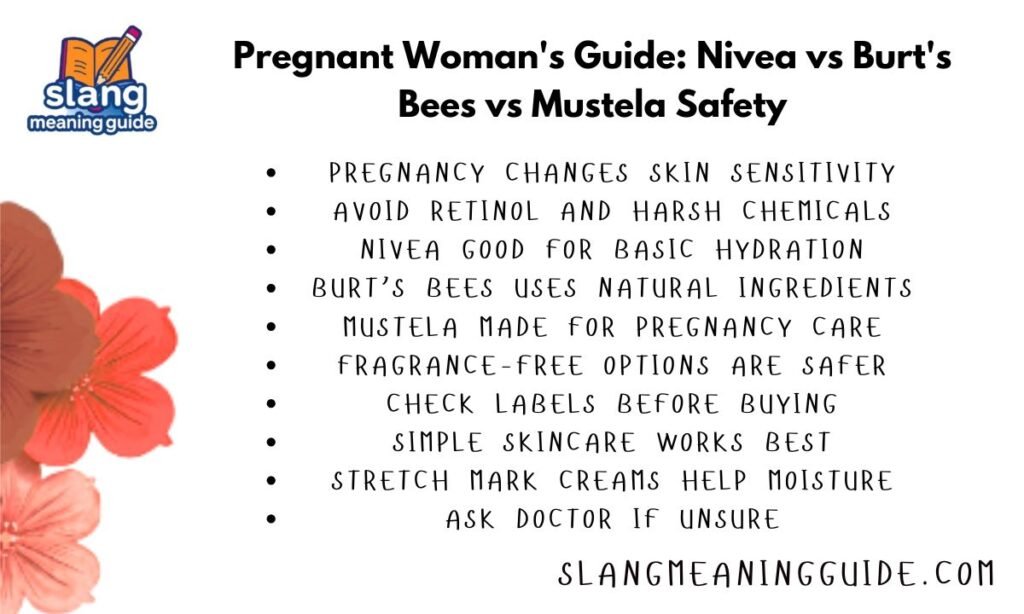
You’re pregnant. You’re reading labels. And suddenly your old moisturizer feels like a chemistry experiment you didn’t sign up for. You’re not overthinking it — your instincts are right. What you put on your skin during pregnancy genuinely matters, and choosing between these three popular brands takes more than a quick Google.
Why Pregnancy Changes Everything About Skincare
Pregnancy reshapes your skin from the inside out. Hormone shifts can cause dryness, heightened sensitivity, hormonal acne, stretch marks, and pigmentation changes — often all at once.
Skin barrier function also changes during pregnancy. Some ingredients absorb more readily, which is why dermatologists recommend reviewing your entire routine when you find out you’re expecting.
How Skin Absorbs Products During Pregnancy
Topical products don’t absorb into the bloodstream at high levels in most cases. That said, certain active ingredients — particularly fat-soluble compounds like retinoids — do cross the skin barrier at higher rates.
The risk isn’t the same for every ingredient. A simple glycerin moisturizer behaves very differently from a vitamin A serum. Knowing that difference is what keeps your routine safe.
Which Ingredients Most Experts Recommend Avoiding
Most OB-GYNs and dermatologists point to a short, consistent list. Avoid these during pregnancy:
- Retinoids and retinol (vitamin A derivatives — strongly avoided)
- Hydroquinone (skin-lightening agent)
- High-strength salicylic acid (small amounts in cleansers are generally fine; concentrated formulas are not)
- Chemical sunscreen ingredients like oxybenzone
- Heavy synthetic fragrances (not dangerous but often irritating)
- Phthalates and formaldehyde-releasing preservatives
Safe ingredients that work well during pregnancy include glycerin, hyaluronic acid, shea butter, ceramides, niacinamide, vitamin C, and zinc oxide.
Are Nivea Products Safe During Pregnancy?
Nivea is one of the most widely used skincare brands in the world. Its core products focus on hydration and barrier protection using tried-and-tested formulas.
For most pregnant women, basic Nivea moisturizers are considered safe. The key is knowing which products to choose and which to skip.
What Makes Basic Nivea Products Generally Safe
Classic Nivea products like the blue tin creme, Nivea Soft, and basic body lotions rely on humectants and occlusives. Their primary job is to lock in moisture — not to deliver actives.
These formulas typically contain glycerin, panthenol, mineral oil, and petrolatum. None of these ingredients appear on the standard avoid-during-pregnancy list. They are low-risk for most expecting mothers and work well for dry, tight pregnancy skin.
Nivea Products to Approach With Caution
Not every Nivea product is equal. The brand makes a wide range, and some lines include ingredients worth double-checking.
Anti-aging and “cellular repair” products may contain retinol or retinyl palmitate. Brightening formulas can include active compounds better reviewed by your doctor. Always check the ingredient list on any Nivea product that makes anti-aging or resurfacing claims before using it during pregnancy.
Are Burt’s Bees Products Safe During Pregnancy?
Burt’s Bees has built a strong reputation around plant-based, naturally derived skincare. That reputation draws a lot of pregnant women toward the brand — and for good reason in many cases.
The brand’s ingredient philosophy does align well with what most dermatologists recommend for pregnancy skin: simpler, gentler, and less active.
Why the Mama Bee Line Is a Smart Choice
Burt’s Bees specifically developed its Mama Bee range with pregnancy in mind. The Belly Butter and body oil in this line use cocoa butter, shea butter, and plant oils to hydrate stretching skin.
These products are typically free of retinoids and strong exfoliating acids. They’re also dermatologist-tested and often fragrance-free, making them a practical option for expecting mothers who want clean ingredients and belly support.
Where “Natural” Can Still Cause Problems
Natural does not automatically mean safe for everyone. This is one of the most important things to understand about Burt’s Bees.
Some products in the range contain concentrated essential oils, herbal extracts, or citrus compounds that can irritate skin made more reactive by pregnancy hormones. If your skin is particularly sensitive right now, reading labels still matters — even with Burt’s Bees.
Must Read: What Is Equal Billing and How Can It Help You When Creating Your Monthly Budget?
Are Mustela Products Safe During Pregnancy?
Mustela is in a different category from the other two brands. Where Nivea and Burt’s Bees are general skincare companies with some maternity overlap, Mustela builds its entire maternity line around pregnancy and postpartum use.
That focus shows in the formulation detail. Many Mustela products are designed to minimize irritation risk and are tested under dermatological supervision for use on pregnant and postpartum skin.
What Sets Mustela’s Formulations Apart
Mustela avoids parabens, phthalates, and phenoxyethanol in many of its maternity products. The brand uses hypoallergenic formulas and relies on ingredients like avocado peptides, shea butter, glycerin, and ceramides.
These ingredients support the skin barrier, improve elasticity, and keep moisture in — all useful during pregnancy. Most products in the maternity line are free of retinoids by design, which removes one of the most significant concerns right away.
Mustela’s Best Products for Expecting Mothers
The Stretch Marks Cream and Stretch Marks Oil are Mustela’s most popular pregnancy products. They’re specifically formulated for the belly, hips, and thighs as the skin stretches during the second and third trimesters.
These products are also lightweight enough for sensitive skin. Mustela also offers fragrance-free versions of several maternity products, making them suitable even for women who develop scent sensitivity during pregnancy.
Nivea vs Burt’s Bees vs Mustela: Side-by-Side Comparison
Here is a clear breakdown of how the three brands compare across the factors that matter most during pregnancy.
| Feature | Nivea | Burt’s Bees | Mustela |
| Pregnancy-focused products | Limited | Moderate (Mama Bee) | Extensive |
| Retinoid-free options | Yes (in basic lines) | Yes | Yes (maternity line) |
| Natural/botanical ingredients | Moderate | High | Moderate-High |
| Fragrance-free options | Some | Some | Many |
| Stretch mark products | Few | Yes | Excellent |
| Price point | Budget | Mid-range | Premium |
| Best use case | Everyday hydration | Plant-based moisture | Targeted maternity care |
Bottom line: Nivea wins on affordability and availability. Burt’s Bees wins on ingredient simplicity and natural formulas. Mustela wins on pregnancy-specific design and dermatological testing.
How to Build a Safe Skincare Routine During Pregnancy
Keep your routine simple. This is the most consistent advice from dermatologists and OB-GYNs when it comes to pregnancy skincare.
Using fewer products reduces both irritation risk and confusion about what is causing a reaction.
Morning Routine for Pregnancy Skin
Start with a gentle, fragrance-free cleanser. Follow with a lightweight moisturizer containing hyaluronic acid or glycerin. Finish with a mineral sunscreen using zinc oxide or titanium dioxide — both are considered safe during pregnancy and protect against the pigmentation changes that hormones can trigger.
Avoid layering active ingredients in the morning. Your skin does not need acids, retinoids, or exfoliants right now — hydration and sun protection are enough.
Night Routine for Pregnancy Skin
Use your cleanser again to remove the day. Apply a richer moisturizer or body butter to any areas prone to dryness or stretching. If stretch mark prevention is a priority, apply your chosen cream or oil to the belly, hips, and thighs while skin is still slightly warm from your shower.
Skip any serums or treatments that contain active ingredients unless your dermatologist has specifically cleared them. Keep the routine short and let your skin rest.
Practical Tips Before Choosing a Brand
A few habits that help you shop smarter during pregnancy:
- Check EWG Skin Deep ratings. The Environmental Working Group database lets you search individual products and see ingredient-level safety scores.
- Patch test everything new. Apply a small amount to your inner arm and wait 24 hours before using a new product widely.
- Trust your nose. If a product smells overpowering or triggers nausea, put it down. Pregnancy often intensifies scent sensitivity.
- Watch for mid-pregnancy reformulations. Brands update formulas regularly. A product you used in your first trimester might have different ingredients by your third.
- Ask your OB-GYN or midwife. Especially if you’re managing acne, eczema, or melasma — those conditions may require specific guidance.
Frequently Asked Questions
Is classic Nivea Creme safe to use during pregnancy?
Yes, the classic Nivea blue tin is generally considered safe. It focuses on basic hydration without retinoids or strong actives.
Does Burt’s Bees Mama Bee Belly Butter work for stretch marks?
It is formulated to support skin elasticity during pregnancy. Many women use it for belly moisture, though no cream can fully prevent stretch marks since genetics plays a large role.
Is Mustela the safest of the three brands during pregnancy?
Mustela offers the most pregnancy-specific formulations, which gives it an advantage for targeted maternity use. But all three brands have safe options when you choose the right products.
Should pregnant women avoid all fragranced skincare?
Not necessarily. Fragrance sensitivity varies by individual. If strong scents cause nausea or skin irritation, switching to fragrance-free options is a smart move.
Can I use Nivea anti-aging products while pregnant?
No. Anti-aging Nivea products may contain retinol or retinyl palmitate, which most dermatologists recommend avoiding during pregnancy.
Conclusion
Nivea, Burt’s Bees, and Mustela can all be part of a safe pregnancy skincare routine when you choose the right products within each brand. Safety comes down to ingredients — not logos — so read labels every time, keep your routine simple, and when in doubt, ask your OB-GYN before adding anything new to your shelf.